
Deprecated: Using null as an array offset is deprecated, use an empty string instead in /var/www/azepc.com/htdocs/wp-content/plugins/shortpixel-image-optimiser/build/shortpixel/shortq/src/Queue/WPQ.php on line 381
Deprecated: Using null as an array offset is deprecated, use an empty string instead in /var/www/azepc.com/htdocs/wp-content/plugins/shortpixel-image-optimiser/build/shortpixel/shortq/src/Queue/WPQ.php on line 381
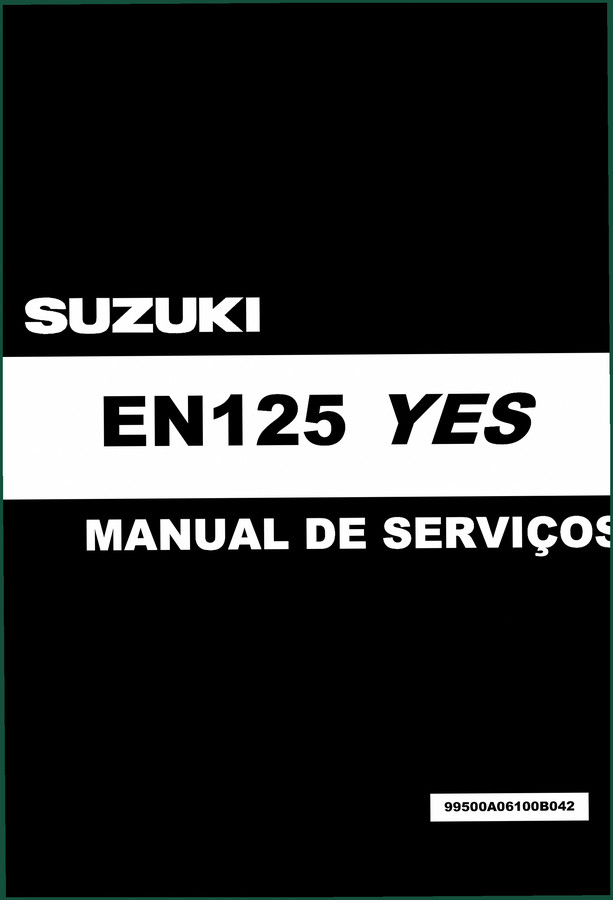
Suzuki EN125 Service Manual – 68 Pages Factory Documentation
Original price was: $30.36.$23.00Current price is: $23.00.
Official Suzuki EN125 Service Manual – 68 pages covering engine, fuel, electrical, chassis, and periodic adjustments. Factory specs.
Description
Suzuki EN125 Service Manual
You’ve got a Suzuki EN125 on the lift and you’re staring at a wiring diagram from some third-party site that looks like it was drawn by a kid with crayons. I’ve seen it a hundred times. That’s why I keep a copy of the factory Suzuki EN125 Service Manual within arm’s reach. 68 pages, straight from Suzuki’s engineering floor, not some reprint that skipped half the torque specs. If you’re rebuilding the motor, checking valve clearances, or chasing an electrical gremlin, this is the document that tells you exactly how the factory intended it to be done—no translation errors, no guesswork.
What the 68 Pages Cover: Engine, Fuel, Electrical, Chassis
The manual splits into seven sections, same structure Suzuki has been using for decades. INFORMAÇÕES GERAIS (General Information) covers serial number location, fuel and oil recommendations, break-in procedures, and the technical specifications table on page 1-3. That page lists every critical spec: compression pressure, valve clearances, spark plug gap, and OEM torque values for head bolts, engine mounting nuts, and chassis fasteners. You don’t need to call the dealer for a torque sequence—it’s printed right there. The MANUTENÇÃO PERIÓDICA E PROCEDIMENTO DE AJUSTE (Periodic Maintenance) chapter gives you the service intervals and adjustment procedures for the carburetor, clutch, and brakes. MOTOR (Engine) walks you through a complete teardown and reassembly, with clearances and tolerances that match the factory assembly line. SISTEMA DE COMBUSTÍVEL (Fuel System) covers the carburetor settings and petcock overhaul. SISTEMA ELÉTRICO (Electrical System) has the full wiring diagram, rectifier test specs, and ignition timing marks. Finally, CHASSI (Chassis) handles fork oil, steering head torque, and wheel alignment. Every step is sequenced, every tool listed.
Is the Wiring Diagram Accurate? Check Section 5
Electrical diagnostics on a bike this age can drive you insane if you’re using a generic schematic. The electrical chapter in this manual is the Suzuki-issued diagram, wire colors coded to the harness, with voltage checks for the stator, CDI unit, and regulator. I’ve used it to trace a no-spark condition in under an hour. The test procedures are written for a multimeter and a service tool, but you can substitute with a good digital meter. Don’t trust an aftermarket diagram that shows a different color code—the factory wire colors are listed in the key on page 5-2 (the electrical section starts at page 5-1, but the actual diagram is later in the chapter). You’ll also find the pickup coil resistance range and the ignition coil primary/secondary values. If you’re swapping the harness or repairing a cut wire, this is your only reliable source.
7 Sections, One Factory Source
Seven indexed sections cover everything from the serial number location to the final chassis torque. The manual is written for mechanics with Suzuki training (the intro mentions J. Toledo Suzuki Motos do Brasil training S1 and S2), but a careful DIYer can follow it if they respect the safety warnings. Each section starts with a list of special tools—like the flywheel puller or the clutch holder—but you can often improvise with common tools if you know the limits. The break-in procedure (amaciamento) in Section 1 is crucial for any rebuilt engine; it tells you to hold specific RPM limits for the first 1,000 kilometers. Ignore that and you’ll glaze cylinders.
Get the Right Torque Values from Section 1-3
Torque specs are scattered through the manual, but the master table in INFORMAÇÕES GERAIS (page 1-3) gives you the fastener torque for engine and chassis. Cylinder head? 20–28 N·m (14.5–20.5 ft-lb). Spark plug? 20–30 N·m (14.5–22 ft-lb). Axle nut? 50–80 N·m (36–58 ft-lb). These are not suggestions—they’re the values Suzuki stamped on the production line. If you’re using a torque wrench that hasn’t been calibrated in five years, get it checked before you touch anything. I’ve seen head gaskets fail because a guy guessed the torque and warped the deck. The manual also lists the tightening sequence for the head bolts, which is as important as the number.
Break-In Procedure: Factory Amaciamento Steps
The break-in section (page 1-1 through 1-2) is something most aftermarket manuals either omit or paraphrase. Suzuki gives a specific RPM limit: keep it under 4,000 rpm for the first 800 km (500 miles), then gradually increase to 6,000 rpm up to 1,600 km (1,000 miles). No short trips, no constant speeds, no full throttle. The oil change schedule is also critical—first change at 800 km, then every 2,000 km. This manual has it spelled out, including the recommended oil viscosity: SAE 20W50, API SF or SG. You can find the same info in the owner’s manual, but the service manual adds the torque values for the drain plug and oil filter housing.
- Does this manual cover the EN125 YES model?
- Yes, the manual is titled for the EN125 YES, and the VIN and engine serial number locations are shown on page 1-1.
- Is the manual printed in English?
- It’s the original Suzuki factory documentation in Brazilian Portuguese. All torque values and tolerances are numerical, and the diagrams use standard symbols. If you can read a spec table, the language won’t stop you.
- What torque values are listed in the spec table?
- Page 1-3 provides a complete table with fasteners for the cylinder head, engine mounts, brake caliper, axle, and more. Values are given in both N·m and the equivalent ft-lb. The manual also includes tightening sequences for critical components like the cylinder head and the flywheel nut.
- Can I use this manual if I’ve never rebuilt a motorcycle engine?
- You can, but you need to proceed methodically. The manual assumes you know how to use a torque wrench, a multimeter, and basic hand tools. Skip the safety precautions on page 1-2 and you risk injury or component damage. If you’re a beginner, pair this manual with a basic engine repair guide such as the Automotive Industry Overview for terminology, but rely on Suzuki’s specs for the actual mechanical work. Also consider the complementary Suzuki VLR1800 2008 Service Manual – OEM Factory Repair Guide if you have another Suzuki model in the shop. The factory approach is the same across lines: follow the sequence, respect the torque.
After you’ve worked through a repair with this manual, you’ll understand why factory documentation separates a professional job from a hack job. The wiring diagram alone is worth the cost if you avoid one short circuit. Torque specs from the OEM keep the engine sealed and the chassis tight. I’ve been inside enough engines to know that the difference between a 0.5 mm feeler gauge and a 0.6 mm one can cost you a valve job. This manual gives you the exact numbers Suzuki used when they built the bike. Don’t let some scanned PDF with missing pages be your reference. Access the Factory Manual from AutoRepairManuals and keep it on your tablet or print it—it belongs on your bench, not buried in a browser tab. Related manuals you might need: Suzuki Grand Vitara 2005 Service Manual – OEM Factory Specs and Suzuki Grand Vitara 2005 Service Manual – OEM Factory Repair Guide for car projects. For background on transmission repair, see Manual Transmission overviews.
Additional information
| Brand | Suzuki |
|---|---|
| Language | English |
3 reviews for Suzuki EN125 Service Manual – 68 Pages Factory Documentation
You may also like…
-
Sale!
Suzuki Hatch Service Manual – 151 Pages Factory Repair Data
Original price was: $54.80.$40.00Current price is: $40.00. -
Sale!
Suzuki SWIFT 1988 Service Manual – Factory Repair Docs for 1300 GTi
Original price was: $67.05.$45.00Current price is: $45.00. -
Sale!
Suzuki GSX-R600 Service Manual – 2001-2002 Factory Repair Data
Original price was: $51.60.$40.00Current price is: $40.00. -
Sale!
Suzuki GC415 2004 Service Manual – 770 Pages Factory Specs
Original price was: $58.95.$45.00Current price is: $45.00.
Related products
-
Sale!

2012 Service Manual – Body Builder Electrical Systems 480 Pages
Original price was: $48.28.$34.00Current price is: $34.00. -
Sale!
Acura NSX 1991 Service Manual – 1420 Pages OEM
Original price was: $102.05.$65.00Current price is: $65.00. -
Sale!

1992 Electrical Schematic – International 1000/3000/4000/2554 OEM Wiring Diagrams (132 Pages)
Original price was: $26.40.$20.00Current price is: $20.00. -
Sale!

2011 Parts Catalog – International Truck OE Parts Documentation (1786 Pages)
Original price was: $34.50.$25.00Current price is: $25.00.
David K. –
This is just what I was looking for. Immediate link after checkout process. It guided me to rebuild my Suzuki EN125 engine. Saves me hundreds of time.
Charles W. –
Highly recommended! The PDF is very clear. Contains precise bolt torque specs for Suzuki. Saved my repair job! Thank you.
Thomas B. –
Excellent OEM spec sheet. It is very easy to read on my laptop without losing quality. It helped me to fix my Suzuki EN125 transmission. Highly recommended for mechanics.