
Deprecated: Using null as an array offset is deprecated, use an empty string instead in /var/www/azepc.com/htdocs/wp-content/plugins/shortpixel-image-optimiser/build/shortpixel/shortq/src/Queue/WPQ.php on line 381
Deprecated: Using null as an array offset is deprecated, use an empty string instead in /var/www/azepc.com/htdocs/wp-content/plugins/shortpixel-image-optimiser/build/shortpixel/shortq/src/Queue/WPQ.php on line 381
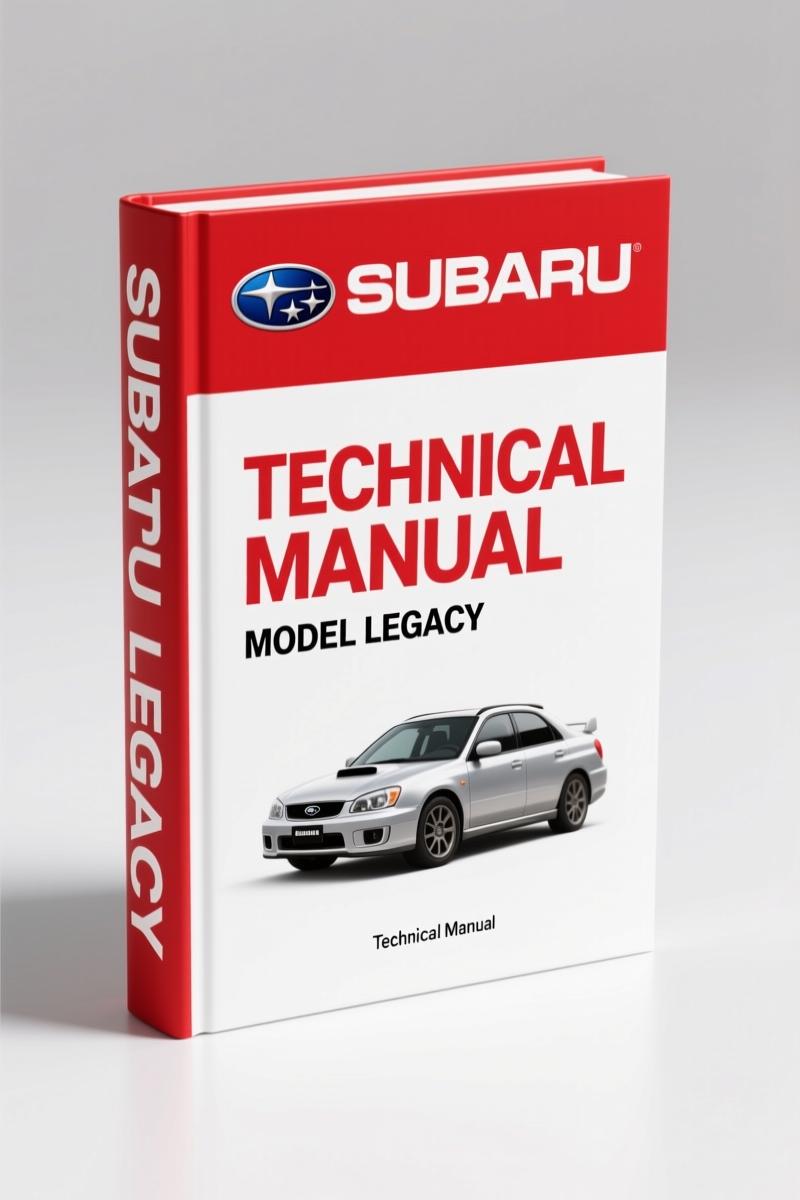
Subaru LEGACY 2003 Service Manual – Factory Specs and Procedures
Original price was: $58.95.$45.00Current price is: $45.00.
OEM service manual for Subaru LEGACY 2003: 3569 pages covering engine, transmission, electrical, suspension, brakes. Factory specs only.
Description
Subaru LEGACY 2003 Service Manual
If you have ever pulled a head bolt on an EJ engine and guessed the torque sequence because the aftermarket manual said “tighten to spec” without giving you the pattern, you know the feeling. That is the kind of waste I have no tolerance for. The Subaru LEGACY 2003 Service Manual from AutoRepairManuals is the exact binder that factory techs used when this car was new. 3569 pages of verified data, not a single aftermarket reprint. You open this PDF, you get the same torque specs, the same wiring colors, and the same diagnostic trees that Fuji Heavy Industries approved for dealership service bays. That matters when you are knee-deep in a camshaft drive belt replacement or chasing an intermittent electrical fault.
Every section is laid out by the engineers who designed the car. The General Information Section alone covers dimensions, engine specs, electrical system ratings, transmission types, steering, suspension, brake data, tire sizes, capacities, and vehicle weights for both the Legacy and the Outback trim. You need the procedure for a front O2 sensor replacement? It is in the Fuel Injection (Fuel Systems) section under FU(H4SO), with removal and installation steps, plus the required tool list. No guesswork, no third-party interpretation.
Specifications: Engine, Electrical, Transmission, Suspension, Brake
The Specifications (SPC) chapter dedicates separate subsections to Engine, Electrical, Transmission, Steering, Suspension, Brake, Tire, Capacity, and Weight. If you are swapping an engine or rebuilding a transmission, you need those baseline numbers. Bore and stroke, displacement, compression ratio, firing order, idle speed, ignition timing, alternator output, starter draw – all listed against factory tolerances. For the brake system, you get rotor thickness limits, pad wear limits, and fluid type. The page for torque values on the cylinder head is in the Engine 1 Section, but the capacity page – page 1 of the Specifications chapter – lists oil and coolant volumes in Imperial quarts. No metric conversions needed.
What Torque Values Are Listed?
This manual contains torque specifications for every critical fastener: cylinder head bolts, main bearing cap bolts, connecting rod nuts, flywheel bolts, wheel lug nuts, brake caliper bolts, and suspension pivot bolts. Each value comes with the required tightening sequence where applicable. The camshaft drive belt tensioner bolt, for example, has a specific torque and a two-step tightening procedure. You do not get that from a generic repair book. The manual also includes the “Caution” notes that tell you when a bolt must be replaced after loosening, or when thread locker is mandatory.
Periodic Maintenance Services Scheduled
The Periodic Maintenance Services (PM) chapter is worth the access by itself. It breaks maintenance into two schedules – Schedule 1 and Schedule 2 – based on driving conditions. You get replacement intervals for engine oil, oil filter, spark plugs, drive belts, camshaft drive belt, fuel filter, air cleaner element, coolant, transmission oil, ATF, front and rear differential oil, brake fluid, and brake pads. Each procedure includes inspection steps. For example, the camshaft drive belt installation procedure on page ??? (the PM section) lists the alignment marks and tension adjustment sequence. Skimping on that step causes valve timing errors and bent valves. I have seen it happen.
Why Factory OEM Documentation Beats Aftermarket
Aftermarket manuals often reprint information from earlier model years, omit wiring diagrams, or use generic torque values that do not match Subaru’s fasteners. This manual is the original OEM document published by Fuji Heavy Industries Ltd. in 2003 under publication numbers G2300BE1 through G2300BE7. It covers the BE and BH chassis codes. Every wiring diagram in the Wiring System Section is color-coded and pinned to the exact connector locations. If you need to diagnose a no-start condition, the Engine Control Module (ECM) pinout table tells you which wire carries the signal and what voltage to expect. That saves hours of probing blindly.
3 Reasons to Choose This Manual
First, the scope. 3569 pages means every system is covered – engine, transmission, chassis, body, and wiring. Second, the source. OEM factory print, not a scanned photocopy of a third-party clone. Third, the format. You get a searchable PDF that works on any device, so you can zoom into diagrams on your phone while you are under the hood. Related factory manuals include SUBARU LEGACY 2004 Service Manual – Section: Wiring System Section for later models, SUBARU LEGACY 1995 Service Manual – Section: Electrical Section for the first-generation cars, and SUBARU LEGACY 1997 Service Manual if you work on earlier BE platforms.
FAQ
- Does this manual cover the Subaru Outback trim?
- Yes. The Specifications chapter includes a separate Outback section with dimensions, engine, electrical, transmission, steering, suspension, brake, tire, capacity, and weight data. The rest of the manual covers both Legacy and Outback variants where systems are shared.
- Can I use this manual for a 2004 model?
- No. 2004 models have different wiring and some revised engine management. Use the correct year manual.
- I need the exact torque for the rear differential fill plug. Where is it?
- Check the Periodic Maintenance section under Front & Rear Differential Oil – the replacement procedure includes the drain and fill plug torque. It is also listed in the Specifications chapter under Capacities. If you cannot find it, the manual’s index points you to the correct page.
- What about the wiring diagrams? Are they complete?
- The Wiring System Section (Pub.No.G2300BE7) contains full-color, pin-by-pin wiring diagrams for every electrical system: engine control, starting, charging, lighting, HVAC, airbag, ABS, and audio. Each harness connector is labeled with terminal numbers and wire colors. You can trace a short circuit without guessing. This is the same documentation that Subaru dealers used for warranty repairs. If you want a broader perspective on how automakers structure their service literature, see this Automotive Industry Overview from a major manufacturer. Another external resource is Automotive Industry Overview, which discusses the importance of original documentation.
Factory documentation keeps your repair work accurate and safe. You have a better chance of finishing the job right the first time when you use the same specifications that built the car. Access the Factory Manual now from AutoRepairManuals and stop chasing aftermarket errors.
Additional information
| Brand | Subaru |
|---|---|
| Language | English |
3 reviews for Subaru LEGACY 2003 Service Manual – Factory Specs and Procedures
You may also like…
-
Sale!

Subaru IMPREZA 2003 Service Manual – 3024 Pages of Factory Specs
Original price was: $61.20.$45.00Current price is: $45.00. -
Sale!
Subaru IMPREZA 1998 Service Manual – 1906 Pages Factory Specs
Original price was: $58.05.$45.00Current price is: $45.00. -
Sale!

Subaru Forester 2002 Service Manual – 2073 Pages of Factory Specs
Original price was: $67.05.$45.00Current price is: $45.00. -
Sale!
Subaru Forester 1999 Service Manual – 1972 Pages of Factory Diagnostic Data
Original price was: $67.05.$45.00Current price is: $45.00.
Related products
-
Sale!

1994 Troubleshooting Manual – International 1000-4000 FBC
Original price was: $60.00.$50.00Current price is: $50.00. -
Sale!
Acura NSX 1991 Service Manual – 1420 Pages OEM
Original price was: $102.05.$65.00Current price is: $65.00. -
Sale!

2006 Service Manual – International DT 466E, 530E Diesel Engine
Original price was: $67.50.$50.00Current price is: $50.00. -
Sale!

Acura Integra 1998 Service Manual – 1891 Pages Factory OEM Documentation
Original price was: $31.75.$25.00Current price is: $25.00.
gearhead88 –
Excellent OEM spec sheet. The scan is high-quality and well indexed. Contains detailed bolt torque specs for Subaru. I will definitely buy again.
Richard G. –
This is just what I needed. It is very easy to read on my phone without losing quality. It assisted me to troubleshoot my Subaru LEGACY transmission. I will recommend this shop to others.
James L. –
This is exactly what I needed. The pages are clean and easy to navigate. A must-have for any Subaru LEGACY DIYer doing maintenance. Saved my repair job! Thanks.