
Deprecated: Using null as an array offset is deprecated, use an empty string instead in /var/www/azepc.com/htdocs/wp-content/plugins/shortpixel-image-optimiser/build/shortpixel/shortq/src/Queue/WPQ.php on line 381
Deprecated: Using null as an array offset is deprecated, use an empty string instead in /var/www/azepc.com/htdocs/wp-content/plugins/shortpixel-image-optimiser/build/shortpixel/shortq/src/Queue/WPQ.php on line 381
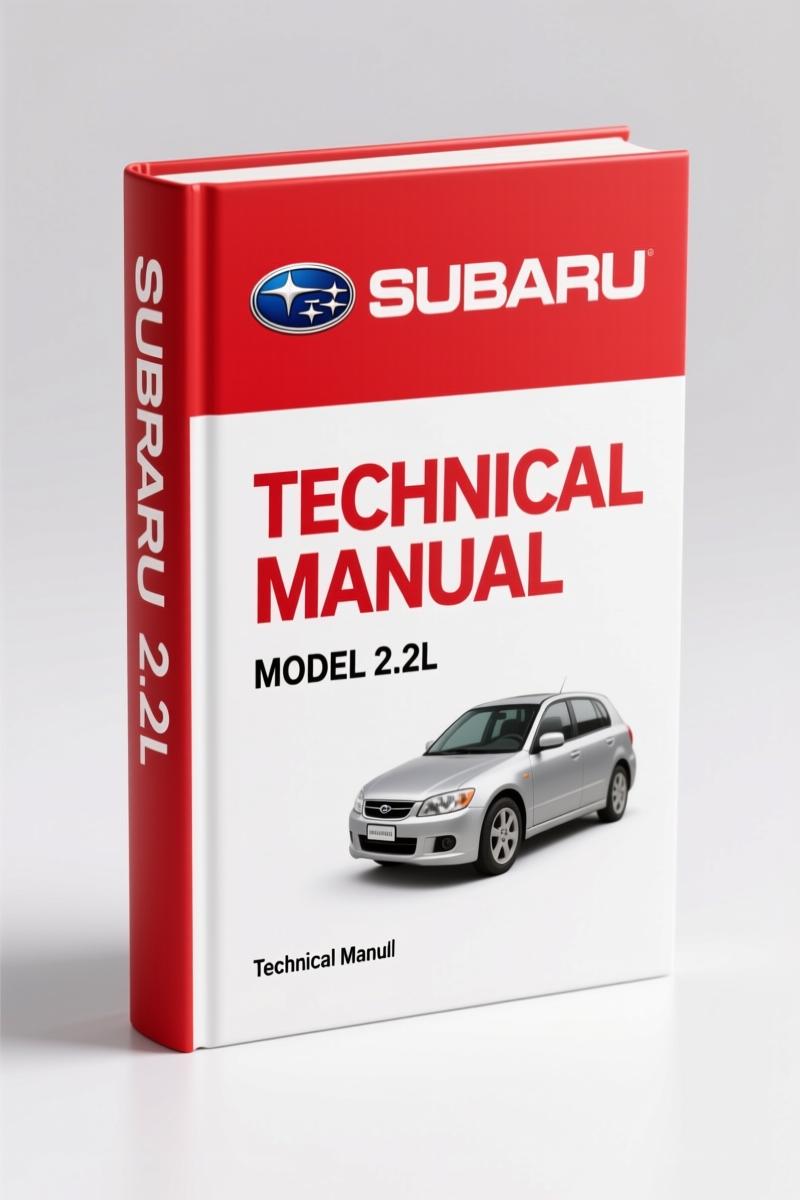
Subaru 2.2L, 2.5L, 3.0L 2001 Technical Manual – Factory Specs
Original price was: $27.00.$22.50Current price is: $22.50.
84-page factory technical manual for Subaru 2.2L, 2.5L, 3.0L boxer engines (2001). OEM diagnostics, disassembly, reassembly specs.
Description
You have a Subaru boxer engine on the stand – 2.2L, 2.5L, or 3.0L – and you need the factory line on what to do next. Aftermarket manuals will tell you something close, but close gets you a leaky head gasket or a snapped bolt. The Subaru 2.2L, 2.5L, 3.0L 2001 Technical Manual is the booklet Subaru gave their own technicians. 84 pages, published August 2001, direct from Subaru of America. If you are working on an EJ22 Phase 1 or Phase 2, or an EJ25 DOHC or SOHC, or the EZ30 3.0L, this is the reference that matches the actual hardware on your bench.
2.2L Engine Identification – Phase 1 vs Phase 2
Page 10 starts with engine identification. You need to know if you have a Phase 1 or Phase 2 2.2L because the pistons, heads, and timing belt routing changed. The manual breaks it down with diagrams and casting numbers. Skip this step and you might order the wrong gasket set. I’ve seen it happen.
Engine Diagnostics: What the Manual Tells You
Page 15 covers in-vehicle servicing and engine diagnostics. The manual gives you the factory diagnostic flow for misfires, compression checks, and idle issues. Not a generic “check spark plugs” – it tells you the exact procedure Subaru uses. You want the charge pressure? You need to follow the steps on page 15. That page also lists required tools – including the Subaru-specific scan tool protocols. Do not skip the precautions on page 23; they warn about sensor damage during compression tests.
Disassembly and Reassembly Specs – Why They Matter
The disassembly section starts on page 16, but the reassembly on page 24 is where most mistakes happen. The manual lists torque sequences for the cylinder heads, main bearings, and oil pan. These are not the same across all boxer engines. The 2.5L DOHC head bolts, for example, require a different tightening pattern than the 2.2L SOHC. You get the exact steps, including angle-torque values. One wrong turn and you’re buying a new block. The manual also includes “Notes and Cautions” on page 28 that detail what can crack if you go too fast.
2.5 Liter Engine Differences – DOHC Phase 1 vs SOHC Phase 2
Starting on page 35, the manual describes the 2.5L engine features. It covers the 1997 DOHC (Phase 1) and the 1999 enhancements for both DOHC and SOHC (Phase 2). The spark plug replacement procedure on page 37 is specific to the 2.5L – you need to remove the intake manifold on the DOHC, but not on the SOHC. The manual tells you that. If you are swapping a 2.5L into a 2.2L car, you need the differences in block height and oil pan clearance, which are on page 42.
3.0L Engine Coverage in This Booklet
The manual also addresses the 3.0L H6 engine, though the bulk of the text focuses on the four-cylinder variants. The section on “New Features of the Phase Two Engines” includes information relevant to the EZ30, such as the variable intake system and cylinder head gasket design. You won’t find a full teardown for the 3.0L here, but the common servicing steps and torque specs are referenced.
Audience Fit – Who Needs This Manual
If you are a DIY mechanic pulling a Subaru engine out of a Legacy or Outback in your home garage, this manual saves you from guessing which bolt goes where. Home garage enthusiasts often rely on forum posts that contradict each other. This document ends that. Professional mechanics in a shop like mine need the factory spec to avoid comebacks. One mis-torqued head bolt and you’re re-doing the job. A buddy of mine used an aftermarket manual and torqued his 2.5L head to the wrong spec – blew the gasket on startup. This manual would have prevented that. The factory procedure includes the angle-tightening steps that aftermarket books often leave out. That is the difference between a running engine and a scrap block. Workshop owners: give this to your junior techs before they touch a boxer. It’s 84 pages – they can read it in an afternoon.
Get the factory specs. Stop guessing.
Source Validity – OEM vs Aftermarket
This is not a third-party reprint. It is the original 2001 Subaru of America technicians reference booklet. The part number is MSA5P0131C. Aftermarket manuals often omit the safety warnings and the precise torque sequences that Subaru validated. I have seen aftermarket manuals list the wrong firing order for a Phase 2 2.5L. Do not risk it. If you need additional Subaru documentation, check the Subaru 2.2L EJ22 Engine Technical Manual for older generations, or the 2001 Subaru Impreza WRX, Outback, Forester, Legacy, SVX SRS Manual for airbag system specs. For the SRS system specifically, the Subaru IMPREZA Technical Manual – Airbag System OEM Specs is also available. For general automotive context, you can reference Automotive Industry Overview or Manual Transmission if doing a full drivetrain rebuild.
Frequently Asked Questions
- Does this manual include torque specifications for all three engine sizes?
- Yes. The manual lists torque sequences and values for the 2.2L, 2.5L, and 3.0L engines, including head bolts, main bearings, and oil pan. Each section has its own spec table.
- Is this the same manual used by Subaru dealerships?
- Yes. It is the official Technicians Reference Booklet (Module 104) produced by Subaru of America for their own training and service departments.
- What years does this manual cover?
- It was published in August 2001 and covers engines produced through that date, including Phase 1 and Phase 2 variants of the 2.2L and 2.5L, and the 3.0L up to 2001.
- Can I use this to rebuild a 2.5L short block from scratch?
- The manual covers disassembly and reassembly steps, but it is a reference booklet, not a full workshop manual. It includes critical torque specs and clearance values, but for a complete rebuild you may need the larger service manual. It will, however, tell you the exact sequence for the head bolts, which gaskets to use, and the proper tension pattern for the timing belt. Many rebuilders forget to check the piston-to-valve clearance – the manual has the specs for that too. I would not start a short block build without this booklet on the bench, because the torque values for the 2.5L DOHC differ from the SOHC, and mixing them up will ruin the head gasket seal.
Stop wasting time on vague internet guides. If you are in the middle of a boxer engine job, this 84-page booklet will keep you from making a $500 mistake. Access the Factory Manual now and get the exact specs Subaru wrote for its technicians.
Additional information
| Brand | Subaru |
|---|---|
| Language | English |
4 reviews for Subaru 2.2L, 2.5L, 3.0L 2001 Technical Manual – Factory Specs
You may also like…
-
Sale!

Subaru IMPREZA 1998 Service Manual – 1906 Pages Factory Specs
Original price was: $58.05.$45.00Current price is: $45.00. -
Sale!

Subaru Forester 1999 Service Manual – 1972 Pages of Factory Diagnostic Data
Original price was: $67.05.$45.00Current price is: $45.00. -
Sale!
Subaru Forester 2002 Service Manual – 2073 Pages of Factory Specs
Original price was: $67.05.$45.00Current price is: $45.00. -
Sale!
Subaru IMPREZA 2003 Service Manual – 3024 Pages of Factory Specs
Original price was: $61.20.$45.00Current price is: $45.00.
Related products
-
Sale!

2005 Parts Catalog – International NGD 3.0 L Engine (77 pages)
Original price was: $44.70.$30.00Current price is: $30.00. -
Sale!

Acura Integra 1998 Service Manual – 1891 Pages Factory OEM Documentation
Original price was: $31.75.$25.00Current price is: $25.00. -
Sale!

Technical Manual – International 6.0L Power Stroke FICM Diagnostics
Original price was: $29.80.$20.00Current price is: $20.00. -
Sale!

1995 Operators Manual – International 1000-4000 Series | OEM Documentation
Original price was: $12.49.$9.99Current price is: $9.99.
diy_master –
Excellent workshop guide. Instant access after checkout. Every torque spec is included for Subaru 2.2L,. I will recommend this shop to others.
William H. –
Superb resource! The file is very clear. It guided me to rebuild my Subaru 2.2L, transmission. Saves me hundreds of dollars.
Richard G. –
I am so happy with this purchase. The scan is high-quality and easy to navigate. A must-have for any Subaru 2.2L, DIYer doing repairs. Saves me a lot of time.
gearhead88 –
This is exactly what I was looking for. It is easily zoomable on my tablet without losing quality. It guided me to fix my Subaru 2.2L, electrical system. Saved my weekend project! Thanks.