
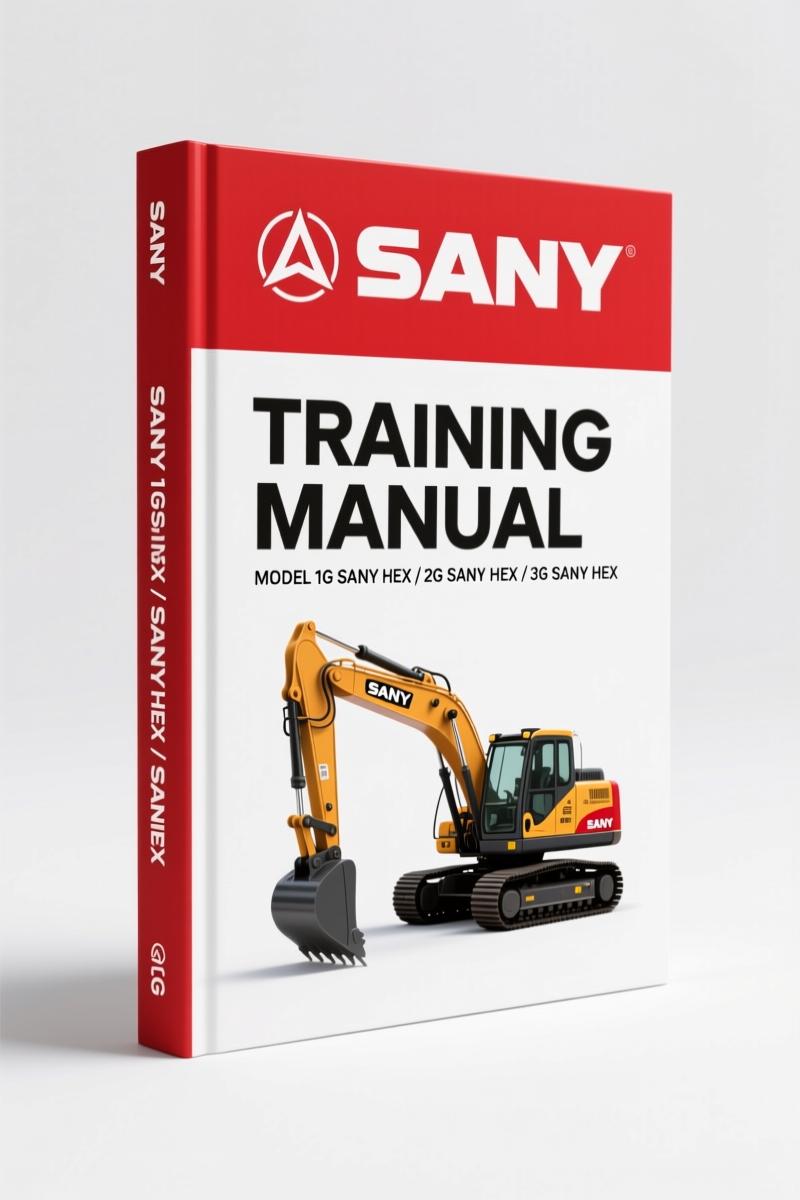
SANY 1G-4G Hex Training Manual – Factory Hydraulic & Electronic Systems
Original price was: $52.00.$40.00Current price is: $40.00.
SANY factory training manual covering 4 generations of hex excavators. 117 pages on hydraulic systems, electronic control, engine speed.
Description
SANY 1G Sany hex, 2G Sany hex, 3G Sany hex, 4G Sany hex Training Manual
If you’re working on a SANY excavator and you don’t know which generation you’ve got under the hood, you’re already behind. I’ve seen guys swap parts between a 2G and a 3G and wonder why the pilot pressure is all wrong. This Training Manual—the actual one from SANY—breaks down the four generations: 1G Sany hex (1998–2001), 2G Sany hex (2001–2006), 3G Sany hex (2006–2008), and 4G Sany hex (2008 onward). No aftermarket fluff. No condensed reprints. Just the factory slides and procedures they use to train their own techs. It’s 117 pages of straight technical content covering hydraulic circuits, electronic controls, and engine introduction. That’s the difference between guessing and knowing.
SANY training manuals aren’t written for the average DIY guy. They’re written for technicians who need to understand why the machine behaves a certain way. If you’re a home garage enthusiast who thinks a wrench and a YouTube video are enough, this manual will probably make your head hurt. But if you’re serious about diagnosing a pump that won’t stroke or an auto-idle that won’t kick in, this is the document that fills the gaps your service manual left open.
Four Generations of SANY Hex Machines
The manual starts with a timeline: 1G from 1998–2001, 2G from 2001–2006, 3G from 2006–2008, and 4G from 2008 onward. Each generation has its own hydraulic system differences—NFC versus PFC. The training material explains that NFC uses output pressure sensors on the front and rear pumps and a control oil pressure sensor at the control valve outlet, while PFC uses nine pilot pressure sensors. The software between the two is different, and the manual warns: “Do not confuse them.” That’s the kind of detail you need when you’re chasing a low-flow complaint. Bucket capacities are listed for models from SY55C to SY2000C—tables with cubic meters and machine weights so you can match the right attachment to the right carrier.
NFC vs PFC Hydraulic Systems: What’s the Difference?
Both systems modulate the pump, but they do it differently. NFC (Negative Flow Control) reads the pressure at the control valve’s central passage and adjusts pump output. PFC (Positive Flow Control) uses pilot pressure signals from the joysticks—more lever movement means higher pilot pressure, which tells the controller to increase pump current through a proportional reducing valve. If you’re troubleshooting a sluggish swing or a weak breakout force, knowing which system you have saves hours. The manual lays this out with diagrams and sensor descriptions. No guesswork. I’ve had to tell more than one tech to stop swapping controllers between NFC and PFC machines. This manual would have set them straight before they even started.
117 Pages – Engine Introduction and Speed Control
Near the middle of the manual, you’ll find an engine introduction section. It covers the basics of the diesels that SANY uses across the hex line, but the real meat is in the engine speed control chapter. The training explains how the controller manages idle, working speed, and auto deceleration. If your machine surges at idle or won’t drop to low idle when the levers are neutral, the root cause is often in the electronic control logic. This manual gives you the theory—no step-by-step repair instructions for the engine itself, but enough to understand what the controller expects from the sensors. That context is gold when you’re reading a wiring diagram.
Electronic Control System – Working Modes and Auxiliary Functions
One section covers the electronic control system in detail. It includes the main oil circuit, pilot oil circuit, and the electronic control system architecture. Working modes like heavy, standard, and light are explained along with auxiliary functions for attachments like thumbs and shears. If you’re retrofitting a third spool or setting up a hydraulic quick coupler, the auxiliary function chapter tells you how the controller responds to mode switches. The manual also covers auto engine speed control—how the system drops RPM when the machine sits idle. That’s a common complaint on older 3G and 4G machines, and this manual tells you the trigger conditions.
For a reference on how manual transmissions work in older equipment, see Manual Transmission.
SANY Excavators vs Other Brands – Background Information
The last third of the manual is a competitive comparison section. It covers background information on the excavator industry, then dives into the basic configuration and highlights of SANY excavators versus other brands. It shows how SANY engineers prioritized service access, cab visibility, and hydraulic efficiency. While this section feels more like sales training, it still contains useful info on machine layout and component location. If you’re cross-training from a Komatsu or Hitachi, this helps you understand SANY’s design philosophy. That context makes diagnostics faster because you know where to look for the pump regulator and the controller.
If you need a deeper understanding of transmission types, read about Manual Transmission.
3 Related Manuals You Should Check
- SANY SCC550C 2012 Operators Manual – Factory Specs & Procedures
- SANY RSC45C2 Operators Manual | 394 Pages OEM
- SANY Reach Stacker 4545 2014 Operators Manual – OEM Factory Specs
- Is this manual suitable for someone who has never touched a SANY excavator?
- No. This is a factory training deck designed for technicians already familiar with hydraulic theory. Beginners will find the lack of step-by-step repair frustrating.
- Does it include wiring diagrams or component locations?
- It includes block diagrams of the electronic control system and descriptions of sensor signals, but not full color wiring schematics. For those, you need the service repair manual for a specific generation. The training manual explains how the system works so you can use the wiring diagram intelligently. It also covers major component identification like pump, control valve, engine, and controller. If you’re replacing a hydraulic pump on a 3G Sany hex and you don’t know the difference between NFC and PFC, this manual will keep you from ordering the wrong part.
Don’t waste another afternoon chasing a phantom hydraulic issue because you relied on a generic aftermarket guide. This is the same training material SANY gives its own service personnel. Access the Factory Manual now and start working with actual factory knowledge.
Additional information
| Brand | SANY |
|---|---|
| Language | English |
3 reviews for SANY 1G-4G Hex Training Manual – Factory Hydraulic & Electronic Systems
You may also like…
-
Sale!
SANY SRC840 Parts Catalog – 436 Pages OEM Parts Book for Rough Terrain Crane
Original price was: $64.35.$45.00Current price is: $45.00. -
Sale!
SANY SCC1000C-K1 Parts Catalog – OEM 483-Page Parts Book
Original price was: $49.60.$40.00Current price is: $40.00. -
Sale!
SANY SRC865XL Parts Catalog – 490 Pages OEM Parts Book
Original price was: $63.90.$45.00Current price is: $45.00. -
Sale!
SANY PQ190 III A Parts Catalog – 311 Pages OEM Parts Book
Original price was: $56.40.$40.00Current price is: $40.00.
Related products
-
Sale!

International 1000-3000 Series Operators Manual – 132 Pages of OEM Specs
Original price was: $14.40.$10.99Current price is: $10.99. -
Sale!

1991 Operators Manual – International Truck OEM Specs (108 Pages)
Original price was: $13.63.$10.99Current price is: $10.99. -
Sale!

2011 Parts Catalog – International Truck OE Parts Documentation (1786 Pages)
Original price was: $34.50.$25.00Current price is: $25.00. -
Sale!

2006 Service Manual – International DT 466E, 530E Diesel Engine
Original price was: $67.50.$50.00Current price is: $50.00.
David K. –
I am so happy with this manual. It is easily zoomable on my phone without blur. A must-have for any SANY 1G4G mechanic doing repairs. I will recommend this shop to others.
William H. –
Excellent workshop guide. The text is searchable and well indexed. Contains clear schematics for SANY. Highly recommended for mechanics.
gearhead88 –
This is exactly what I was looking for. Quick access after checkout. A must-have for any SANY 1G4G owner doing maintenance. Worth every penny.