
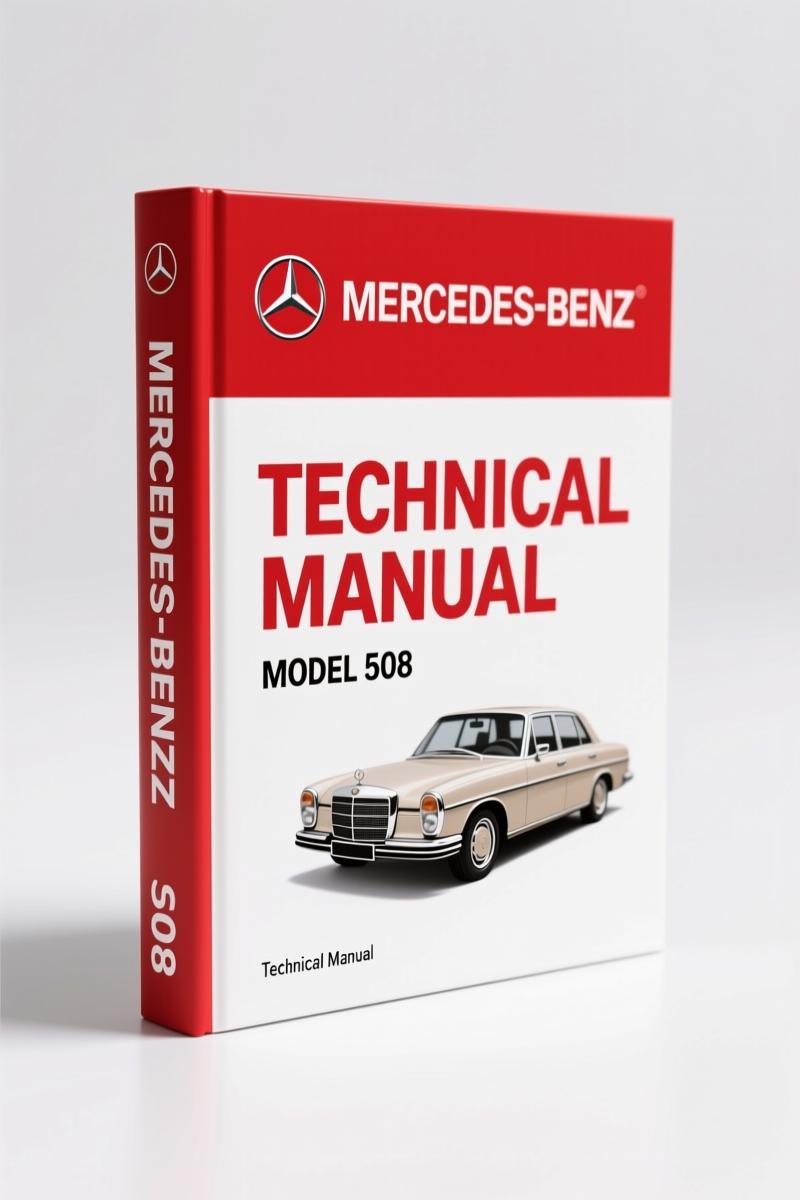
Mercedes-benz 508 2001 Technical Manual: ESP System Training
Original price was: $31.50.$25.00Current price is: $25.00.
22-page factory ESP training for Mercedes-benz 508. Sensor data, control modes, and brake light switch diagnostics. OEM source.
Description
Mercedes-benz 508 2001 Technical Manual – ESP System Deep Dive
You’re chasing an ESP warning light that keeps coming back on a 2001 508. You’ve swapped the steering angle sensor, bled the brakes twice, and the code still points to a yaw rate mismatch. Without the factory wiring diagrams and the exact sequence the control unit expects, you’re burning flat-rate time and guessing. That’s where this Mercedes-benz 508 2001 Technical Manual comes in. It’s Part 4 of the factory ESP training series – 22 pages of OEM documentation that explains how the system integrates ABS, ASR, and Electronic Brake Distribution (EBR) into one unit. I’ve been a tech for 28 years, and I can tell you: the difference between a diag that takes 20 minutes and one that takes two hours is having the right source material. This manual is that source.
What the Mercedes-Benz 508 2001 Technical Manual Covers
This manual isn’t a full service manual – it’s a focused technical reference on the ESP system. The table of contents starts with ESP Function, then moves through Advantages, Driver Information, CAN Communication, Understeer, Oversteer, an ESP Block Diagram, and individual sensor sections: Steering Angle Sensor, Lateral Acceleration Sensor, Yaw Rate Sensor, Rotational Speed/Lateral Acceleration Sensor, and the B24/15 unit. Also covered are the Brake Light Switch, a Service Note, and three ESP Control Modes: Pressure Apply, Pressure Hold, and Pressure Release. If you’re dealing with a 508 that pulls to one side under hard braking or doesn’t activate ESP when it should, this manual tells you what signals the control unit expects and how to test them.
ESP Function: More Than Just a Light on the Dash
Page 3 of the manual sums it up: BAS + ABS + ASR + EBR = ESP. That’s Brake Assist, Anti-lock Braking, Acceleration Slip Regulation, and Electronic Brake Distribution combined. The manual explains how the system stabilizes the truck during braking, acceleration, and rolling, and how it shortens stopping distances on slippery surfaces. The torque spec for the brake light switch mounting? Not listed here, but the manual does reference the switch’s role in the ESP activation logic. You’ll need a separate Manual Transmission service guide for driveline torque values, but for ESP-specific diagnostics, this is the source.
Driver Information: What That Flashing Light Means
Page 5 gives you the dash indicator behavior. Flashing ESP light means the system is actively controlling – you’re on a low-traction surface. Continuous light means ESP is disabled, either by the driver or a fault. The manual shows the VDO cluster interface and explains how the control unit communicates via CAN bus. If you’ve got a continuous light and no codes in the scanner, check the steering angle sensor zero position. The manual’s block diagram on page 2 (referenced in the bookmarks) shows the signal flow.
Can You Diagnose Without the CAN Communication?
Short answer: not reliably. The ESP system relies on CAN bus to share data between the steering angle sensor, yaw rate sensor, lateral acceleration sensor, and the ABS/ASR control unit. The manual dedicates a section to CAN Communication, explaining how messages are prioritized and what happens when a sensor drops off the network. If you’re seeing intermittent ESP activation, a corrupted CAN signal is often the root cause. The manual provides oscilloscope test points and expected voltage levels. Pair it with the Mercedes-Benz 508 Traction Control ABS Service Manual for the full ABS diagnostic procedures.
3 ESP Control Modes You Need to Know
Pressure Apply, Pressure Hold, and Pressure Release. These are the three hydraulic states the ESP control unit commands. The manual breaks down each mode with a description of the solenoid valve positions and the resulting brake pressure at each wheel. For example, during Pressure Hold, the inlet valve closes and the outlet valve stays closed, trapping pressure in the caliper. If you’re bleeding the system or replacing a modulator, you need to know which mode the system is in to avoid pulling air into the unit. The 22 pages of this manual include a full acronym list so you don’t get lost in the abbreviations.
Understand the Brake Light Switch Before You Replace It
The Brake Light Switch (B24/15) is a critical input to the ESP system. The manual explains how it provides a digital signal that the control unit uses to detect driver braking intent. If the switch is misadjusted or fails, the ESP system may not apply pressure during a panic stop. The manual includes a service note on page 16 (estimated based on the OCR) that warns about improper switch alignment causing intermittent faults. Before you replace the switch, check the voltage at the connector with the brake pedal released and depressed. Specs are in the manual. Don’t guess – use the factory data.
Source Validity: OEM Factory Documentation
This is not an aftermarket reprint. It’s a scan of the original Mercedes-Benz training material published by Mercedes-Benz USA, LLC in 2001. The copyright notice on page 2 spells it out: reproduction or translation without written authorization is prohibited. That means you’re getting the exact same diagrams, torque references, and diagnostic logic that Mercedes-Benz dealers used. I’ve seen too many generic manuals that mix up left and right sensor positions or skip the CAN communication details. This one stays true to the factory line. If you need the full set, check the Mercedes-Benz 508 ETS-ASR Technical Manual and Mercedes-Benz 508 Technical Manual for the complete library.
- Does this manual cover the engine or transmission?
- No. It covers only the ESP traction control system.
- Can I use this manual to replace a brake light switch on a 2001 508?
- Yes, but it’s a technical reference, not a step-by-step repair guide. The manual includes the brake light switch electrical function, signal testing, and the service note about alignment. For the actual removal and replacement procedure, you’ll want the factory service manual that includes torque specs for the mounting bracket and hydraulic line connections. Combine this ESP manual with the Manual Transmission service manual for transmission-related electrical checks, but for brake system diagnostics, this manual gives you the necessary theory and test points.
Get the Right Data Before You Touch the Wires
If you’re working on a 2001 Mercedes-Benz 508 and the ESP system is giving you trouble, stop guessing. This 22-page technical manual gives you the OEM wiring logic, sensor descriptions, and control mode details that the factory uses. You’ll save time on diag, avoid replacing parts that aren’t broken, and keep the truck safe. Access the Factory Manual now.
Additional information
| Brand | Mercedes-benz |
|---|---|
| Language | English |
3 reviews for Mercedes-benz 508 2001 Technical Manual: ESP System Training
You may also like…
-
Sale!
Mercedes-benz Actros 2011 Service Manual – 165 Pages
Original price was: $70.65.$45.00Current price is: $45.00. -
Sale!
Mercedes-benz 380 SL Service Manual – 327 Pages OEM Specs
Original price was: $69.30.$45.00Current price is: $45.00. -
Sale!
Mercedes-benz 201 Wiring Diagram – 290-Page Factory Electrical Data
Original price was: $63.00.$45.00Current price is: $45.00. -
Sale!
Mercedes-Benz Actros Training Manual – Factory FR Module & Vehicle Control
Original price was: $84.70.$55.00Current price is: $55.00.
Related products
-
Sale!

1993 Operators Manual – International Bus 1000-3000 OEM Specs
Original price was: $12.30.$7.99Current price is: $7.99. -
Sale!
International 1000-3000 Series Operators Manual – 132 Pages of OEM Specs
Original price was: $14.40.$10.99Current price is: $10.99. -
Sale!

Technical Manual – International DT 530 & HT 530 (118 Pages)
Original price was: $37.00.$25.00Current price is: $25.00. -
Sale!
Acura NSX 1991 Service Manual – 1420 Pages OEM
Original price was: $102.05.$65.00Current price is: $65.00.
Richard G. –
This is just what I required. It is easily zoomable on my iPad without blur. A must-have for any Mercedes-benz 508 mechanic doing maintenance. I will definitely buy again.
James L. –
Five stars! The pages are clean and easy to navigate. Contains precise schematics for Mercedes-benz. Great value for money.
John S. –
This is exactly what I was looking for. The file is high resolution. Contains detailed wiring diagrams for Mercedes-benz. Highly recommended for mechanics.