
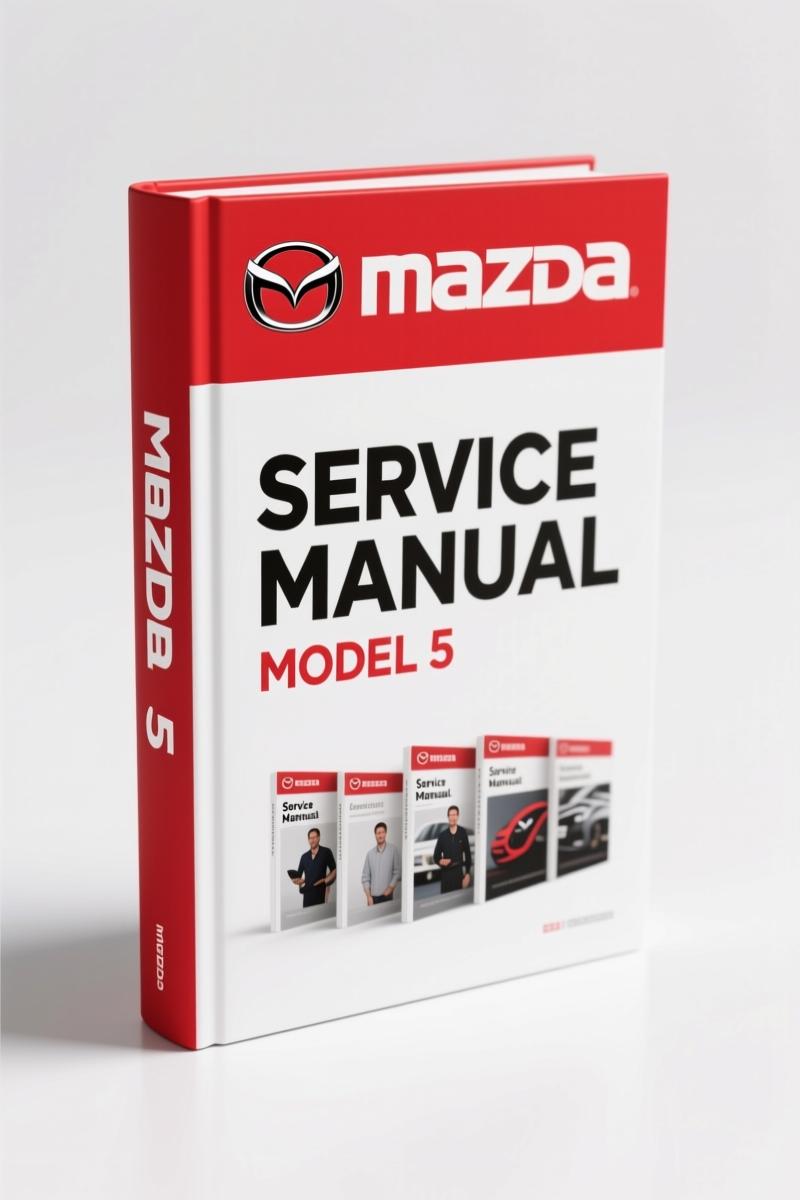
Mazda 5 2011 Training Manual – Factory Body Repair Specs
Original price was: $36.60.$30.00Current price is: $30.00.
Factory 56-page training manual for Mazda 5 body repair. Covers Nagare flow design, SRS, dimensions. OEM data only.
Description
Mazda 5 2011 Training Manual – What You Get and Why It Matters
I’ve seen too many guys pull a quarter panel off a 2011 Mazda 5 and then scratch their heads when the side curtain airbag didn’t deploy during a collision because they clipped a wire they didn’t know existed. This Mazda 5 2011 Training Manual isn’t a repair manual – the first page tells you that. It’s a model introduction document written for auto body repair centers. And if you’re planning to work on one of these things, you need to understand the structure before you grab the torch. Ford Motor Company of Southern Africa printed it in 2011, all 56 pages. It’s not aftermarket junk – it’s straight from the manufacturer.
What This Training Manual Actually Covers
Open the Table of Contents and you see five main sections: Overview, Technical Specifications, Body, Supplemental Restraint System, and Dimensions. That’s it. No wiring diagrams for the stereo. No engine rebuild procedures. But what is here matters: the Overview walks through the “Nagare Flow” design language – first full application on a Mazda production car. It explains the aerodynamic optimization that affects panel fit and paint flow. The Body section covers the unibody structure, including the extended rear quarter glass that covers the D-pillar – that’s a common rust trap if you don’t know it’s there. For a home garage guy replacing a door skin, knowing where the structural reinforcements sit is the difference between a clean job and a safety hazard.
Technical Specifications and Dimensions
Page numbers? I’m not throwing them around for every line – but when you need the wheelbase length or overall height for a suspension swap or alignment check, this manual gives you the factory numbers. The Technical Specifications section lists the exact dimensions for the 2.0 L models (Original, Individual, Active). It also notes the 6-speed manual transmission – and if you’re swapping gearboxes, always reference the correct Manual Transmission tolerances from Mazda, not a generic chart. The Dimensions section includes interior volume numbers and curb weight. That matters when you’re calculating floor jack points or shipping the car. You don’t guess those.
Supplemental Restraint System: Why It Matters
The Supplemental Restraint System (SRS) chapter is where this manual earns its keep. It details how the airbags deploy based on crash severity and occupant position. For a body shop or a serious DIYer replacing a dash or seat, you need to know the disarming procedure and the sensor locations. One wrong cut into a wiring harness and you’ve got a live airbag in your face. The manual explicitly says it’s a training document – not a repair guide – so you’ll still need a proper service manual for torque values on SRS components. That’s where the Mazda 5 Service Manual comes in. Together, these two documents give you the complete picture. And if you’re dealing with older Mazda SRS systems, check the Mazda Tribute 2005 Training Manual – Factory SRS Documentation – similar philosophy, different chassis.
Body Construction and Nagare Flow Design
The Body section shows you the “flow” lines in the sheet metal – from the front fender through the rear quarter. That’s not just styling fluff; those creases create structural rigidity and affect how the metal stretches during repair. The manual calls out the dual sliding rear doors and “easy step-in access” – which means the rocker panels have specific reinforcement plates. If you’re welding in a patch panel, you need to replicate that strength. The design also includes the five-point grille and extended rear window glass covering the D-pillar. That glass is bonded, not bolted – so plan your removal accordingly. For a deeper dive into the earlier version of this platform, the Mazda PREMACY Training Manual (2001) covers the predecessor’s structure.
Who Should Use This Manual
If you’re a home garage mechanic who wants to understand how a modern unibody minivan is put together before you start cutting, this is your textbook. Body shop trainees will get the layout of the frame rails and crush zones. But if you’re looking for piston ring end gaps or cam timing, this isn’t that manual – go grab the factory service manual. The training manual is a 56-page orientation, not a repair bible. And that’s fine – you need the big picture before the small details. The Automotive Industry Overview context helps you see why Mazda went with Nagare Flow: it’s about aerodynamic efficiency and brand identity, which directly affects parts availability and repair methods.
Source Authenticity: OEM vs Aftermarket
This is a Ford Motor Company of Southern Africa copyright document. That means the dimensions, the SRS logic, and the body structure info were written by the engineers who designed the car. Aftermarket “training manuals” are often photocopies of photocopies, with blurry diagrams and missing pages. This one is a clean scan of the original 56-page booklet. You get the exact same information that certified Mazda body repair centers received in 2011. No guesswork on bolt locations or airbag zones. I’ve been burned by third-party manuals that had the wrong curb weight by 200 pounds – that’s a liability when you’re calculating shipping or towing. OEM documentation is the only source I trust, and this site carries the real thing.
- Can I use this training manual to replace an engine in my Mazda 5?
- No. This is a body introduction training manual, not a service or repair manual. It covers design overview, dimensions, body structure, and SRS basics. You need the factory service manual for engine torque specs, wiring diagrams, and removal procedures.
- What specific years and models does this manual cover?
- It covers the 2011 Mazda 5 across three trims: 2.0 L Original, 2.0 L Individual, and 2.0 L Active. It includes details on the 6-speed manual transmission, dual sliding doors, Nagare Flow body design, and the supplemental restraint system. The manual is specific to the 2011 model year introduction – later years may have different specs.
If you’re working on a 2011 Mazda 5 and need to understand the skeleton before you start bending metal, Access the Factory Manual from AutoRepairManuals.com. It’s the same 56-page document the factory gave to their own shops. Keep it on your tablet next to the service manual – you’ll need both to do the job right.
Additional information
| Brand | Mazda |
|---|---|
| Language | English |
2 reviews for Mazda 5 2011 Training Manual – Factory Body Repair Specs
You may also like…
-
Sale!

Mazda R100 Parts Catalog – 740 Pages Factory OEM – AutoFix Global
Original price was: $66.15.$45.00Current price is: $45.00. -
Sale!
Mazda R100 Parts Catalog – 609 Pages Factory OEM Part Numbers
Original price was: $79.95.$65.00Current price is: $65.00. -
Sale!

Mazda 110 Parts Catalog – 173 Pages Factory OEM Index
Original price was: $96.20.$65.00Current price is: $65.00. -
Sale!

Mazda 1200 Parts Catalog – 366 Pages Factory OEM Documentation
Original price was: $66.60.$45.00Current price is: $45.00.
Related products
-
Sale!

1991 Electrical Schematic – 112-Page OEM Wiring Diagram for International 1000-3000 Series
Original price was: $22.75.$17.50Current price is: $17.50. -
Sale!
2004 Acura TSX Wiring Diagram – 73-Page Factory Electrical Schematics
Original price was: $15.88.$9.99Current price is: $9.99. -
Sale!
1992 Electrical Schematic – International 1000/3000/4000/2554 OEM Wiring Diagrams (132 Pages)
Original price was: $26.40.$20.00Current price is: $20.00. -
Sale!

2011 Parts Catalog – International Truck OE Parts Documentation (1786 Pages)
Original price was: $34.50.$25.00Current price is: $25.00.
diy_master –
Great workshop guide. It is very easy to read on my tablet without blur. Every torque spec is provided for Mazda 5. Highly recommended for mechanics.
Thomas B. –
Perfect workshop guide. The document is very clear. It assisted me to rebuild my Mazda 5 electrical system. Saved my repair job! Thank you.