
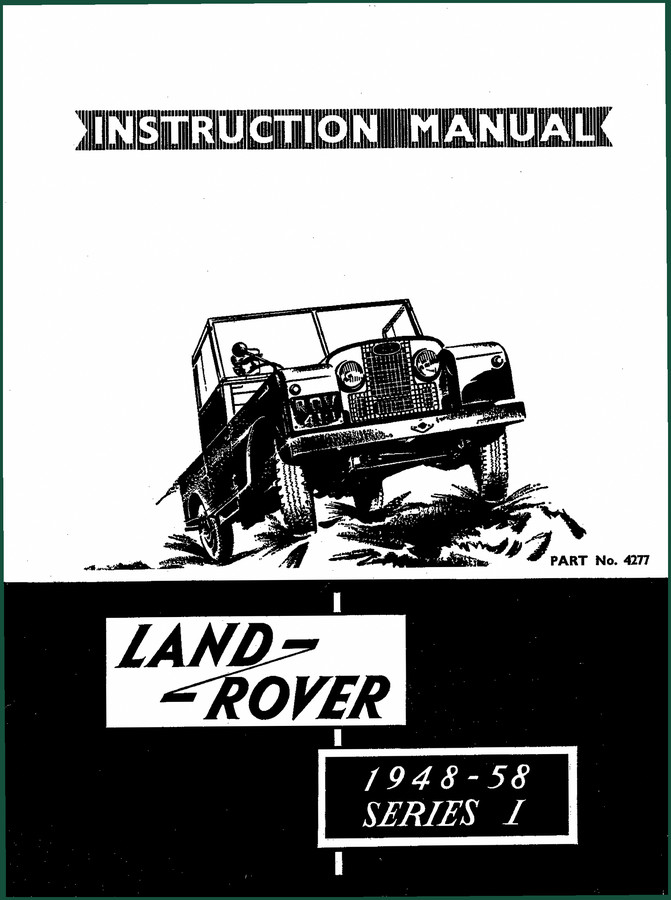
Land Rover 80, 86, 107, 88, 109 1963 User Manual – 64 Pages
Original price was: $36.45.$27.00Current price is: $27.00.
Factory Land Rover 1963 User Manual covering 80, 86, 107, 88, and 109 Series I models. 64 pages of OEM lubrication data and pre-operation checks.
Description
Land Rover 80, 86, 107, 88, 109 1963 User Manual
You’ve got a Series I Land Rover on your lift—80, 86, 107, 88, or 109—and you’re chasing a wandering idle or a gearbox that grinds. Out comes some aftermarket reprint that lists “tighten to spec” without telling you the actual ft-lbs. That’s where this 1963 Land Rover 80, 86, 107, 88, 109 1963 User Manual earns its keep. It’s the original factory booklet Rover published for the driver—not a parts catalog, not a service manual, but the actual handbook Rover expected owners to keep in the glovebox. Everything here came straight from Solihull, not from a third-party photocopier.
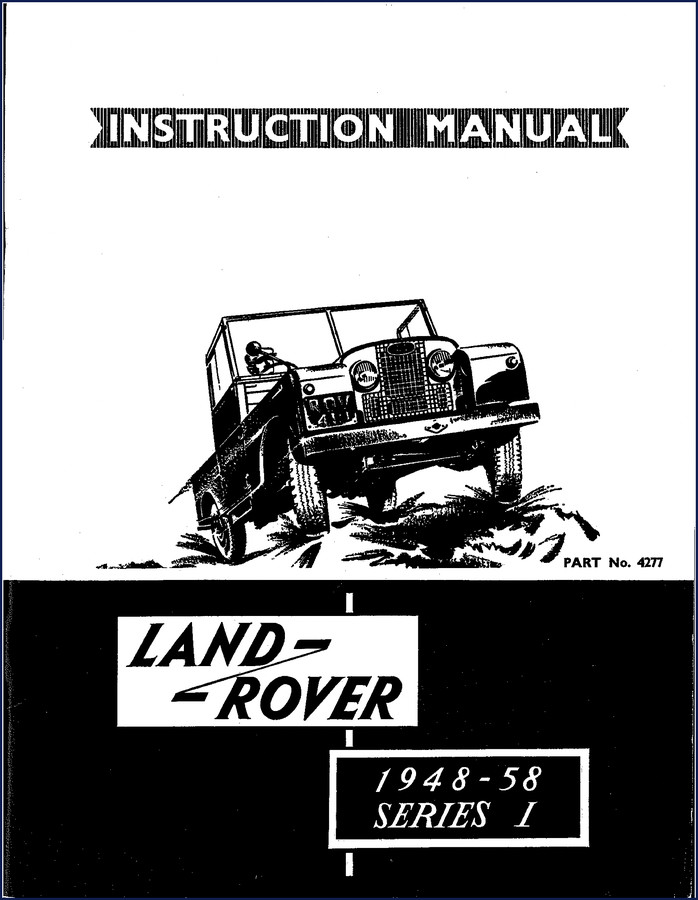
Land Rover Series I Maintenance Procedures
Open the manual and the first thing you see is the proper way to grease every nipple, adjust brake rods, and set tappet clearances. On page 3 of this 64-page document, Rover lists each model variant: Land Rover 80 (1948–53), 86 and 107 (1954–55), 88 and 109 (1956–58). Each one gets its own lubrication chart, oil capacities in imperial quarts, and tire pressures for highway and off-road use. If you’re working on a 1952 80 or a 1958 109, the procedure for the cooling system or the clutch adjustment is the same—Rover didn’t change much on the Series I until the II came along.
64 Pages of Factory Documentation
Sixty-four pages might sound thin, but this user manual packs what you actually need: starting procedure, running-in instructions, routine maintenance intervals, and the official Rover-approved way to grease the steering swivels. There’s even a section on the optional PTO and winch operation. No fluff, no exploded diagrams you can’t read—just printed text and line drawings that tell you where to put the grease gun and what part number oil filter to buy. The manual was revised in May 1963 (Publication No. IP/241/B, Part No. 4277), so it covers the entire Series I production run through 1958.
Engine Tune-Up: Factory Settings from 1963
Spark plug gap, contact breaker dwell, valve clearance—the specs are all here in the tune-up section. Rover built these engines with a side-valve four, and if you’ve ever tried to set the tappet clearances using a generic chart, you know the frustration of getting it wrong. This manual gives you the exact feeler gauge thickness for both inlet and exhaust valves when the engine is cold. No guesswork. No “adjust till it sounds right.” You get the number Rover stamped on the factory floor.
Check the Lubrication Chart on Page 3
Page 3 is where the model identification lives, but also the lubrication chart that lists every grease point on the chassis. There are 14 nipples on the front axle, 12 on the rear, and another 6 on the propshaft bearings—Rover wanted them greased every 500 miles with a specific grade of NLGI 2 grease. Miss one and you’ll hear it in the steering when the kingpins dry out. This manual tells you which ones to hit and how much grease to pump. That’s the kind of detail you don’t get from a reprint.
Does This Manual Include Torque Specifications?
Yes, embedded in the general data section—but don’t expect a full engine assembly torque chart. This is a user manual, not a shop manual. You get torque values for wheel nuts (65–70 ft-lbs), cylinder head nuts (45–50 ft-lbs), and sump drain plug (25–30 ft-lbs). For the full rebuild specs—main bearing cap bolts, connecting rod nuts—you’ll need the Land Rover Freelander Owner’s Guide Softback Hardback”>Land Rover Freelander Owner’s Guide or the Land Rover Standard Vehicle, Station Wagon, Welding Outfit Vehicle User Manual 1″>Standard Vehicle manual for later models. But for routine service and basic torques, this manual covers the critical ones.
Source Validity: Original Rover Company Publication
This PDF is a direct scan of the factory-printed booklet. The OCR excerpt shows “INSTRUCTION MANUAL PART No. 4277” and the Rover Company Ltd., Solihull address. No aftermarket publisher slapped a new cover on a pirated copy. The manual carries the official Rover Service Department stamp and the London Service Station address at Seagrave Road, Fulham. When you access this, you’re holding the same document a 1958 Land Rover owner would have read. Compare that to the crap you see on forums that says “tighten till it stops then back off half a turn.”
3 Common Questions About Using This Manual on a 1950s Land Rover
Can I use this to rebuild my engine? No—this is a user manual, not a workshop manual. It covers maintenance, adjustments, and basic troubleshooting. For full rebuild procedures you need the Series I workshop manual.
Will it tell me how to fix the brakes? It describes the brake system operation and gives adjustment specs for the rod and hydraulic cylinders, but it assumes the system is working. Bleeding instructions are included.
Does it cover the 109 pickup with the 2.0L engine? Yes, the 109 model is listed. The manual covers both petrol and diesel variants (where offered).
For further reading on the historical context of factory manuals, see the Automotive Industry Overview”>Automotive Industry Overview. And if you’re rebuilding the gearbox, refer to the Manual Transmission”>Manual Transmission article for background on early Rover synchromesh units.
If you own a Series I Land Rover—2.6-liter petrol or 2.0-liter diesel—you need this manual on your workbench. It’s the document Rover intended you to have. Access the Factory Manual now and get the original 1963 specs in your hands.
Related manuals you might need:
• Land Rover Freelander 1999 In Car Entertainment User Manual”>Land Rover Freelander 1999 In Car Entertainment User Manual
Frequently Asked Questions
- Is this the same as the workshop manual?
- No. This is the user manual—covers operation, lubrication, and minor adjustments. The workshop manual (Part No. 599255) covers full teardown and rebuild.
- Does it include wiring diagrams?
- No wiring diagrams. The Series I had a very simple 12V system; this manual describes the fuse location and bulb replacement but no schematic.
- Can I use it for a 1950 80 model?
- Yes. The manual covers all Series I models from 1948–58, including the 80. The 80 is specifically listed on page 3.
- What about the diesel engine?
- Diesel models are covered in the fuel system section, with injection pump timing and bleeding procedures. The torque specs for cylinder head nuts are the same as the petrol.
Additional information
| Brand | Land Rover |
|---|---|
| Language | English |
3 reviews for Land Rover 80, 86, 107, 88, 109 1963 User Manual – 64 Pages
You may also like…
-
Sale!
Land Rover Freelander 2003 Wiring Diagram – Factory Electrical Schematics
Original price was: $58.95.$45.00Current price is: $45.00. -
Sale!
Land Rover Defender 2007 Electrical Schematic – 338-Page OEM Circuit Data
Original price was: $53.20.$40.00Current price is: $40.00. -
Sale!
Land Rover Defender Workshop Manual – 1213 Pages of Factory Specs
Original price was: $62.80.$40.00Current price is: $40.00. -
Sale!
Land Rover Defender 1996 Workshop Manual – Factory Specs for 300Tdi
Original price was: $63.20.$40.00Current price is: $40.00.
Related products
-
Sale!

1994 Troubleshooting Manual – International 1000-4000 FBC
Original price was: $60.00.$50.00Current price is: $50.00. -
Sale!
1996 Operators Manual – International 1000-4000 Series (246 pages)
Original price was: $15.28.$9.99Current price is: $9.99. -
Sale!

2006 Service Manual – International DT 466E, 530E Diesel Engine
Original price was: $67.50.$50.00Current price is: $50.00. -
Sale!

1991 Operators Manual – International Truck OEM Specs (108 Pages)
Original price was: $13.63.$10.99Current price is: $10.99.
Richard G. –
Great OEM spec sheet. It is easily zoomable on my iPad without blur. Contains clear bolt torque specs for Land Rover. Saved my weekend project! Thanks.
Michael T. –
Highly recommended! It is very easy to read on my laptop without blur. It helped me to rebuild my Land Rover Rover electrical system. Saves me hundreds of time.
William H. –
This is exactly what I required. The scan is high-quality and easy to navigate. A must-have for any Land Rover Rover owner doing repairs. I will recommend this shop to others.