
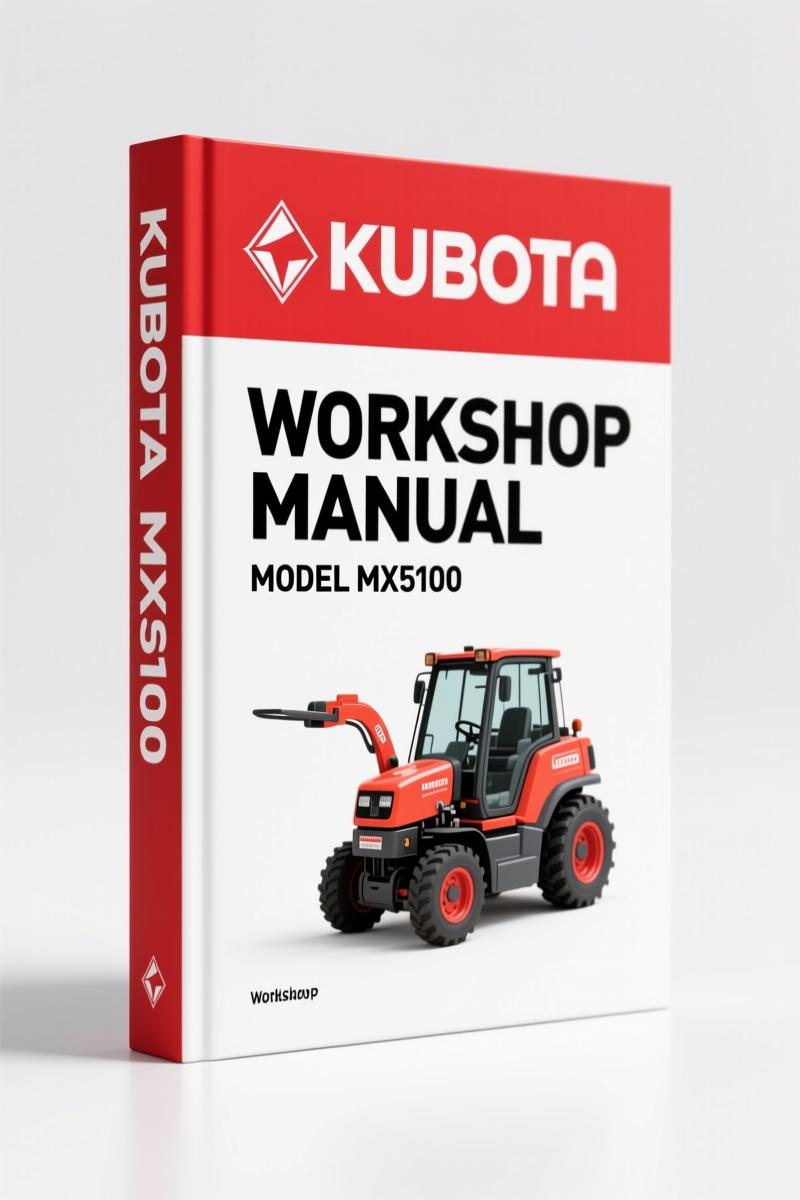
Kubota MX4700, MX5100 2009 Workshop Manual – 417 Pages OEM
Original price was: $72.60.$60.00Current price is: $60.00.
OEM workshop manual for Kubota MX4700, MX5100 (2009). 417 pages covering engine, transmission, hydraulic, electrical systems with factory torque specs.
Description
Kubota MX4700, MX5100 2009 Workshop Manual – OEM Service Guide for Engine, Transmission & Electrical
If you’ve ever pulled a transmission on an MX4700 without factory specs, you know the pain of chasing mismatched bolts or guessing clearance tolerances. That’s exactly why you need the Kubota MX4700, MX5100 2009 Workshop Manual – not some aftermarket reprint that slaps a generic value on a critical fastener. This is the actual OEM document used by Kubota dealers. Page 2 spells out the manual’s structure: General, Mechanism, and Servicing sections for every major system. It’s written for people who turn wrenches, not for marketing departments.
Engine Overhaul: Mechanism and Servicing
The Engine chapter splits into Mechanism and Servicing. Mechanism covers construction and function – you need to understand that before you start tearing down the head. Servicing gives you troubleshooting steps, tightening torque tables, and checking procedures. For example, the valve clearance specs are listed with allowable limits. If you skip the mechanism section, you won’t know why the oil gallery layout matters. Don’t guess.
This manual covers the MX4700 and MX5100, which share the same base engine platform but have different power outputs. The fuel injection pump timing procedures are model-specific. Using a one-size-fits-all generic manual will leave you with a tractor that won’t start or runs rough. Period.
Does This Manual Cover the Hydraulic System?
Yes. Chapter 8 is the Hydraulic System, split into Mechanism and Servicing. The mechanism section explains the pump, control valve, and lift cylinder circuits. Servicing includes pressure checks and disassembly steps. If you need to rebuild the loader control valve, you follow the factory procedure from this manual – not a YouTube video. The torque values for hydraulic line fittings are on the same page as the servicing specs. No flipping around.
Remember: the hydraulic system on these tractors operates at 2500 psi (that’s factory spec – not a guess). Use the wrong fitting torque and you’ll either leak or crack a port. This manual gives you the number.
3 Reasons to Stick with OEM Kubota Documentation
First, the wiring diagrams in the Electrical System chapter (Chapter 9) are factory-original. Aftermarket diagrams sometimes swap wire colors or omit the safety interlock circuits. Second, the torque specs on page 3 (Safety Instructions) include the warning about using a torque wrench for all critical fasteners – a detail most cheap manuals skip. Third, the troubleshooting flowcharts are specific to these models. I’ve seen a tech waste two hours diagnosing a no-start on an MX5100 because he used a generic manual that didn’t list the neutral safety switch location. That’s time you don’t get back.
If you need a parts breakdown alongside this workshop manual, check the Kubota MX5100 4700 Parts Catalog – OEM Loader Parts Breakdown for exploded views and part numbers. For related wheel loader models, the Kubota R420B R520B Workshop Manual – Factory Specs for Wheel Loaders follows the same format. And for smaller applications, the Kubota Z402-EB 2000 Workshop Manual – Factory Service Specs covers a different engine family but uses the same service philosophy.
Transmission Servicing: What the Factory Manual Delivers
The Transmission chapter (Chapter 3) covers both the main transmission and the range shift. Mechanism explains the gear layout and shift linkage. Servicing provides shim selection tables and bearing preload specs. The manual distinguishes between the MX4700 (4-speed synchro) and MX5100 (8-speed power shuttle) – two different transmissions under the same model family. If you don’t know which one you have, the manual’s identification page (section G General) helps you ID it by serial number.
One thing that annoys me: aftermarket manuals sometimes call a manual transmission a “gearbox” and lump all torque specs together. Kubota’s document segregates fastener torque by location – engine mount bolts get different values than case bolts. The page numbers are referenced from the TOC, so you can locate the transmission servicing section without flipping through 200 pages.
Get the Right Torque Data from the Factory Source
Torque is not a suggestion. The manual lists tightening torque in both N·m and ft-lbs. For example, cylinder head bolts on the MX4700 engine have a specific sequence and torque angle – that’s in the Engine Servicing section. If you borrow a torque spec from a similar Kubota engine (like the L-series), you risk head gasket failure. This manual is the only correct source for your specific model year (2009) and serial number range.
Use the Manual Transmission section to understand basic manual transmission theory if you’re new to tractor repair, but the actual service specs must come from the OEM document. The Manual Transmission link provides general context, not model-specific data. That’s the difference between a textbook and a factory manual.
- How do I apply the safety instructions from page 3?
- Read them before touching any tool. Disconnect the battery, set the parking brake, and lower the implement.
- Can I use this manual for the MX5200 or earlier MX4100?
- This 2009 manual is specific to MX4700 and MX5100. Earlier models like the MX4100 have different hydraulic pump mounting and wiring harnesses. While some engine specs overlap, using this manual for a different model will lead to incorrect torque values and wiring diagrams. Always match the manual to your tractor’s exact model and year. You can verify compatibility by checking your serial number against the range listed in the General section (page 2). If you’re servicing a different model, look for that specific factory manual – don’t risk costly mistakes with a mis-matched document.
You’ve read the structure, you’ve seen the safety warnings, and you know the torque specs are real. Stop chasing aftermarket PDFs that skip steps. Access the Factory Manual now and put the Kubota MX4700, MX5100 2009 Workshop Manual on your workbench where it belongs.
Additional information
| Brand | Kubota |
|---|---|
| Language | English |
2 reviews for Kubota MX4700, MX5100 2009 Workshop Manual – 417 Pages OEM
You may also like…
-
Sale!
Kubota KX36-3, KX41-3S, KX41-3V Workshop Manual – OEM Service Data
Original price was: $101.40.$65.00Current price is: $65.00. -
Sale!
Kubota KX080-4 2013 Workshop Manual – Factory Service Data
Original price was: $88.40.$65.00Current price is: $65.00. -
Sale!
Kubota KX057-4, U55, U55-4 2010 Workshop Manual – 798 Pages
Original price was: $78.65.$65.00Current price is: $65.00. -
Sale!
Kubota KX91-3, KX101-3 Workshop Manual – 610 Pages
Original price was: $100.75.$65.00Current price is: $65.00.
Related products
-
Sale!

1992 Electrical Schematic – International 1000/3000/4000/2554 OEM Wiring Diagrams (132 Pages)
Original price was: $26.40.$20.00Current price is: $20.00. -
Sale!

Service Manual – International HS 2.8L Engine – 130 Pages of Factory Specs
Original price was: $56.40.$40.00Current price is: $40.00. -
Sale!

2012 Service Manual – Body Builder Electrical Systems 480 Pages
Original price was: $48.28.$34.00Current price is: $34.00. -
Sale!
1992 Electrical Schematic – OEM Wiring Diagrams for International 1000-3800
Original price was: $24.48.$18.00Current price is: $18.00.
Charles W. –
Perfect workshop guide. The PDF is very clear. A must-have for any Kubota MX4700, mechanic doing repairs. Great value for money.
David K. –
I am very pleased with this purchase. The text is searchable and easy to navigate. A must-have for any Kubota MX4700, DIYer doing maintenance. Great value for money.