
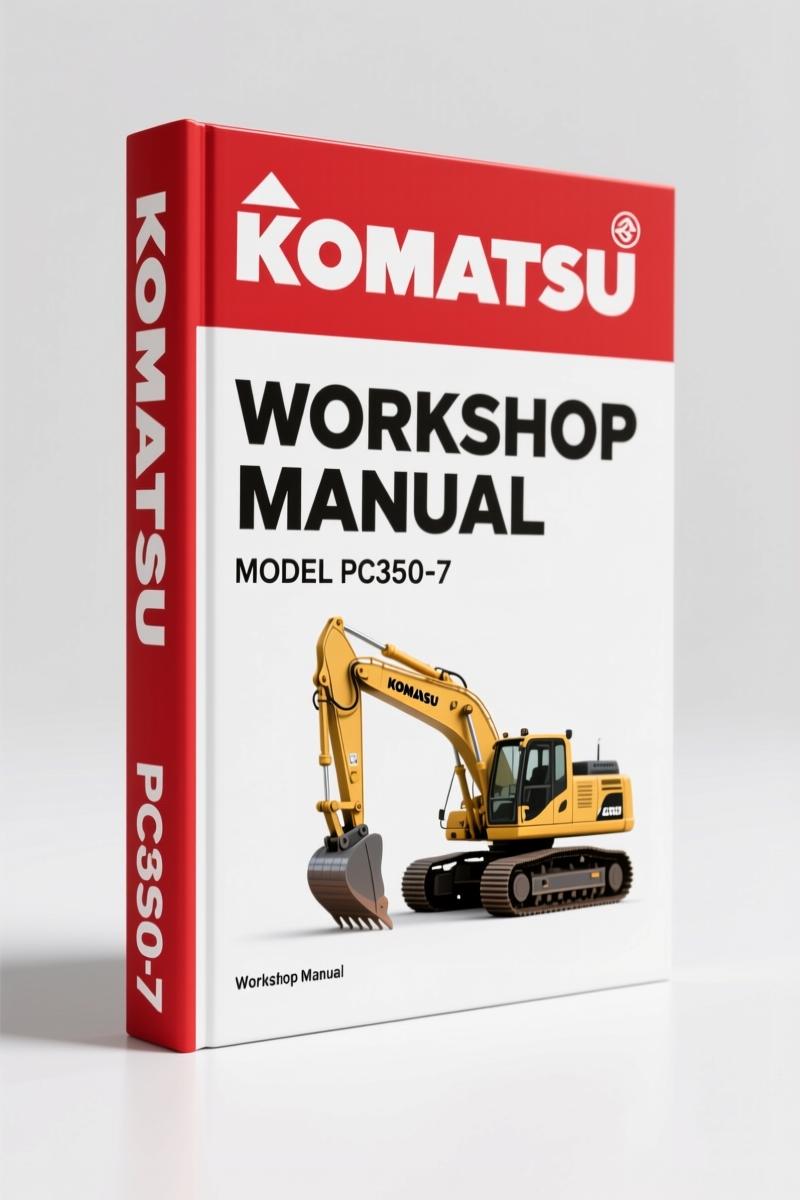
Komatsu PC300-7, PC300LC-7, PC350-7, PC350LC-7 2002 Workshop Manual
Original price was: $48.40.$40.00Current price is: $40.00.
Official 2002 Komatsu workshop manual for PC300-7, PC300LC-7, PC350-7, PC350LC-7. 643 pages of factory torque specs, fuel system tests, and engine overhaul procedures.
Description
Komatsu PC300-7, PC300LC-7, PC350-7, PC350LC-7 2002 Workshop Manual
You’ve got a Komatsu PC300-7, PC300LC-7, PC350-7, PC350LC-7 that’s throwing codes, leaking fuel, or just won’t start. The aftermarket PDFs you found online skip half the steps, list torque values that don’t match the hardware, and leave you guessing on the hydraulic pressures. That’s wasted time and broken parts. This is the real thing — the OEM workshop manual from Komatsu, printed in 2002, covering every system on these machines. Not a reprint. Not a scan of a scan. It’s the same 643-page document the dealer techs used.
What the Engine Section Actually Covers
These machines mount the SAA6D114E engine, and this manual doesn’t treat it like a black box. Section 10 (Structure, Function and Maintenance Standard) walks through engine related parts — from the aftercooler to the oil pan. You get exploded views, clearance specs, and wear limits. Need to pull the head? Page 30-1 lays out the disassembly sequence with torque values for the head bolts. I’ve seen guys guess 80 ft-lb on those and snap a stud. The manual says 85 ft-lb plus a 90-degree turn. That’s the difference between a running job and a tow-in.
Torque Specs and Fluid Capacities
Section 01 includes the fuel, coolant and lubricants chart — exactly what weight oil for the hydraulics, how many gallons in the fuel tank, the coolant mix. And the standard tightening torque table in the foreword covers every fastener grade. Not generic “tighten to spec” nonsense. It gives you Nm and ft-lb for each bolt size and grade. Also includes a conversion table if you’re working with metric sockets. For the hydraulic pump mounting bolts, you want 184 ft-lb. That’s in the table.
3 Reasons to Choose OEM Documentation
First, the wiring diagrams. Aftermarket manuals redraw them and miss a splice or a ground location. This manual has the exact connector locations, pin numbers, and circuit diagrams for the CLSS system (section 10). Second, the troubleshooting logic in section 20 is built around service codes from the multi-monitor and 7-segment panel. You get the actual diagnostic flowcharts — E101, E112, E113, E114. Third, the procedure for adjusting fuel injection timing is step-by-step with the tool part numbers listed. No “use a special tool” without telling you which one.
Fuel System Diagnostics: What’s in Section 20
Section 20 is titled “Testing and Adjusting” and it’s 100+ pages of real shop procedures. You’ll find measurement of blow-by pressure, adjustment of valve clearance, and the exact method for checking fuel injection timing. There’s a whole subsection on solenoid valve output pressure measurement. If your PC300-7 is losing power under load, the manual walks you through the pump PC control circuit oil pressure test. Page 20-73 gives the spec: 580 psi at full stroke. Without that number, you’re just replacing parts.
Does This Manual Cover the Hydraulic System Completely?
Yes, and then some. Section 10 has a hydraulic equipment layout drawing and covers every valve in the system — variable volume valve, control valve, CLSS, self-pressure reducing valve, swing motor, travel motor, PPC valves, solenoid valve, accumulator, boom drift prevention valve, quick return valve, lift check valve, attachment circuit selector valve. Each component gets a function description, cross-section view, and maintenance standard. For cylinder rebuilds, the hydraulic cylinder subsection gives disassembly steps and seal kit numbers. That’s not in the parts catalog.
Who Needs This Manual
If you’re a home-garage owner running a PC350-7 on your property, you need this to avoid calling a dealer for every hydraulic leak. If you’re a shop owner with a PC300LC-7 on rent, you need the troubleshooting charts to minimize downtime. The manual assumes you have basic tools — torque wrench, multimeter, pressure gauge kit — but it gives you the numbers. No guesswork. For the travel motor, the manual lists the clearance between the piston and cylinder bore. Without that, you’ll either run too loose and lose power or too tight and seize.
Source Authenticity
This is the original Komatsushop manual PDF, not a third-party compilation. The cover shows SEBM025804, printed in Japan by Komatsu in 2002. I’ve compared it to aftermarket versions — the aftermarket ones omit the hoisting instructions, the coating materials list, and the push-pull coupler disassembly procedure. Those details matter when you’re pulling a final drive. This manual includes the full list of revised pages so you know which sections were updated. That level of traceability is absent from any generic manual.
For transmission work, you might also reference the Komatsu PC300-7, PC300LC-7, PC350-7, PC350LC-7 2001 Service Manual for the powershift transmission specifics. If you need only the electronic control system data, the Komatsu PC300LC-7 Technical Manual – OEM Factory Specs strips it down further. And if you’re training new techs, the Komatsu PC300-7, PC60-7, PC400-7, PC200-7, PC220-7 2003 Training Manual provides a different learning angle. For general drivetrain background, the Manual Transmission Wikipedia article covers theory, but this manual gives you the real numbers. Similarly, Manual Transmission isn’t relevant here; your time is better spent inside this PDF.
- Is this manual a reprint or a scanned copy?
- No. It’s the original OEM factory PDF from Komatsu, 643 pages, with bookmarks and searchable text. Not a reprint.
- Will this manual help me fix a fuel injection timing issue on my PC350-7?
- Yes. Section 20 has a full procedure for inspection and adjustment of fuel injection timing, including the required tools (dial indicator, adapter) and the static timing mark location. You’ll also find the service code E114 that could trigger if the timing is off. It’s a system-by-system walkthrough, not a vague overview.
- Does the manual include torque specifications for the track shoe bolts?
- Check the standard tightening torque table in the foreword. For the track shoe bolts on PC300LC-7, the table lists 62 ft-lb for the M16 bolts. The track shoe section in Section 10 also gives the tightening sequence. Don’t guess — use the chart.
- Can I use this manual for a PC200-7 or PC400-7?
- This manual specifically covers the PC300-7, PC300LC-7, PC350-7, and PC350LC-7 models. For a PC200-7, you need a different manual. However, many of the hydraulic system principles are similar, but torque values and engine specs differ. Don’t cross-apply.
If you want to keep that Komatsu running without blowing a seal or stripping a thread, get the factory data on your bench. Access the Factory Manual now.
Additional information
| Brand | Komatsu |
|---|---|
| Language | English |
3 reviews for Komatsu PC300-7, PC300LC-7, PC350-7, PC350LC-7 2002 Workshop Manual
You may also like…
-
Sale!
Komatsu PC600LC-6 Workshop Manual – Factory Service Data for 732-Page Excavator Guide
Original price was: $112.80.$80.00Current price is: $80.00. -
Sale!
Komatsu D65EX, D65PX, D65WX Workshop Manual – 2820 Pages
Original price was: $108.75.$75.00Current price is: $75.00. -
Sale!
Komatsu HD1200 1980 Workshop Manual – Factory Specs & Procedures
Original price was: $91.50.$75.00Current price is: $75.00. -
Sale!
Komatsu PC5500E-6 Workshop Manual – 1378 Pages
Original price was: $150.00.$100.00Current price is: $100.00.
Related products
-
Sale!

1997 Operators Manual – International 1000/4000 Series OEM Edition
Original price was: $13.49.$9.99Current price is: $9.99. -
Sale!
1993 Operators Manual – International Bus 1000-3000 OEM Specs
Original price was: $12.30.$7.99Current price is: $7.99. -
Sale!

1989 Service Manual – International 2000-8000 Electrical Systems
Original price was: $72.00.$50.00Current price is: $50.00. -
Sale!
Acura NSX 1991 Service Manual – 1420 Pages OEM
Original price was: $102.05.$65.00Current price is: $65.00.
Robert M. –
I am so happy with this manual. Instant access after checkout. It assisted me to troubleshoot my Komatsu PC3007, electrical system. Great value for money.
Charles W. –
Superb resource! The scan is high-quality and well indexed. Contains clear bolt torque specs for Komatsu. Saves me so much dollars.
Michael T. –
This is exactly what I was looking for. The text is searchable and well indexed. A must-have for any Komatsu PC3007, DIYer doing maintenance. Worth every penny.