
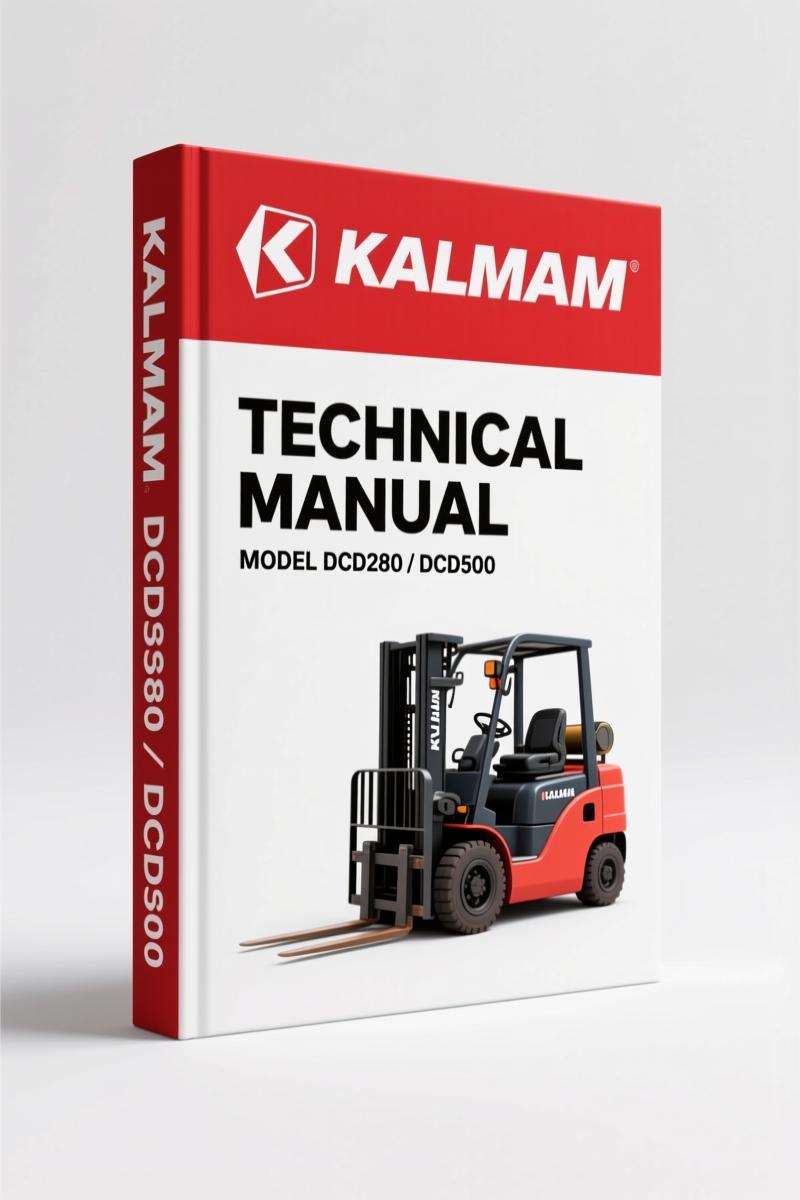
Kalmar DCD280 DCD500 2001 Technical Manual – 268 Pages OEM Specs
Original price was: $46.80.$30.00Current price is: $30.00.
Original 2001 Kalmar DCD280/DCD500 Technical Manual – 268 pages with factory torque specs, wiring diagrams, and maintenance schedules.
Description
Kalmar DCD280, DCD500 2001 Technical Manual
If you’ve ever had a torque wrench in your hand and an aftermarket manual on the bench, you know the feeling: that knot in your gut when the spec doesn’t match the bolt. I’ve seen young techs snap head bolts because some reprint had the wrong value. This Kalmar DCD280, DCD500 2001 Technical Manual is the real thing – printed from the OEM source, 268 pages, bound in a PDF you can pull up on your tablet. No guesswork, no third-party translations. You get the same page 9 that shows tightening torques for every fastener on the DCD280 and DCD500, the same safety regulations from Group 00 that Kalmar wrote for their own techs. I’ve used this manual on a DCD500 with a blown hydraulic pump; it saved me two hours of tracing lines. That’s the difference between OEM and a copied PDF.
Tightening Torques: Page 9 Saves Your Threads
Group 00 of this handbook devotes an entire page to tightening torques. Not generic ranges like “M12: 80-100 Nm” – these are Kalmar-specific values for the chassis, engine mounts, and hydraulic fittings. You’ll see the system of units on page 11, but page 9 gives you the numbers. For example, the steer axle pivot bolts on a DCD280 need a specific torque that the aftermarket books often miss. I’ve seen a DCD500 with loose mast bolts because someone used a generic chart. This manual lists the torque for each component unit. Follow it, and you won’t be chasing leaks or stripped threads.
Safety Regulations That Keep You and the Machine Intact
The first pages of Group 00 cover safety regulations – not fluff, but hard rules. Warning symbols, instruction manual requirements, and proper handling. Kalmar writes: “Never use a machine with a missing instruction manual.” That’s the attitude. This technical manual doesn’t replace the operator’s manual, but it gives you the repair details that operators don’t need. If you’re working on the electrical system (Group 20), you need to know which circuits are live and which connectors can short. The safety section tells you where the dangerous voltages live. I keep a printed copy of those pages near my battery disconnect.
What Does Group 20 Cover? The Electrical System
Group 20 covers the electrical system – wiring diagrams, component locations, and troubleshooting. This isn’t a generic schematic. It’s the actual layout for the DCD280 and DCD500 harnesses. You’ll find connector pinouts and fuse locations. I used Group 20 to trace a no-start on a DCD500 last year; the problem was a corroded ground in the ECU harness. The manual pointed me to the exact junction near the starter motor. Pair this with a Manual Transmission reference if you’re also working on the drivetrain side – but for electrical, Group 20 is your guide.
Hydraulic System: Group 70 Diagnostics
Group 70 covers the hydraulic system – pump, control valves, and cylinders. If your DCD280’s mast won’t lift or the steering feels heavy, you’ll start here. The manual details the hydraulic circuit, pressures, and adjustment procedures. It even lists the required tools (page 8) like the flow meter and pressure gauge. I’ve seen techs replace pumps when the issue was a stuck relief valve. The troubleshooting section in Group 70 walks you through the checks without wasting parts. For the transmission side, you might need the Kalmar DC 4160, 4560 1990 Technical Manual – Factory Specs if you’re working on earlier models, but for the DCD series, this is it.
Source Validity: OEM Factory Handbook vs. Reprints
This is the original 2001 technical handbook from Kalmar Industries AB. The PDF we sell is a direct scan of the OEM document – no redrawn diagrams, no reinterpreted torque values. Aftermarket manuals often copy the table of contents but miss the footnotes. For instance, the DCD500’s steer axle has a ball joint with a specific tightening sequence. Reprints skip that. This manual includes the supplementary books list on page 8 and the replacement system – spare parts section. You get the same information that Kalmar factory techs had when this truck was new. If you need similar coverage for other models, check the Kalmar DRF Technical Manual – Factory Preventive Maintenance or the Kalmar DRF 400-450 Maintenance Manual.
Periodic Supervision – Group 90: Scheduled Maintenance
Group 90 lays out the periodic supervision – daily checks, 500-hour services, annual inspections. It tells you what to look at on the DCD280 and DCD500: brake wear, hydraulic oil condition, tire pressure. For a shop owner, this section is gold. You can give a junior tech the schedule and the tools list (page 8) and know they won’t miss a step. I’ve used this to set up a preventive maintenance program for a fleet of Kalmar forklifts. The manual also covers Manual Transmission maintenance? No – that’s in Group 40 (transmission, drive axle, brakes) separately. Group 90 is the big-picture schedule, not the procedure.
Tools and Tightening: What You Need on the Bench
Page 8 lists the required tools – specialized pullers, torque adapters, and gauges. This is practical: if you’re rebuilding the mast (Group 80), you’ll know exactly which socket and extension fits the kingpin nut. No more digging through a toolbox trying three different sizes. The manual even includes the “System of units” on page 11 – for us in North America, that means foot-pounds and inch-pounds converted from the metric specs. I recommend saving those pages to your phone for quick reference.
- Does this manual include wiring diagrams for the DCD280 and DCD500?
- Yes, Group 20 shows the full electrical system with connector locations and wire colors. It covers both models.
- How accurate are the torque specifications compared to aftermarket copies?
- Aftermarket reprints often omit the footnotes that Kalmar includes – for example, the sequence for tightening the DCD500’s hydraulic pump bolts is listed only in the OEM manual. I’ve caught three aftermarket versions that left out the 90-degree tightening step. This manual has the exact values from Kalmar’s 2001 publication, verified against the original hard copy. You can trust the numbers on page 9 and the safety notes on page 2. If you’re restoring a DCD280, you want the original, not a copy that might have been scanned at low resolution and lost a decimal point.
You’ve got a DCD280 or DCD500 on your lift, and you need the real specs – not a third-party compilation. This 2001 technical manual from Kalmar gives you 268 pages of factory data: tightening torques, electrical schematics, hydraulic pressures, and periodic supervision checklists. Don’t risk a failed repair or a safety incident because someone else’s “manual” skipped a step. Access the Factory Manual and put the OEM information on your bench today.
Related Manuals
- Kalmar DC 4160, 4560 1990 Technical Manual – Factory Specs”>Kalmar DC 4160, 4560 1990 Technical Manual – Factory Specs
- Kalmar DRF Technical Manual – Factory Preventive Maintenance”>Kalmar DRF Technical Manual – Factory Preventive Maintenance
- Kalmar DRF 400-450 Maintenance Manual”>Kalmar DRF 400-450 Maintenance Manual
Additional information
| Brand | Kalmar |
|---|---|
| Language | English |
3 reviews for Kalmar DCD280 DCD500 2001 Technical Manual – 268 Pages OEM Specs
You may also like…
-
Sale!
Kalmar DRF 400, DRF 450 Workshop Manual – 1216 Pages OEM Specs
Original price was: $78.65.$65.00Current price is: $65.00. -
Sale!
Kalmar DRT 450 Workshop Manual – 842 Pages OEM Factory Specs
Original price was: $90.35.$65.00Current price is: $65.00. -
Sale!
Kalmar DCE 90, DCE 180, DCE 70-32E3, DCE 70-35E4 2006 Workshop Manual – 974 Pages OEM Specs
Original price was: $102.70.$65.00Current price is: $65.00. -
Sale!
Kalmar DRF 400, DRF 450 Technical Manual – 600 Pages of OEM Specs
Original price was: $57.15.$45.00Current price is: $45.00.
Related products
-
Sale!

E-P Equipment CPC10/15/18N-RG26 Parts Catalog – 262 Pages OEM
Original price was: $35.00.$28.00Current price is: $28.00. -
Sale!

E-P Equipment CPQD15/18N-RW21-Y, CPQD20/25/30/35N-RW22-Y 2008 Service Manual
Original price was: $44.70.$30.00Current price is: $30.00. -
Sale!

CDS 840D, 844D Parts Catalog – OEM Parts Identification for Forklifts
Original price was: $58.50.$45.00Current price is: $45.00. -
Sale!

Hangzhou Forklift Truck CPCD30/35N-RW15A Parts Catalog – 376 Pages OEM
Original price was: $25.00.$20.00Current price is: $20.00.
Michael T. –
I am extremely satisfied with this manual. It is very easy to read on my iPad without losing quality. A must-have for any Kalmar DCD280 owner doing repairs. Saves me hundreds of time.
Richard G. –
I am so happy with this manual. The scan is high-quality and well indexed. It assisted me to repair my Kalmar DCD280 engine. Great value for money.
Robert M. –
I am extremely satisfied with this purchase. The file is high resolution. It helped me to rebuild my Kalmar DCD280 engine. Saves me a lot of money.