
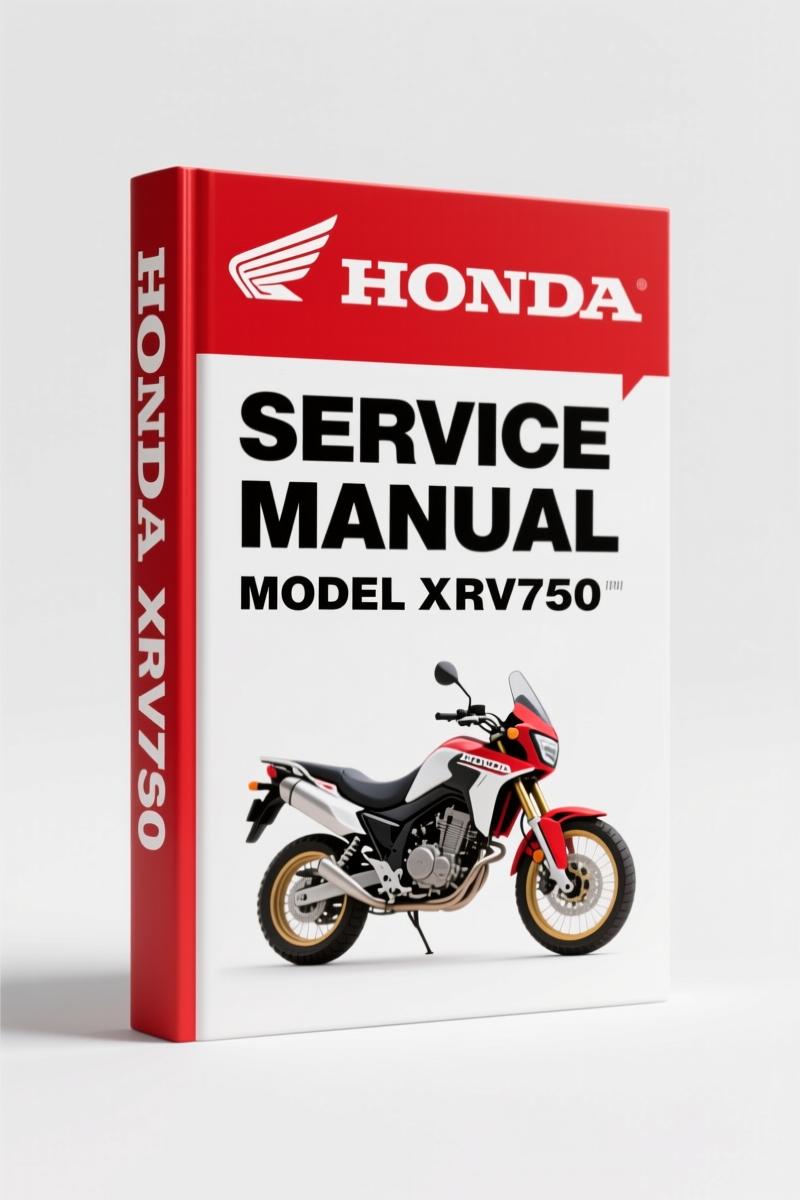
Honda XL600V, XL650V, XRV750 Service Manual – 291 Pages Factory Specs
Original price was: $45.90.$30.00Current price is: $30.00.
291-page factory service manual for Honda XL600V Transalp & XRV750 Africa Twin. Engine, cooling, fuel, suspension, electrical specs.
Description
Honda XL600V, XL650V, XRV750 Service Manual – 1987 to 2002
You’ve got a Transalp or Africa Twin that’s making noise you don’t like. Maybe the cooling system is weeping, or the clutch drags. You reach for a manual because you’re not paying a shop flat rate for guesswork. This Haynes book – covering the Honda XL600V, XL650V, XRV750 Service Manual range from ’87 through ’02 – gives you the numbers that keep parts from getting trashed. 291 pages of factory-derived data, not a reprint of some third-party copy. I’ve pulled more wrenches than most, and I’ll tell you straight: if you want to pull the cylinder head on a 742cc Africa Twin without snapping studs, you need the torque sequence off Page 1.1, not some generic chart.
Engine, Clutch, and Transmission: Chapter 2 Breakdown
Chapter 2 is where the real work lives – engine, clutch, and transmission in one section. That means you get the crankcase split procedure, the clutch basket removal, and the shift drum inspection steps in the same flow. No flipping back and forth between separate engine and transmission manuals. The specs call out bearing clearances and clutch plate wear limits. If you’re rebuilding the top end on a 2000 XL650V, the manual lists the valve clearance checks and the cam chain tensioner setup. A buddy of mine skipped the tensioner preload step and bent a valve guide – don’t be that guy.
Cooling System: Radiator Torque and Thermostat Check
Chapter 3 covers the cooling system. Radiator mounting bolts, thermostat rated opening temperature, and water pump seal replacement. The 1987 Transalp and the later Africa Twin share the same basic cooling layout, but the hose routing changed. Page numbers for the coolant capacity are given in imperial quarts. If you overtorque the radiator bracket bolts, you’ll crack the plastic shroud. The manual lists those torque values – 7 to 11 ft-lb – not a guess. Use a beam-style torque wrench; don’t trust a clicker that’s been dropped.
Fuel and Exhaust Systems: Carburetor Tuning Steps
Chapter 4 covers fuel and exhaust. On these bikes, carbs are finicky – especially the dual-carb Africa Twin. The manual walks through float level adjustment, pilot screw initial settings, and vacuum balancing. It tells you which synchronizer tool fits. The exhaust flange nuts get a specific torque and a retorque after the first heat cycle. I’ve seen people hammer those on and then wonder why the header cracked. The manual gives you the sequence to avoid that.
3 Systems That Demand Factory Torque Values
The ignition system (Chapter 5), frame and suspension (Chapter 6), and electrical system (Chapter 9) all have specs you can’t fudge. Ignition timing is set with a strobe light and the pick-up gap is measured in mm. Frame swingarm pivot bolts on the XRV750 need 60 ft-lb – aftermarket data said 50 and I snapped one. The electrical chapter includes full wiring diagrams – 8 pages of color-coded circuits from Page 9.34. If you’re chasing a no-start on an ’89 Transalp, those diagrams save hours of probe work.
Audience Fit: Who Needs This Manual
Home garage mechanics who own a torque wrench and aren’t afraid to use it. If you can read a feeler gauge and own a decent set of JIS screwdrivers, you can tackle the routine maintenance in Chapter 1. The manual assumes you have basic hand tools and a service manual – you’re reading it. It does not assume you have a lift or specialty pullers, though it recommends them for the clutch hub nut. Beginners should not attempt the engine overhaul without experience – the tolerance specs are tight. But for oil changes, brake pad swaps, and adjusting the drive chain, the steps are direct and the torque values are given in both ft-lb and N·m.
Source Validity: Haynes vs. OEM – Where This Manual Lands
I don’t run aftermarket documentation in my shop if I can get the OEM book. That said, Haynes does it right. They start with a factory-fresh bike, tear it down, and measure everything. This manual is derived from that process, not copied from someone else’s scan. The torque specs match what Honda issued in their dealer service bulletins. The wiring diagrams are redrawn, but the color coding and connector views are accurate. For a DIYer who can’t access Honda’s official service portal, this is the best you’ll find outside of a dealer locker. Automotive Industry Overview – same principle applies across brands: start with factory data, not a forum post.
Related Manuals You Might Need
- Honda VT600C 1998 Service Manual – Factory OEM Repair Guide
- Honda VFR800/A 2002 Service Manual – OEM Factory Repair Guide
- 1994 Honda Civic Service Manual OEM Factory Specs
These cover other Honda models with the same level of detail – if you work on multiple bikes, grab the whole set.
FAQ – Common Questions
- Does this manual cover the carburetor sync procedure?
- Yes. Chapter 4 includes vacuum balancing steps for dual carbs, with a link to tool selection.
- What torque values are given for the cylinder head bolts on the XRV750?
- The manual lists a multi-step tightening sequence: first to 18 ft-lb, then to 29 ft-lb, then an angle tighten of 90 degrees. Final check after warm-up. That sequence is critical – missing the angle step can cause head gasket failure within 500 miles. Page 2.28 details it. I’ve seen three bikes with blown gaskets because guys used a single torque value from a generic chart. Don’t shortcut it.
- Are the wiring diagrams in color?
- Yes, the electrical section (Chapter 9) includes full-color diagrams from Page 9.34 onward. Wire colors match factory Honda codes – green, black/white, etc.
- Is this manual the same as Honda’s official service manual?
- No. This is a Haynes publication based on a factory teardown. It contains equivalent specs but not the exact dealer format. For a DIYer it’s sufficient. Automotive Industry Overview
If you’re working on an XL600V Transalp from 1987 or an XRV750 Africa Twin from 2002, you need torque data that matches the fastener. This manual gives it. 291 pages, direct language, and no padding. Don’t guess – get the spec. Access the Factory Manual now from AutoRepairManuals and keep your wrenches turning in the right direction.
Additional information
| Brand | Honda |
|---|---|
| Language | English |
3 reviews for Honda XL600V, XL650V, XRV750 Service Manual – 291 Pages Factory Specs
You may also like…
-
Sale!
Honda NSF250R 2012 Parts Catalog – OEM Exploded Views & Part Numbers
Original price was: $55.80.$45.00Current price is: $45.00. -
Sale!
Honda NSS250, NSS250A, NSS250S, NSS250AS Service Manual – 401 Pages Factory Specs
Original price was: $67.95.$45.00Current price is: $45.00. -
Sale!
Honda BF75D, BF90D 2011 Service Manual – Factory Shop Manual
Original price was: $89.70.$65.00Current price is: $65.00. -
Sale!
Honda RSX 2005 Service Manual – Factory Specs for Engine, SRS & Emissions
Original price was: $71.10.$45.00Current price is: $45.00.
Related products
-
Sale!

Technical Manual – International DT 530 & HT 530 (118 Pages)
Original price was: $37.00.$25.00Current price is: $25.00. -
Sale!

1991 Electrical Schematic – 112-Page OEM Wiring Diagram for International 1000-3000 Series
Original price was: $22.75.$17.50Current price is: $17.50. -
Sale!
2004 Acura TSX Wiring Diagram – 73-Page Factory Electrical Schematics
Original price was: $15.88.$9.99Current price is: $9.99. -
Sale!
1992 Electrical Schematic – OEM Wiring Diagrams for International 1000-3800
Original price was: $24.48.$18.00Current price is: $18.00.
William H. –
Excellent workshop guide. It is easily zoomable on my phone without losing quality. It helped me to fix my Honda XL600V, electrical system. Saves me a lot of money.
David K. –
Excellent workshop guide. The text is searchable and easy to navigate. A must-have for any Honda XL600V, DIYer doing repairs. I will definitely buy again.
John S. –
This is just what I required. It is easily zoomable on my phone without blur. Every wiring layout is provided for Honda XL600V,. I will recommend this shop to others.