
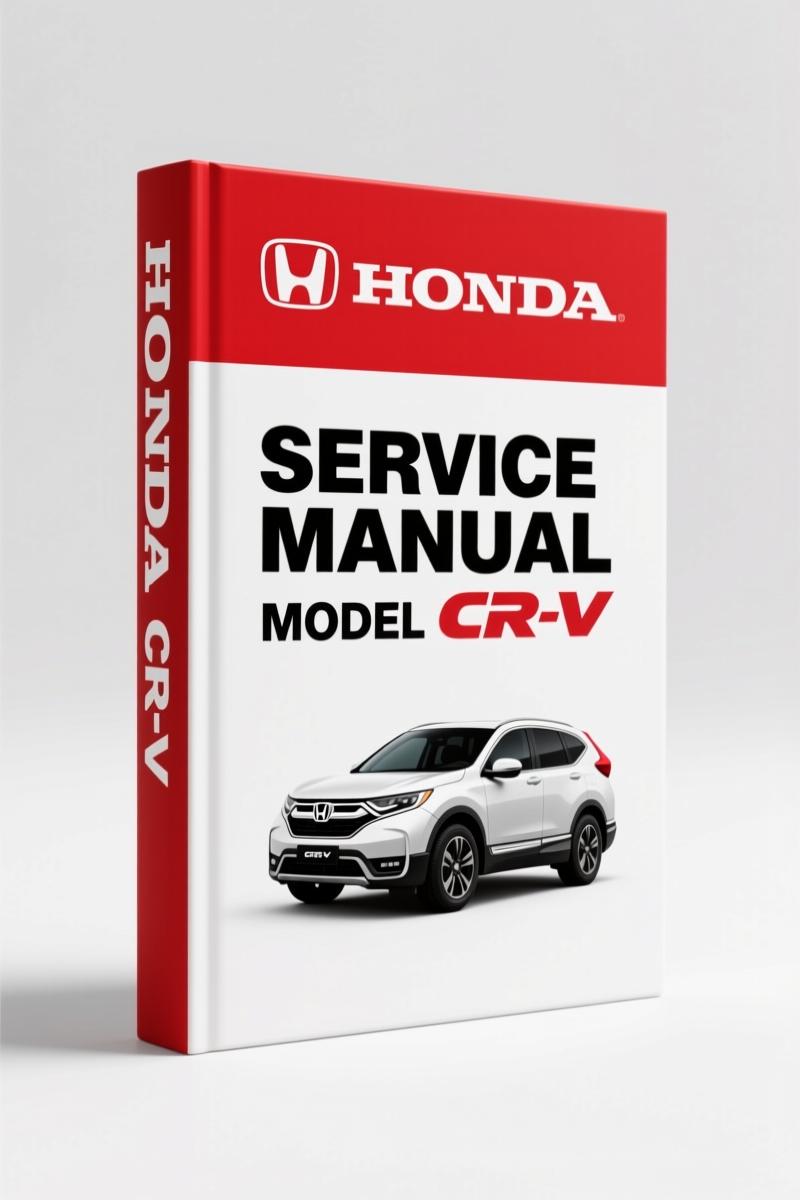
Honda CR-V Service Manual – 1395 Pages OEM Factory Specs
Original price was: $38.75.$25.00Current price is: $25.00.
1395-page factory service manual for Honda CR-V 1997-2000. Covers engine, electrical, cooling, fuel, suspension, ABS with OEM torque data.
Description
Honda CR-V Service Manual – 1997-2000: The Factory Binder Your Shop Needs
If you’ve ever had a 1997-2000 Honda CR-V on your lift with a mystery leak or a no-start, you know the cost of guessing. You chase a wiring diagram from a third-party site, find a torque spec that doesn’t match the bolt you just snapped, and suddenly you’re out an afternoon and a cylinder head. The Honda CR-V Service Manual (1395 pages) is what Honda’s own techs used. It’s the same binder that sat in the dealer service bay, and it’s the only way to get the factory sequence on every job. I’ve torqued head bolts on these B20 engines more times than I can count, and I won’t put a wrench on one without the factory numbers in front of me.
1395 Pages of Factory Procedure
This isn’t a reprint of a Chilton or a Haynes rehash. It’s the original Honda publication, first edition 11/99, covering the 1997 through 2000 model years. Every section has its own thumb index tab, so you can flip directly to Engine, Electrical, Cooling, Fuel and Emissions, Suspension, or ABS without thumbing through a table of contents. The manual is divided into 24 sections, each with an exploded view index that lists bolt torques, thread sizes, and page references. You don’t waste time hunting for the right socket – it’s all laid out in the same order Honda assembled the vehicle.
What Sections Cover the Engine and Electrical Systems?
Engine Electrical is its own section, covering the starting and charging system, ignition timing, and ECM inputs. The ENGINE section includes full disassembly, inspection, and reassembly of the B20B and B20Z. Cooling gets its own section with thermostat specs, water pump torque, and radiator cap pressure test numbers. Fuel and Emissions covers the multi-point injection system, idle speed control, and the EVAP system. If you’re chasing a check engine light on a 1999 CR-V, the factory diagnostic trees in the Fuel and Emissions section will save you from swapping parts you don’t need.
Cooling System: Factory Diagnostics and Specs
Overheating complaints on these CR-Vs are common. The manual gives you the coolant capacity (1.6 gal for the B20 with rear heater, 1.4 gal without), the thermostat opening temperature (176–180 °F), and the water pump bolt torque sequence. Page 73 of the Cooling section lists the charge pressure for the radiator cap (15–20 psi). Use that number before you condemn a water pump. I’ve seen three shops replace water pumps on a car that just needed a cap.
Get the Torque Specs for Suspension and ABS
The Suspension section covers the front and rear struts, control arms, and stabilizer bar. You need the factory torque for the damper pinch bolt (32 lb-ft) and the lower arm ball joint nut (40–47 lb-ft). The ABS section is separate from the base Brakes section – it includes the modulator valve, wheel speed sensor resistance specs, and the bleed sequence for the ABS unit. If you don’t follow the factory bleed procedure, you’ll get a soft pedal that won’t self-correct. The manual also includes a full troubleshooting flow chart for ABS codes. I’ve seen more than one tech replace a controller when the issue was a corroded sensor ring.
3 Reasons to Trust the OEM Manual Over Aftermarket
First, the torque values are the ones Honda tested on the assembly line. Aftermarket manuals often round numbers to the nearest 5 lb-ft, which can overstress a bolt or leave a joint loose. Second, the wiring diagrams in the Electrical section use Honda’s own color codes and connector views – no generic pinouts. Third, the manual includes the Restraints section with SRS precautions. The Body section covers interior trim removal, which is critical when you’re fishing a broken seat mount. Aftermarket manuals skip the SRS warnings. This one doesn’t. For a broader look at why OEM documentation matters, see the Automotive Industry Overview on official manufacturer resources. For a related manual tailored to the same generation, check out the Honda CR-V Service Manual. If you want the specific section on safety warnings and SRS handling, the Honda CR-V 1997-2000 Service Manual – Section: Special Information gives you the exact text. For later models, the Honda CR-V Service Manual (2007-2009) – Factory Brake & VSA covers the next generation.
Fuel and Emissions: What the Manual Covers
The Fuel and Emissions section is 40+ pages of diagnostic procedures, including fuel pressure test (38–46 psi at idle), injector resistance (10.5–13.5 ohms), and the EGR valve test. The manual also includes the under-hood emissions control label location and the vacuum hose routing diagram. If you’re dealing with a P0420 code, the factory test for the catalytic converter efficiency is in this section. You won’t find that level of detail in a generic repair book.
For further reading on the importance of factory documentation in the Automotive Industry Overview, cross-reference this with other manufacturer resources.
Who Needs This Manual?
DIYers who have a 1997-2000 CR-V and want to do their own timing belt, head gasket, or suspension work. Shop owners who want to cut down on comebacks by giving their techs the correct torque values. Beginners who are willing to follow a factory procedure step by step – this manual assumes you have basic tools, but it doesn’t skip the safety warnings. The SRS section alone is worth the price if you ever touch the steering wheel or airbag module.
Source Authenticity: OEM vs Aftermarket
This is a direct scan of the official Honda service manual, published by Honda Motor Co., Ltd. Service Publication Office. It’s the same book that came with the dealer’s tool box. Aftermarket manuals like Haynes or Chilton are written by a third party who disassembles the car once and writes a generic procedure. Those manuals are fine for changing oil, but they don’t include the factory torque sequences, the real-time 4WD system precautions, or the specific ABS bleed procedure. If you care about the bolt staying tight, get the OEM version.
- Does this manual cover the 1999 CR-V model?
- Yes, it covers 1997 through 2000 model years, including the 1999 CR-V.
- Are the torque values for the ABS unit listed in the manual?
- Yes, the ABS section includes torque specs for the modulator brackets, wheel speed sensor bolts, and the hydraulic unit mounting nuts. It also includes the required bleed sequence for the ABS modulator – a step most aftermarket manuals skip entirely. Page numbers vary by section, but the ABS section is tabbed with its own index.
- Can I use this manual for a 2001 CR-V?
- No. This manual specifically covers 1997-2000. The 2001 model year had significant changes to the engine management and suspension.
- Why is the OEM manual better than a Haynes for this CR-V?
- Because the OEM manual gives you the exact torque values Honda used on the assembly line, the factory diagnostic flow charts, and the manufacturer’s own wiring diagrams with correct connector pinouts. A Haynes manual compresses all that into a single volume and often rounds torque values. For a head gasket job, a 5 lb-ft difference can mean a failed gasket or a stripped thread. The OEM manual also includes the SRS service precautions that Haynes leaves out.
You can’t afford to guess on a 22-year-old CR-V that’s already got 200,000 miles. Access the Factory Manual and get the same information Honda’s dealerships pay for. Your Saturday afternoon will go a lot smoother when you have 1395 pages of factory engineering backing you up.
Additional information
| Brand | Honda |
|---|---|
| Language | English |
4 reviews for Honda CR-V Service Manual – 1395 Pages OEM Factory Specs
You may also like…
-
Sale!
Honda RSX 2005 Service Manual – Factory Specs for Engine, SRS & Emissions
Original price was: $71.10.$45.00Current price is: $45.00. -
Sale!

Honda NSF250R 2012 Parts Catalog – OEM Exploded Views & Part Numbers
Original price was: $55.80.$45.00Current price is: $45.00. -
Sale!
Honda NSS250, NSS250A, NSS250S, NSS250AS Service Manual – 401 Pages Factory Specs
Original price was: $67.95.$45.00Current price is: $45.00. -
Sale!
Honda BF75D, BF90D 2011 Service Manual – Factory Shop Manual
Original price was: $89.70.$65.00Current price is: $65.00.
Related products
-
Sale!

1992 Electrical Schematic – International 1000/3000/4000/2554 OEM Wiring Diagrams (132 Pages)
Original price was: $26.40.$20.00Current price is: $20.00. -
Sale!
1991 Electrical Schematic – 112-Page OEM Wiring Diagram for International 1000-3000 Series
Original price was: $22.75.$17.50Current price is: $17.50. -
Sale!
1995 Operators Manual – International 1000-4000 Series | OEM Documentation
Original price was: $12.49.$9.99Current price is: $9.99. -
Sale!
1993 Operators Manual – International Bus 1000-3000 OEM Specs
Original price was: $12.30.$7.99Current price is: $7.99.
Richard G. –
This is exactly what I was looking for. Immediate link after checkout process. Contains clear bolt torque specs for Honda. Saves me hundreds of money.
William H. –
Great OEM spec sheet. Instant access after checkout process. Every spec sheet is included for Honda CRV. Worth every penny.
Robert M. –
This is just what I needed. The text is searchable and well indexed. It guided me to troubleshoot my Honda CRV engine. I will recommend this shop to others.
workshop_guy –
Perfect factory service manual. Immediate link after checkout process. Every wiring layout is included for Honda CRV. I will definitely buy again.