
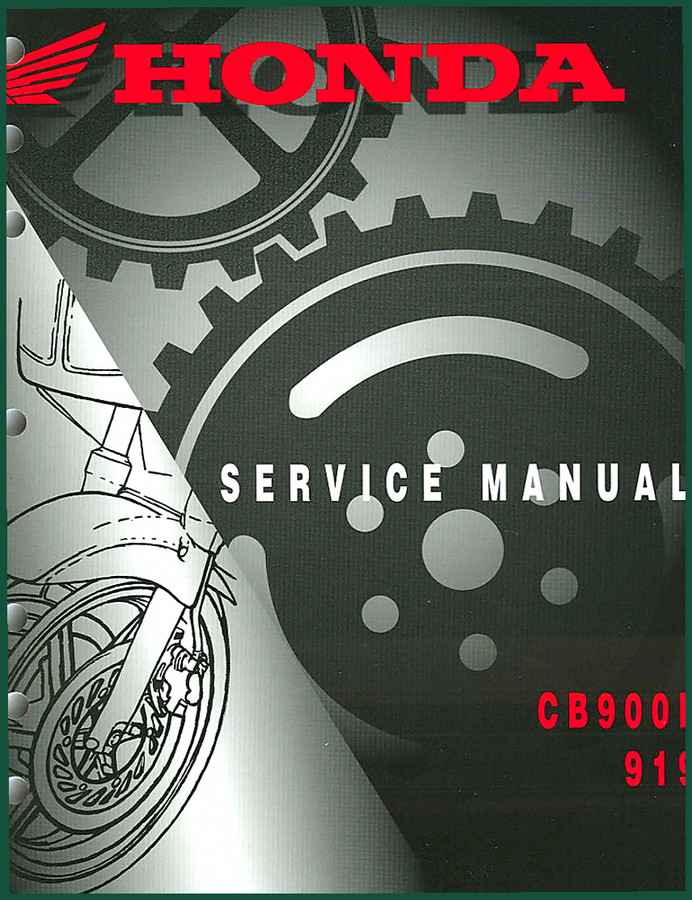
Honda CB900F 2001 Service Manual – Factory Specs | AutoFix Global
Original price was: $29.25.$22.50Current price is: $22.50.
Official Honda CB900F 2001 Service Manual – 432 pages of factory repair data for professional technicians, covering all systems.
Description
Honda CB900F 2001 Service Manual – Factory OEM Repair Guide
Working on a CB900F? I’ve seen guys try to use a Clymer manual and end up with a stripped thread in the cylinder head. That’s not happening with this. The Honda CB900F 2001 Service Manual is the factory book – 432 pages of the exact procedures Honda technicians use. No aftermarket guesswork.

You need the right torque values for the crankshaft bearings? They’re in the General Information section. Need to know the cooling system capacity? Chapter 6. The fuel injection system (Programmed Fuel Injection) is chapter 5 – page numbers are in the table of contents. This isn’t a reprint of someone’s scanned copy; it’s the original Honda service manual.
Every time I open this manual, I find something that saves me from a mistake. The wiring diagrams in chapter 20 are clear enough that you can trace a ground fault without backprobing the wrong pin. That’s the difference between factory and aftermarket.
Inside the Honda CB900F 2001 Service Manual: What You Get
This manual covers the CB900F 919 from frame to exhaust. Chapter 2 is frame/body panels/exhaust system. Chapter 3 is maintenance – oil changes, valve adjustments, the boring stuff that keeps the bike running. Chapter 4 is lubrication, then chapter 5 fuel, chapter 6 cooling. You get the engine removal and installation in chapter 7, cylinder head/valves in chapter 8, clutch/gearshift in chapter 9, alternator/starter clutch in chapter 10. The crankcase, transmission, and crankshaft/piston/cylinder are chapters 11 and 12. Suspension (front and rear) in chapters 13 and 14, hydraulic brake in 15. The rest is electrical – battery/charging, ignition, starter, lights/meters/switches, wiring diagrams, and troubleshooting. That’s 21 chapters of factory data. If you need a refresher on manual transmission theory, check the Manual Transmission article on Wikipedia.
What Torque Values Are You Using?
I get asked this more than anything. The General Information section has the torque values table. Every fastener on this bike has a factory spec. Cylinder head bolts, crankshaft main bearing cap bolts, brake caliper bolts – all listed. If you use a generic torque chart, you’ll either under-torque and get leaks or over-torque and strip threads. This manual gives you the numbers. Period.
Engine and Cylinder Head: Factory Procedures
The cylinder head/valves chapter is where most guys screw up. The manual tells you the disassembly sequence, the valve clearance specs, and the proper tool for compressing the valve springs. It also specifies the torque sequence for the head bolts. If you skip the sequence, you’ll warp the head. I’ve seen it. Follow the manual.
3 Critical Systems This Manual Covers Fully
Three systems that always cause problems: the fuel injection (chapter 5), the cooling system (chapter 6), and the brakes (chapter 15). The fuel section covers the PGM-FI system, including the pressure regulator and injector testing. The cooling section gives you the thermostat removal procedure and coolant capacity. The brake section includes bleeding procedures and caliper rebuild steps with torque specs for the banjo bolts. All factory correct. The fuel injection on this bike is an early electronic system – part of the broader trend in the automotive industry. For background, see Automotive Industry Overview.
Fuel and Cooling: Get the Specs Right
Fuel system on this bike is programmed injection – not carburetors. If you mess with the throttle body without the right data, you’ll throw off the air/fuel mixture. The manual has the throttle body removal and installation steps, plus the idle air control valve testing. Cooling: the manual tells you the exact coolant capacity and the bleeding procedure. No air pockets left behind.
Check the Wiring Diagrams Before You Probe
Wiring diagrams in chapter 20 are the real deal. They show the exact wire colors and connector pinouts. If you’re troubleshooting a no-start or a dead light, you need these diagrams. Aftermarket wiring diagrams often have the colors wrong. I’ve lost hours to that. This manual’s diagrams are the same ones the Honda dealer uses.
- Does this manual cover the fuel system?
- Yes. Chapter 5 covers the programmed fuel injection system.
- What’s the difference between this OEM manual and a third-party repair guide?
- Aftermarket manuals often skip steps, use generic torque values, and sometimes have wiring diagrams that are mislabeled. This Honda factory manual gives you the exact procedure Honda designed, with the exact torque specs for every fastener. I’ve seen aftermarket manuals tell you to use threadlocker where the factory says dry, and that causes issues. The wiring diagrams in chapter 20 are the same ones the dealer uses. You pay for accuracy. I’ve been burned by cheap manuals. This one is worth the money.
Related Manuals
- HONDA CB900F 919 Service Manual
- Honda VT600C 1998 Service Manual – Factory OEM Repair Guide
- Honda VFR800/A 2002 Service Manual – OEM Factory Repair Guide
Access the factory manual. It’s the only torque data I trust for a CB900F engine.
Additional information
| Brand | Honda |
|---|---|
| Language | English |
3 reviews for Honda CB900F 2001 Service Manual – Factory Specs | AutoFix Global
You may also like…
-
Sale!
Honda NSS250, NSS250A, NSS250S, NSS250AS Service Manual – 401 Pages Factory Specs
Original price was: $67.95.$45.00Current price is: $45.00. -
Sale!

Honda NSF250R 2012 Parts Catalog – OEM Exploded Views & Part Numbers
Original price was: $55.80.$45.00Current price is: $45.00. -
Sale!
Honda RSX 2005 Service Manual – Factory Specs for Engine, SRS & Emissions
Original price was: $71.10.$45.00Current price is: $45.00. -
Sale!
Honda BF75D, BF90D 2011 Service Manual – Factory Shop Manual
Original price was: $89.70.$65.00Current price is: $65.00.
Related products
-
Sale!

1996 Operators Manual – International 1000-4000 Series (246 pages)
Original price was: $15.28.$9.99Current price is: $9.99. -
Sale!

2006 Service Manual – International DT 466E, 530E Diesel Engine
Original price was: $67.50.$50.00Current price is: $50.00. -
Sale!

Acura Integra 1998 Service Manual – 1891 Pages Factory OEM Documentation
Original price was: $31.75.$25.00Current price is: $25.00. -
Sale!
Acura NSX 1991 Service Manual – 1420 Pages OEM
Original price was: $102.05.$65.00Current price is: $65.00.
Charles W. –
Excellent quality! The file is high resolution. Contains detailed schematics for Honda. Saves me so much dollars.
pro_mechanic –
Five stars! It is easily zoomable on my tablet without blur. Every wiring layout is provided for Honda CB900F. Saves me hundreds of dollars.
William H. –
Outstanding! The scan is high-quality and easy to navigate. Every wiring layout is provided for Honda CB900F. Saves me a lot of dollars.