
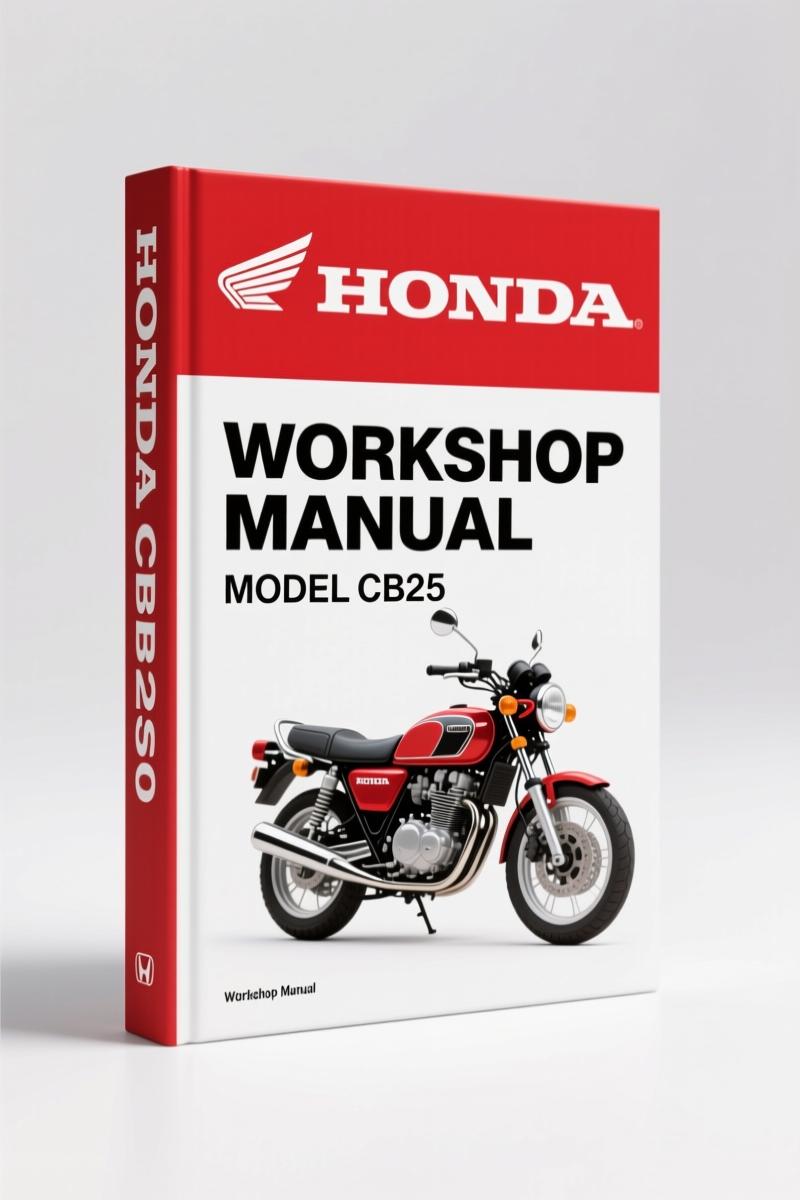
Honda CB250, CB400N Workshop Manual – 130 Pages, Factory-Approved Specifications
Original price was: $39.00.$25.00Current price is: $25.00.
130-page workshop manual covering Honda CB250 & CB400N (1978–1984). Engine, fuel, ignition, electrical, and frame procedures with factory torque values.
Description
Honda CB250, CB400N Workshop Manual – The Only Shop Book You Need for These Twins
You bought a 1978 CB400N Super Dream, and you’re staring at a bike that won’t start, or maybe you’ve got an oil leak that looks like a crime scene. I’ve been there. The last thing you want is a generic manual that says ‘remove bolt’ without telling you the torque spec or which way the clip faces. This Honda CB250, CB400N Workshop Manual is the real deal. 130 pages of text and photographs taken during an actual strip-down and rebuild in a working shop. That means the hands in the photos are the author’s and the mechanic’s – not some CAD drawing. Every torque value was checked against Honda’s own data. If you’re a DIY guy or a pro who refuses to guess, this is the book.
Engine, Clutch and Gearbox – Chapter 1 (Page 15)
This chapter runs from page 15 to page 62, and it covers the entire powertrain removal and overhaul. You’ll find the exact sequence for pulling the engine out of the frame, splitting the crankcase, and checking the gearbox dogs for wear. One thing I’ll tell you: the clutch removal procedure on these bikes can lock you up if you don’t know the trick. The manual shows how to hold the primary drive gear without the factory tool – they used a strap wrench and a block of wood. Works fine. Need the torque for the cylinder head bolts? It’s in this section. Honda specs them in kg·m, but the manual includes conversion tables on page 124 so you can work in ft-lb. Don’t skip the note about re-torquing after the first heat cycle – it’s on page 13 in the quick glance maintenance section.
Fuel System and Lubrication – Chapter 2 (Page 63)
Carburetor tuning on the CB250 and CB400N is where most people screw up. This chapter gives you the float heights, pilot screw settings, and the full disassembly of the Keihin carbs. It also covers the oil pump and lubrication path. The manual tells you the recommended lubricants – use 10W-40 API SE or SF. Page 13 lists capacities: 1.6 liters for the sump. If you’re rebuilding the oil pump, there’s a trick to priming it after reassembly – they explain it on page 70. Don’t try to run it dry.
Ignition System – Chapter 3: Setting the Points and Timing
Chapter 3 starts on page 76 and goes through the ignition system. Points gap is 0.35 mm (0.014 in), and the timing mark alignment is critical. These bikes use a mechanical advance unit that can stick if it hasn’t been cleaned in years. The manual shows you how to pull the flywheel and clean the advance weights. One thing they don’t tell you in the aftermarket junk: you need a dial gauge to set the static timing accurately. The manual mentions it on page 77. If you don’t have one, order one. You’ll thank me when the bike doesn’t backfire through the carbs.
Wiring Diagram – Chapter 6 (Page 105) and Electrical System
Electrical problems on these old Hondas are usually corrosion at the connectors or a failed regulator/rectifier. The wiring diagram on page 123 is worth the price of the manual alone. It shows the entire harness for all models from 1978 to 1984, including the later NB and NC variants. Color codes are printed in black and white, but they list the wire functions. Chapter 6 includes the starter motor overhaul, alternator tests, and the rectifier diode check with a multimeter. If you’ve got a charging system issue, start on page 106. They give you the test points and the expected resistance values. Don’t skip the safety warning on page 6 about battery acid and gas – that’s real.
The 1981 to 1984 Models – Chapter 7 (Page 114): What Changed
Honda made running changes between 1978 and 1984. The CB250 models got different carburetors, and the frame received additional bracing. Chapter 7 covers the CB250 NB, NDB, NDC, and the CB400 NB and NC. If you’re working on a 1982 CB250 NDC, you need this section. Page 114 lists the differences in the front fork stanchions and brake calipers. Don’t use earlier torque specs on the later models – some fasteners changed grade. This chapter cross-references everything so you don’t strip a bolt because you used the wrong value.
OEM vs Aftermarket: Where This Manual Stands
I’m not going to pretend a Haynes manual is the same as a Honda factory shop manual. But here’s the truth: Honda never released a comprehensive workshop manual for these Super Dreams in a form that’s easily accessible to the public. What you get from the dealer is a thin service manual. This Haynes book is built on OEM data – they got permission from Honda to reproduce line drawings and specs. The author, Martyn Meek, worked with Honda UK directly. So while it’s not a blue binder, it’s the next best thing. And for 130 pages, it’s thorough. The photographic sequence of the engine rebuild alone is worth it.
Who Needs This Manual?
If you own a CB250 or CB400N from 1978 to 1984, you need this manual. Covers the N, NA, NB, NDB, NDC, and NC models. Whether you’re doing a top-end rebuild, chasing an electrical fault, or just changing the oil, the specs are here. Don’t rely on YouTube videos where the guy skips the torque wrench. Use the factory data.
- Does this manual cover the CB250 NDB model?
- Yes. Chapter 7 specifically includes the NDB from 1981.
- How do I remove the clutch without the factory service tool?
- Page 28 shows a method using a strap wrench and a piece of hardwood to lock the primary gear. The manual emphasizes that you must support the gear on both sides to avoid bending the clutch basket. If you don’t have the workshop tool, this procedure works – I’ve done it. Make sure you mark the bolts’ positions before removal because the clutch hub is balanced. Torque the center nut to 55 Nm (41 ft-lb) on reassembly, and use thread lock on the clutch basket bolts. Don’t forget to soak the new friction plates in oil for 30 minutes before installation or you’ll burn them on the first ride.
Related Manuals
- Honda CB250 350 CL250 SL350 1971 Workshop Manual – OEM Factory Specs
- Honda CB250, CL250, CB350, CL350 Workshop Manual – OEM Factory Specs
- Honda CB250, 360, CL360, CJ250T, CJ360T 1975 Workshop Manual – OEM Specs
For a broader look at motorcycle repair standards, you can refer to Automotive Industry Overview and Automotive Industry Overview.
Access the Factory Manual and get those twins running right. No guesswork. Just the specs.
Additional information
| Brand | Honda |
|---|---|
| Language | English |
3 reviews for Honda CB250, CB400N Workshop Manual – 130 Pages, Factory-Approved Specifications
You may also like…
-
Sale!

Honda NSF250R 2012 Parts Catalog – OEM Exploded Views & Part Numbers
Original price was: $55.80.$45.00Current price is: $45.00. -
Sale!
Honda BF75D, BF90D 2011 Service Manual – Factory Shop Manual
Original price was: $89.70.$65.00Current price is: $65.00. -
Sale!
Honda NSS250, NSS250A, NSS250S, NSS250AS Service Manual – 401 Pages Factory Specs
Original price was: $67.95.$45.00Current price is: $45.00. -
Sale!
Honda RSX 2005 Service Manual – Factory Specs for Engine, SRS & Emissions
Original price was: $71.10.$45.00Current price is: $45.00.
Related products
-
Sale!

Acura Integra 1998 Service Manual – 1891 Pages Factory OEM Documentation
Original price was: $31.75.$25.00Current price is: $25.00. -
Sale!

2012 Service Manual – Body Builder Electrical Systems 480 Pages
Original price was: $48.28.$34.00Current price is: $34.00. -
Sale!

Service Manual – International HS 2.8L Engine – 130 Pages of Factory Specs
Original price was: $56.40.$40.00Current price is: $40.00. -
Sale!

1993 Operators Manual – International Bus 1000-3000 OEM Specs
Original price was: $12.30.$7.99Current price is: $7.99.
Charles W. –
I am extremely satisfied with this manual. It is very easy to read on my phone without blur. It assisted me to repair my Honda CB250, electrical system. I will recommend this shop to others.
diy_master –
Perfect factory service manual. The text is searchable and easy to navigate. Every spec sheet is included for Honda CB250,. Saved my weekend project! Thanks.
Thomas B. –
I am so happy with this transaction. The document quality is excellent. Contains detailed wiring diagrams for Honda. Saves me a lot of time.