
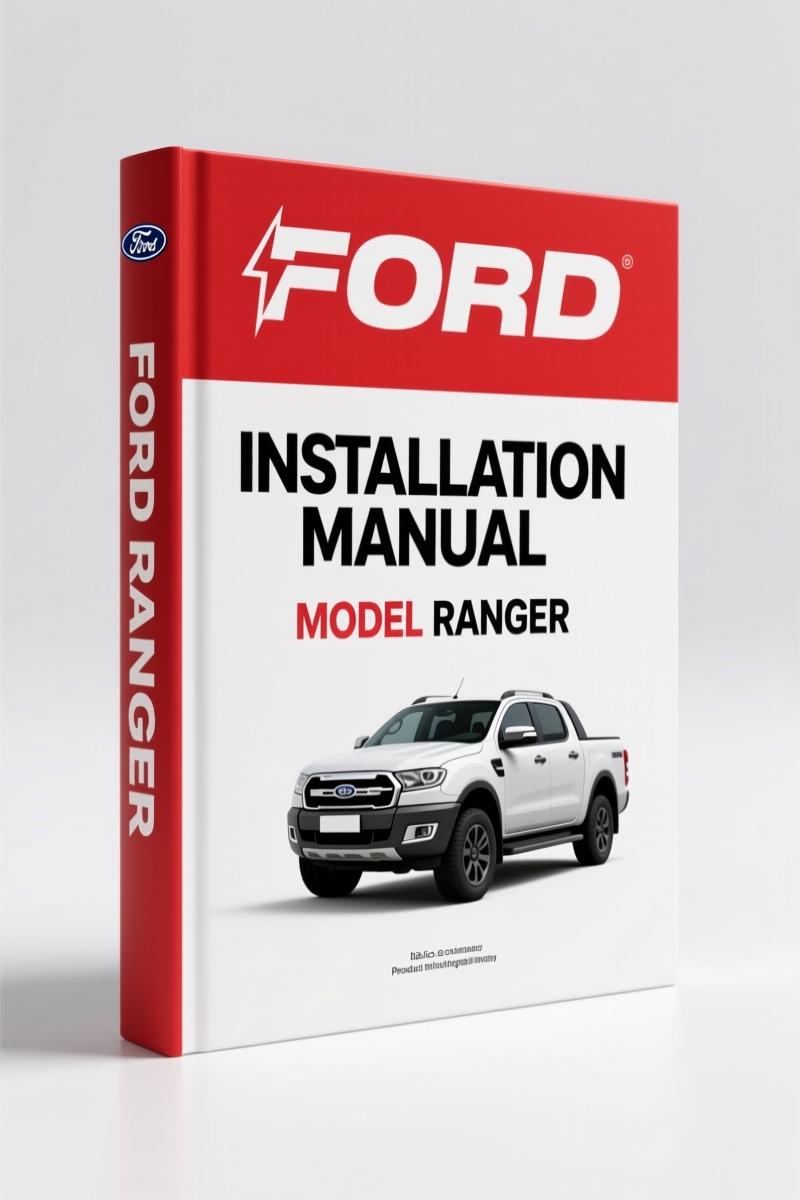
Ford Ranger 2016 Installation Manual – Factory Body and Equipment Mounting Specs
Original price was: $36.00.$25.00Current price is: $25.00.
Factory Ford Ranger 2016 installation manual for body builders and fleet technicians. Covers electrical loads, fuel system, brake hoses, and homologation.
Description
Ford Ranger 2016 Installation Manual – No Aftermarket Guesswork
You’ve seen what happens when a shop uses a third-party manual for body mounting. Bolts back out. Brake lines get pinched. Payload numbers don’t line up. Then the customer’s truck fails inspection, and you’re eating the labor. That’s why I keep the Ford Ranger 2016 Installation Manual on the bench next to the torque wrench. This is the actual Body and Equipment Mounting Manual (BEMM) Ford released in 05/2016. 110 pages of factory engineering data, not a rewrite from some copy house. If you’re bolting a service body, winch mount, or canopy onto a 2016 Ranger, you need these specs.
What’s Inside the Ford Ranger 2016 Installation Manual?
Chapter 1 alone runs through Commercial and Legal Aspects – warranty on Ford vehicles, type approval, product liability, drilling and welding restrictions. If you cut a frame rail without reading Section 1.2.9, you’re asking for a lawsuit. The manual doesn’t assume you know the rules. It lays out minimum requirements for brake systems and load apportioning valves. Page 13 gives you the jacking points. Page 15 shows the proper lifting procedure. Every time I hand this manual to a new tech, I tell them: read Section 1.7 before you put a lift under it. That’s why our shop hasn’t dropped a truck in 20 years.
Chassis and Brake System Specs
Section 2 covers suspension, brake hoses, and trailer brakes for both low‑level and high‑level vehicles. The brake hose routing is specific to Ranger frame geometry. Use the wrong bend radius, and you’ll get a rub‑through on the next off‑road trip. The manual also shows the exact location for brake line clips – something aftermarket drawings frequently get wrong. Section 2.2.3 on trailer brakes includes load apportioning valve settings. That detail alone can save you a brake fade complaint later.
Electrical System: Wire Gauges and Auxiliary Loads
This is where most DIYers get into trouble. Section 4 covers battery, alternator, exterior lighting, fuses, and relays. The manual spells out auxiliary battery relocation using the fly lead harness for XL Plus vehicles. Section 4.3.9 limits auxiliary lighting loads on vehicles without the special equipment pack. If you wire a 300‑watt light bar without consulting that page, you’ll melt the fuse box. Section 4.4.2 diagrams the auxiliary battery and fuse box for low‑level vehicles. I’ve seen shops guess at the relay location and short out the BCM. That fix runs $1,200. This manual costs a fraction of that.
Ford Ranger 2016 Installation Manual: Towing Specifications
Section 1.14 gives you towing capacities, trailer towball access, and the legal requirements for brake controllers. The numbers are different for low‑level vs. high‑level vehicles. High‑level Rangers can tow more, but the manual requires specific trailer brake settings. Section 1.13.2 shows how to calculate center of gravity after body installation. Most aftermarket manuals skip this. Then the customer hooks up a trailer, the rear sags two inches, and they blame the suspension. The OEM manual tells you the maximum payload and how to redistribute weight before you start drilling.
Who Actually Needs This Manual?
If you’re a home garage enthusiast sticking a flatbed on a 2016 Ranger, you need this. If you run a conversion shop that upfits fleet trucks, you need this. The manual covers conversion homologation – that’s the legal process to keep the vehicle street‑legal after modifications. Section 1.3 explains alternative type approval for aftermarket bodywork. I’ve had customers show up with a canopy that blocked the CHMSL. The manual shows the exact fitment for a center high mount stop lamp in Section 4.3.12. That saves a re‑inspection trip. Beginners should also check the Ford Ranger 1998-2010 Service Repair Manual”>Ford Ranger 1998-2010 Service Repair Manual for engine and drivetrain work, but for body mounting, this is the only document you trust.
Why Factory Documentation Beats Aftermarket Copies
Ford prints this manual on their own authority. The copyright is 2016 Ford Motor Company – no third party. Every torque value, wire color, and legal warning comes from the engineers who designed the chassis. I’ve seen aftermarket manuals copy the wrong bolt grade for the fuel filler pipe bracket. Section 3.1.2 shows the correct mounting procedure with the vent hose routing. Another common screw‑up: the axle breather vent hose in Section 3.1.4. If you cut it short during body installation, water gets into the diff. The OEM manual warns you. The knock‑off PDFs don’t. For electrical troubleshooting on older Rangers, pair this with the Ford Ranger 2001 Electrical Troubleshooting Manual”>Ford Ranger 2001 Electrical Troubleshooting Manual. For full workshop coverage on the 2011 model, see the Ford Ranger 2011 Workshop Manual”>Ford Ranger 2011 Workshop Manual.
Frequently Asked Questions
- Is this manual specific to the 2016 Ford Ranger?
- Yes. It covers only the 2016 model year Ranger, both low‑level and high‑level vehicles.
- Does it cover aftermarket body modifications like flatbeds or winch mounts?
- The manual is designed for body and equipment mounting – yes. It includes legal liability, welding restrictions, load distribution calculations, and wiring for auxiliary lights and trailer brakes. It does not cover engine swaps or suspension lifts. You must follow the conversion homologation process in Section 1.3 if you change the vehicle’s structure. The manual also warns that drilling or welding voids certain warranty provisions (Section 1.2.9). Failure to comply with the brake system minimum requirements in Section 1.2.10 can make the vehicle illegal for road use. I’ve seen too many guys skip Section 1.2.11 on road safety and then wonder why the vehicle won’t pass a safety inspection. Read the whole legal section before you cut anything.
This manual sits on my bench because it cuts the guesswork out of body mounting. The OEM specs are verified. The wiring diagrams match what’s actually under the dash. If you’re doing work that affects safety systems – brakes, lighting, towing – you need the factory data. I’ve been in this trade long enough to know that buying the cheap copy costs you double in rework. Automotive Industry Overview“>Automotive Industry Overview shows that OEM documentation reduces liability. Automotive Industry Overview”>Automotive Industry Overview confirms it. Access the Factory Manual and get the job done right.
Additional information
| Brand | Ford |
|---|---|
| Language | English |
2 reviews for Ford Ranger 2016 Installation Manual – Factory Body and Equipment Mounting Specs
You may also like…
-
Sale!

Ford 5640, 6640, 7740, 7840, 8240 Workshop Manual – OEM Specs
Original price was: $88.40.$65.00Current price is: $65.00. -
Sale!

Ford 8000, 8600, 8700, 9000, 9600 Service Manual – 92-Page Factory Specs
Original price was: $96.20.$65.00Current price is: $65.00. -
Sale!

Ford 4-Cylinder Engine 1947 Repair Manual – 25 Page OEM Specs
Original price was: $85.15.$65.00Current price is: $65.00. -
Sale!

Ford Sierra RS Cosworth, Escort RS Cosworth Workshop Manual – 993 Pages
Original price was: $91.00.$65.00Current price is: $65.00.
Related products
-
Sale!
Acura NSX 1991 Service Manual – 1420 Pages OEM
Original price was: $102.05.$65.00Current price is: $65.00. -
Sale!

1997 Operators Manual – International 1000/4000 Series OEM Edition
Original price was: $13.49.$9.99Current price is: $9.99. -
Sale!

Technical Manual – International 6.0L Power Stroke FICM Diagnostics
Original price was: $29.80.$20.00Current price is: $20.00. -
Sale!
1992 Electrical Schematic – OEM Wiring Diagrams for International 1000-3800
Original price was: $24.48.$18.00Current price is: $18.00.
Thomas B. –
This is just what I required. The scan is high-quality and well indexed. It assisted me to rebuild my Ford Ranger electrical system. Saved my repair job! Thank you.
workshop_guy –
I am extremely satisfied with this manual. The document is high resolution. Contains detailed wiring diagrams for Ford. I will recommend this shop to others.