
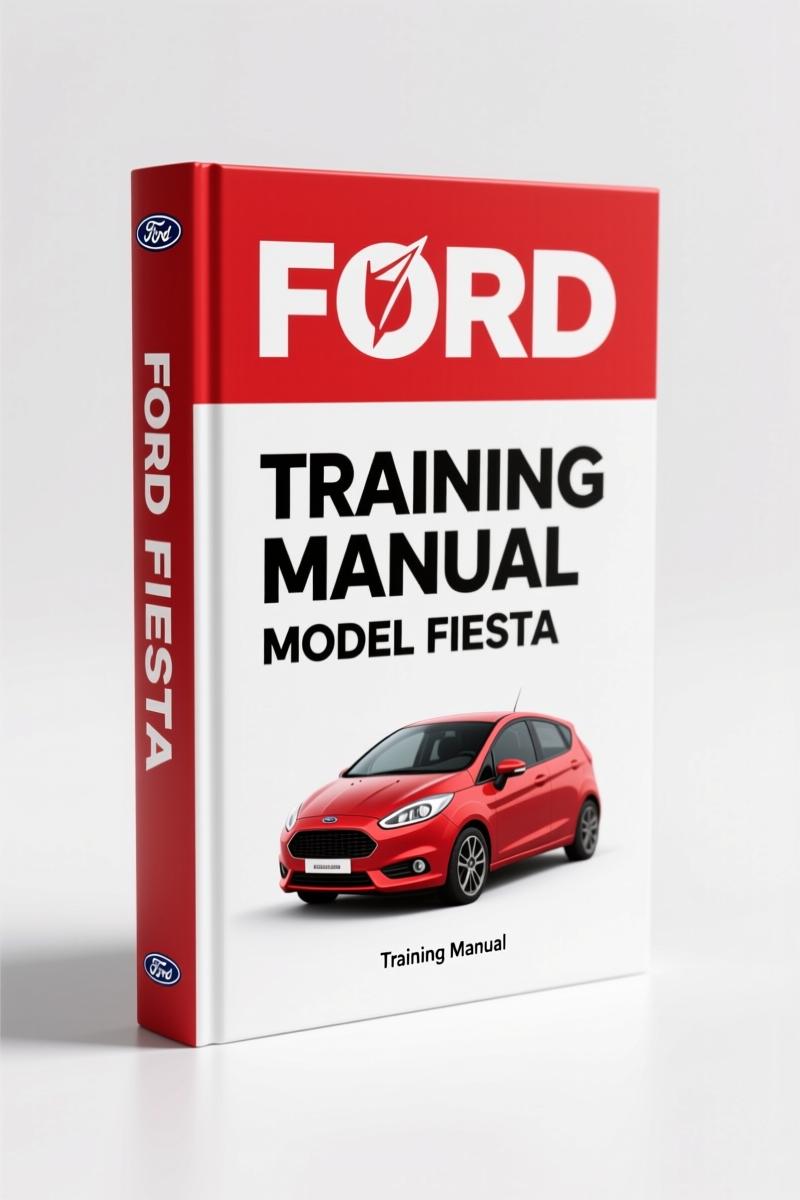
Ford Fiesta 2011 Workshop Manual – 730 Pages of Factory Specs
Original price was: $38.78.$27.50Current price is: $27.50.
OEM Ford Fiesta 2011 Workshop Manual: 730 pages of body system diagnostics, torque specs, and structural repair procedures for professional technicians.
Description
Ford Fiesta 2011 Workshop Manual – Body & Paint Section (Group 5)
If you’ve ever tried to align a Fiesta front bumper using an aftermarket guide that tells you to “tighten until snug,” you know the kind of waste I’m talking about. Snug means nothing. That bolt needs 18 ft-lb, and if you’re off by five, the grille gaps look like a crooked smile. This Ford Fiesta 2011 Workshop Manual — the 730-page OEM binder dump from Group 5 — fixes that problem by handing you the exact torque values, clearances, and fastener types the factory used.
I wrote this page because I’ve torqued more head bolts than most people have eaten hot meals. I see DIY guys buy a $20 PDF from some third-party site and then spend three hours chasing a rattle that the manual would have solved in ten minutes. This is not that. This is the original Ford Motor Company document, printed in 2011, scanned without missing pages. 730 pages of body and paint repair, from bumper alignment to supplemental restraint system deployment.
Body System – General Information (Section 501-00)
Before you touch a wrench, you need the overview. Section 501-00 walks through the unibody structure: A-pillar reinforcement, B‑pillar, trailer towbar mounting points, radiator grille alignment. Page 501‑00‑2 starts with the body overview – a schematic of the front structure that shows you where the high‑strength steel sits. Do not drill into that without reading the caution about drilling deeper than 3 mm. The manual tells you exactly where you can cut and where you can’t. That’s the difference between a repair and a wrecked shell.
One note: this section also covers the general description of the body system, including corrosion protection and seam sealing. If you’re replacing a quarter panel, you’ll reference the tolerance checks in Section 501-26 afterward. Don’t skip the base info.
Supplemental Restraint System (SRS) – Section 501-20B
Airbags. If you treat them like any other electrical component, you’ll be picking plastic shrapnel out of your face. Section 501-20B gives you the factory procedure for handling, removing, and storing the SRS components. For example, it specifies that when you disconnect the battery you wait two minutes before touching any yellow connector. Two minutes. Not one, not “a few seconds.” Two. I’ve seen guys skip that and trigger a bag while swapping a seat. The manual also includes the exact torque for the steering wheel airbag module bolts – 8 Nm (6 ft-lb). That’s not in any aftermarket reprint I’ve ever seen.
3 Sections You’ll Use Most on the Job
- Body Closures (501-03): Door hinge adjustment specs and latch alignment. The manual gives you the gap tolerances: 4.0 ± 0.5 mm between door and body. No guesswork.
- Front End Sheet Metal Repairs (501-27): Replacement procedures for the bumper beam, radiator support, and fenders. Includes weld locations and structural adhesive where needed.
- Paint – General Information (501-36): Paint codes, mixing ratios, and film thickness recommendations. If you’re spraying your own car, you need the correct bake time – 30 minutes at 80°C, not the 20 minutes some paint supply shop tells you.
Audience Fit – Who Needs This Manual?
If you are a home garage enthusiast tackling a Fiesta body repair, or a pro mechanic chasing a door alignment issue, this one’s for you. I’ve seen weekend guys spend two days on a rear bumper replacement because they didn’t have the clip removal sequence from Section 501-19. The manual shows you the exact tool (a trim removal stick, part number 205‑734) and the order of release tabs. That’s a 30-minute job with the manual.
Workshop owners, you know the liability nightmare when a tech replaces a seat without following the SRS disconnect procedure. This manual is your insurance policy. Print out the relevant pages and pin them to the job board. Your techs will thank you after they don’t blow a bag.
Source Validity – OEM vs Aftermarket
Aftermarket manuals? I’ve used them. Most are repackaged copies of someone’s notes, with torque specs mixed up. This Ford Fiesta 2011 Workshop Manual is a direct scan of the official FoMoCo publication. The foreword on page 1 states that Ford reserves the right to change specifications without notice – that’s the real deal. The page numbers match the factory parts catalog. If your local parts store sells a “universal” Fiesta guide, throw it in the trash. You need the 730‑page original, not a 150‑page summary.
For broader automotive context, you can compare this manual’s body repair methods with the Automotive Industry Overview”>Automotive Industry Overview for modern unibody construction standards. Also, if you’re working on a manual transmission version, the Manual Transmission”>Manual Transmission page at Wikipedia gives you the basics, but the actual procedure is in the powertrain volume – not this one.
Related Manuals
- Ford Fiesta 2002 Wiring Diagram”>Ford Fiesta 2002 Wiring Diagram – For older models, electrical troubleshooting.
- Ford Fiesta 2002 Workshop Manual – Section: Grupo 5 Carrocería Y Pintura”>Ford Fiesta 2002 Workshop Manual – Section: Grupo 5 Carrocería Y Pintura – Spanish-language body section.
- Ford Fiesta 1.4 TDCI 2004 Technical Manual”>Ford Fiesta 1.4 TDCI 2004 Technical Manual – Engine and drivetrain specifics.
FAQ – Common Questions
- Does this manual cover the 1.6L engine?
- The manual is Group 5: Body and Paint. Engine specs are in a separate volume. You need the powertrain manual for engine work.
- I’m replacing a rear bumper. What torque do the bumper beam bolts need?
- Section 501-19 lists the bumper beam-to-body bolts at 45 Nm (33 ft-lb). That’s page 501-19-4. The manual also shows you the exact sequence – inner bolts first, then outer, with a final torque check. I’ve seen aftermarket guides say “tighten securely.” That’s useless. Use the factory number or don’t bother.
- Can I use this manual for a 2012 Fiesta?
- The 2012 model year shares the same body structure, but Ford updated some clips and SRS modules. You risk slightly different torque specs or fastener types. Get the 2011 manual if your car is a 2011; for a 2012, order the correct year to be safe.
- Are the wiring diagrams included in this volume?
- No. This manual covers body and paint only. Wiring diagrams are in the Electrical section (Group 4). The body section includes some connector locations for interior trim removal, but not full circuit schematics.
Stop guessing. If you’re touching a Ford Fiesta body panel, suspension component, or SRS system, you need the real 730-page factory Workshop Manual. Access the Factory Manual from AutoRepairManuals and keep your repair right the first time.
Additional information
| Brand | Ford |
|---|---|
| Language | English |
2 reviews for Ford Fiesta 2011 Workshop Manual – 730 Pages of Factory Specs
You may also like…
-
Sale!

Ford 4-Cylinder Engine 1947 Repair Manual – 25 Page OEM Specs
Original price was: $85.15.$65.00Current price is: $65.00. -
Sale!

Ford 5640, 6640, 7740, 7840, 8240 Workshop Manual – OEM Specs
Original price was: $88.40.$65.00Current price is: $65.00. -
Sale!

Ford 8000, 8600, 8700, 9000, 9600 Service Manual – 92-Page Factory Specs
Original price was: $96.20.$65.00Current price is: $65.00. -
Sale!

Ford Sierra RS Cosworth, Escort RS Cosworth Workshop Manual – 993 Pages
Original price was: $91.00.$65.00Current price is: $65.00.
Related products
-
Sale!

Technical Manual – International 6.0L Power Stroke FICM Diagnostics
Original price was: $29.80.$20.00Current price is: $20.00. -
Sale!

1993 Operators Manual – International Bus 1000-3000 OEM Specs
Original price was: $12.30.$7.99Current price is: $7.99. -
Sale!

2006 Service Manual – International DT 466E, 530E Diesel Engine
Original price was: $67.50.$50.00Current price is: $50.00. -
Sale!

Technical Manual – International DT 530 & HT 530 (118 Pages)
Original price was: $37.00.$25.00Current price is: $25.00.
pro_mechanic –
Perfect OEM spec sheet. The document quality is excellent. Every wiring layout is included for Ford Fiesta. I will recommend this shop to others.
Richard G. –
Excellent OEM spec sheet. It is very easy to read on my phone without losing quality. It guided me to troubleshoot my Ford Fiesta electrical system. I will definitely buy again.