
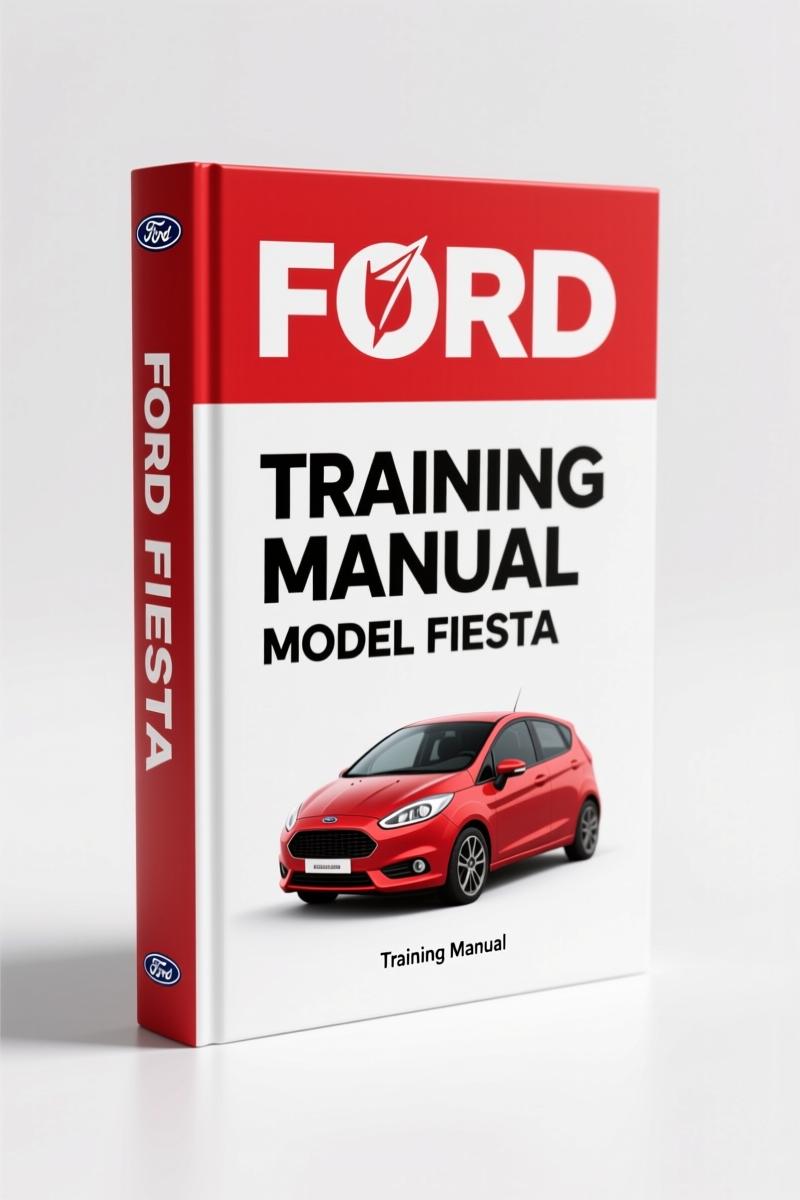
Ford Fiesta 2010 Diagnostics Manual – NVH Factory Procedure
Original price was: $34.50.$25.00Current price is: $25.00.
OEM 18-page diagnostics manual for 2010 Ford Fiesta NVH troubleshooting: road test, inspection, pinpoint tests.
Description
If you are chasing a rattle, a shake, or a groan on a Ford Fiesta 2010 Diagnostics Manual job, you already know how quickly time burns on a mystery noise. That Fiesta comes in with a complaint – “vibration at 60 mph” or “steering pump whine when turning” – and you are left guessing which bushing, joint, or alignment spec is off. This 18-page factory document from Ford pulls that guesswork out of the bay. It is the NVH section (100-04) pulled straight from the 2010 Fiesta service information. No third-party condensation, no generic bull. Just the original diagnostic path the engineers wrote.
I have seen aftermarket manuals try to summarize NVH in two paragraphs. That gets you a comeback. This Ford publication lays out the Inspection and Verification steps, the Noise Diagnostic Procedure, and the Road Test Quick Checks in the order they need to happen. Page 2 tells you to first verify the customer concern, then visually inspect for obvious mechanical or electrical damage. If you skip that step, you will waste an hour chasing a tire balance issue when the real problem is a loose heat shield. The Symptom Chart starting on page 100-04-7 gives you a direct map from symptom to Pinpoint Tests. page 100-04-13 holds the pinpoint tests themselves – each one a closed-loop check that eliminates variables.
Noise, Vibration and Harshness (NVH) Diagnosis
The manual opens by walking through the full NVH diagnostic flow: road test, vehicle preparation, road condition assessment. It differentiates a shake (low-frequency, usually wheel/tire related) from a vibration (higher frequency, often driveline or engine mount). The Road Test Quick Checks on page 100-04-3 are exactly what you need to isolate the condition without swapping parts. Run the car at the complaint speed, note the frequency, then check tires, driveshaft, and engine mounts in sequence. This method saves you from the “throw a tire rod at it” approach.
Inspection and Verification Procedure
Step one: verify the concern. Step two: visual inspection. Step three: if you find something obvious, fix it before proceeding. Step four: if not, go to the Symptom Chart. That is the factory flow. The manual stresses that NVH concerns are more critical on modern Fiestas because the body structure is stiffer – vibrations transmit more clearly. So the inspection includes checking for loose bolts, worn bushings, and contact points between components. It also covers vehicle preparation: tire pressure to factory spec, fuel level, and removing any aftermarket accessories that could mask the noise. That last one is a trap many DIYers fall into. The manual catches it.
Power Steering Operation Noise Check
Power steering noise is a common complaint on this generation. The manual dedicates a specific subsection to the Power Steering Operation Noise Check (page 100-04-4). It tells you to listen at idle, during low-speed turns, and under load. Causes include air in the fluid, worn pump, or binding steering column. The diagnostic steps force you to rule out fluid condition and belt tension before condemning the pump. Follow this order, and you will not replace a pump that just needed a flush. I have seen that mistake cost two hours of labor and a customer who later complains the noise is still there.
Symptom Chart and Pinpoint Tests
The Symptom Chart lists 14 symptoms – from “Buzz, rattle, or squeak” to “Steering wheel vibration” – each cross-referenced to a Pinpoint Test letter. The pinpoint tests themselves (starting on page 100-04-13) are numbered A through H. Each test gives a procedure, a question, and a “Yes/No” diagnostic branch. For example, Test B: “Is the vibration felt in the steering wheel?” leads you to inspect the front tire and wheel assembly. No guesswork, no skipping. The manual also includes the road condition notes: rough pavement, crowned roads, and wind. It even tells you to test on a smooth, level road to eliminate variables. That is the kind of detail you do not get from a third-party summary.
Source Authenticity: Why OEM Matters for NVH
This 18-page manual is an original Ford publication. Not a reprint, not a scan from a pirate forum. The torque specs for suspension bolts? Not in this NVH section, but if the pinpoint test points to a loose component, the manual tells you to refer to the corresponding workshop manual section. The key point: every number, every diagram, every step in this document came from the Ford engineering team that designed the 2010 Fiesta. Aftermarket manuals often generalize NVH across multiple platforms – they skip the Fiesta-specific road test procedures or the power steering noise check because it costs time to model. If you want to diagnose a noise on a Fiesta correctly the first time, you use the Fiesta factory manual. That is all there is to it.
This manual fits the home garage mechanic who is tired of swapping parts and the pro who needs to bill a job once. The road test quick checks alone will halve your diagnostic time on common complaints like driveline vibration or suspension clunk. Pair it with the Ford Fiesta 2002 Wiring Diagram if you are chasing an electrical-related noise, or the Ford Fiesta 2002 Workshop Manual – Section: Grupo 5 Carrocería Y Pintura for body panel alignment issues. For diesel variants, the Ford Fiesta 1.4 TDCI 2004 Technical Manual covers engine-specific NVH. And if you need context on how OEM documentation standards work across the industry, read the Automotive Industry Overview or the Automotive Industry Overview for reference.
- Does this manual cover torque specifications for suspension components?
- No. This is a diagnostics manual, not a repair manual. It references torque specs only when a specific bolt needs to be tightened during a diagnostic step – for example, if a pinpoint test requires checking a loose tie-rod end, it will say to tighten to spec per the workshop manual.
- How many pages is the manual?
- 18 pages.
- Can I use this manual for a 2011 Ford Fiesta?
- The vehicle application explicitly states 2010.50 Fiesta. The 2011 model introduced different suspension and steering components – the diagnostic procedures may differ. Use the correct year-specific manual to avoid misdiagnosis.
- What does the Road Test Quick Check actually tell me?
- The manual gives you a series of test drives at specific speeds and conditions (straight line, turning, braking) to isolate whether the vibration is speed-related, load-related, or component-specific. It then tells you which Pinpoint Test to run based on the result. For example, if vibration disappears when coasting in neutral, the cause is powertrain-related rather than tire/wheel. That saves you from pulling four wheels for balance when the problem is a failing CV joint.
You have dealt with enough NVH comebacks to know that a systematic approach beats a lucky guess. Access the Factory Manual now and get the exact diagnostic flow Ford intended for the 2010 Fiesta. Keep it on the bench next to your scan tool – it will pay for itself the first time you isolate a steering pump noise in fifteen minutes instead of an hour.
Additional information
| Brand | Ford |
|---|---|
| Language | English |
2 reviews for Ford Fiesta 2010 Diagnostics Manual – NVH Factory Procedure
You may also like…
-
Sale!

Ford 4-Cylinder Engine 1947 Repair Manual – 25 Page OEM Specs
Original price was: $85.15.$65.00Current price is: $65.00. -
Sale!

Ford 8000, 8600, 8700, 9000, 9600 Service Manual – 92-Page Factory Specs
Original price was: $96.20.$65.00Current price is: $65.00. -
Sale!

Ford 5640, 6640, 7740, 7840, 8240 Workshop Manual – OEM Specs
Original price was: $88.40.$65.00Current price is: $65.00. -
Sale!

Ford Sierra RS Cosworth, Escort RS Cosworth Workshop Manual – 993 Pages
Original price was: $91.00.$65.00Current price is: $65.00.
Related products
-
Sale!
Acura NSX 1991 Service Manual – 1420 Pages OEM
Original price was: $102.05.$65.00Current price is: $65.00. -
Sale!

2012 Service Manual – Body Builder Electrical Systems 480 Pages
Original price was: $48.28.$34.00Current price is: $34.00. -
Sale!

1989 Service Manual – International 1000-4000, 7000, 8000 Instruments
Original price was: $58.80.$40.00Current price is: $40.00. -
Sale!
1993 Operators Manual – International Bus 1000-3000 OEM Specs
Original price was: $12.30.$7.99Current price is: $7.99.
gearhead88 –
Great buy! It is very easy to read on my tablet without blur. Every spec sheet is provided for Ford Fiesta. I will definitely buy again.
Richard G. –
This is exactly what I was looking for. It is very easy to read on my tablet without blur. It assisted me to repair my Ford Fiesta electrical system. Saved my repair job! Thank you.