
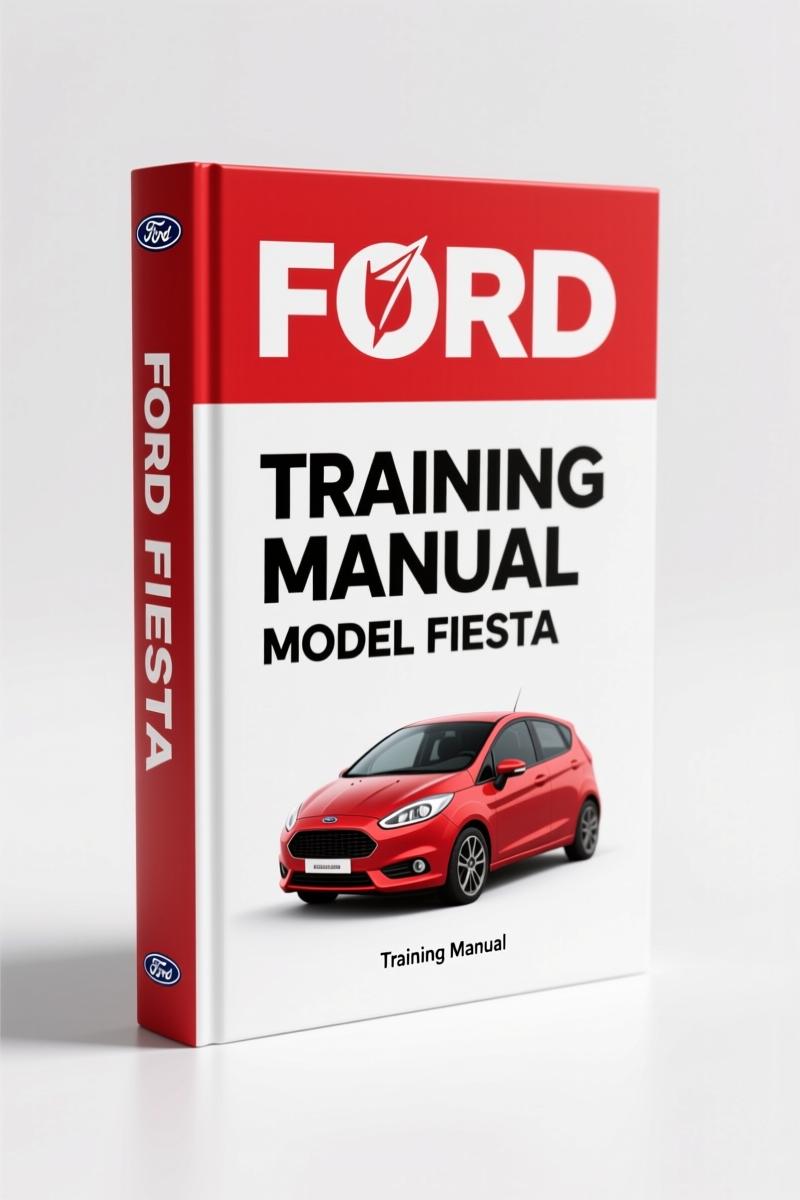
Ford Fiesta 2000 Training Manual – SIM Engine Management
Original price was: $19.94.$14.99Current price is: $14.99.
41-page Ford training manual on SIM engine management systems for the 2000 Fiesta. Covers sensors, fuel metering, diagnostics.
Description
Ford Fiesta 2000 Training Manual – No Guesswork, Just Factory Specs
You’ve got a Ford Fiesta 2000 Training Manual in your hands – 41 pages of OEM curriculum that Ford wrote for its own techs. The SIM19A and SIM20 systems from Siemens are nothing like the generic aftermarket wiring diagrams that leave you chasing ghosts. If you’re trying to diagnose a no-start or a fuel trim issue on a 1.25L Zetec-SE, this is the document that tells you what the Crankshaft position sensor voltage should really be and when the PCM ignores the signal.
I’ve seen too many DIYers (and some techs I won’t name) swap a Camshaft sensor because a scan tool showed a code, only to find the real problem was a broken wire at the T-MAP connector. This manual doesn’t let you skip steps. It walks you through the exact relationship between the CKP and CMP sensors, the Fuel pressure control strategy, and the logic behind the Siemens failure management mode. That’s the difference between a fix that sticks and a comeback job that eats your Saturday.
Lesson 1 – Components: Sensors, Actuators, and the Fuel Rail
Lesson 1 covers every input and output that matters. The manual lists the Crankshaft position (CKP) sensor, Camshaft position (CMP) sensor, heated oxygen sensors (HO2S-11 and HO2S-12), the Temperature and manifold absolute pressure (T-MAP) sensor, generator load feed forward, fuel level input (FLI) signal, and the Park Neutral Position (PNP) switch. On the actuator side you get the fuel injectors/fuel rail, EVAP canister purge valve, cooling fan control, and idle air control (IAC). Each component gets its own subsection with factory wiring color codes and test procedures. Need the resistance spec for the IAC? It’s on page 24 of the PDF – don’t rely on a part-store printout that’s wrong half the time.
The SIM PCM (Single Integrated Module PCM) is the brain, and the manual shows you how it interprets sensor voltage to adjust injection timing and spark advance. No theory overload – just the data a working mechanic needs to verify with a multimeter.
Lesson 2 – Operation: Air Mass Calculation and Fuel Metering
Lesson 2 digs into the speed-density calculation Ford used on these engines. Instead of a hot-wire MAF, the SIM system uses the T-MAP sensor to calculate air mass from manifold pressure and temperature. The manual explains the SIM flow diagram step by step – how the PCM estimates cylinder air charge, determines injector pulse width, and sets spark angle. There’s a whole section on fuel supply and metering that covers the returnless fuel rail and the pressure regulator built into the pump module.
If you’ve ever chased a lean condition on a 2000 Fiesta and couldn’t find the vacuum leak, check the Fuel level input influence on the fuel pump voltage – it’s buried in the stand-alone inputs on page 18. This is the stuff aftermarket manuals leave out because they’re printed from generic databases.
Lesson 3 – Diagnostics: DTCs and Siemens Failure Management
Lesson 3 is where the training manual earns its keep. It covers the Data Link Connector (DLC), diagnostic trouble codes (DTCs), and the Siemens failure mode effects management strategy. That strategy is key – when a sensor fails, the PCM doesn’t just light the MIL; it substitutes a calculated value and keeps the engine running in a limp mode. The manual explains each failure scenario and what the recommended repair step is. Octane adjustment is also covered – explains how knock sensor inputs trim the spark curve without triggering a DTC.
The diagnostic flow charts on pages 32-34 give you the sequence for checking the CKP sensor signal at the PCM connector. If you follow that exactly, you won’t end up replacing a good sensor. Pair this with the Ford Fiesta 2002 Wiring Diagram for pin-by-pin confirmation, and you’ll have the complete picture.
Why This Training Manual Beats Aftermarket
Every torque spec, every test point, every failure strategy in this manual comes from Ford’s engineering group. Aftermarket manuals often reprint a generic Siemens SIM document with the wrong connector views or a missing step in the idle learn procedure. This one is the original student information for training course TC3043025H. It’s 41 pages of dense, no-padding content – no ads, no warranty disclaimers, just the facts as Ford wrote them in 2000. The Ford Fiesta 2002 Workshop Manual – Section: Grupo 5 Carrocería Y Pintura covers body work; this training manual covers the engine brain.
For diesel variants, check the Ford Fiesta 1.4 TDCI 2004 Technical Manual – different injection system entirely. But for the 1.25L Zetec-SE SIM engines, this training manual is the primary resource. You won’t find a better explanation of the speed-density fuel model anywhere in the aftermarket world.
Who Needs This Manual?
If you own a 2000.5 Ford Fiesta with the SIM19A or SIM20 system, you’re the target audience. DIYers who want to diagnose their own check-engine light without throwing parts at it will get the most value. Professional techs who haven’t worked on these Siemens systems since the early 2000s will save hours by skipping the scan-tool rabbit hole – the manual tells you exactly which sensor to test under which conditions. Beginners should have a basic understanding of how a four-stroke engine works; this isn’t a “how to change your oil” pamphlet. But if you’re comfortable with a multimeter and a scan tool, you’ll find everything you need.
Use the Automotive Industry Overview to understand how Ford’s training compares to other OEM programs, but for the Fiesta SIM, stick with this manual. And if you’re troubleshooting a manual transmission issue, the Manual Transmission guide covers the clutch and gearbox – separate system, but worth having on the shelf.
FAQ – Ford Fiesta 2000 Training Manual
- Does this manual cover the 1.3L engine or only the 1.25L Zetec-SE?
- The manual specifically covers the SIM19A and SIM20 systems introduced for the complete Fiesta engine range starting with the 1.25L Zetec-SE in the 2000.5 model. Other engines may use different PCM strategies.
- Can I find torque specs for head bolts in this training manual?
- No. This is a system training manual, not a workshop repair manual. It focuses on the electronic management sensors, actuators, and diagnostics. You need the Ford workshop manual for mechanical torque values.
- What is the difference between SIM19A and SIM20 in this document?
- The manual treats them as a single system with minor differences in actuator wiring. Both are explained in Lesson 1 with separate connector pinouts. The SIM20 has a slightly different fuel pressure control strategy, detailed on page 22.
- How do I access the octane adjustment procedure after a PCM replacement?
- Page 29 describes the octane adjustment routine: you must drive the car under specific load conditions for a minimum of 10 minutes with the diagnostic tool monitoring the knock sensor feedback. The manual provides the exact scan tool data PID to watch.
Ford built this training material for its own technicians so they could fix cars fast and get them back on the road. That’s exactly what you’ll get from these 41 pages. Access the Factory Manual and put it on your tablet or print it out – keep it with the Fiesta wiring diagram set, and you’ll stop guessing what the PCM expects to see from the Crankshaft or Camshaft sensor.
Additional information
| Brand | Ford |
|---|---|
| Language | English |
4 reviews for Ford Fiesta 2000 Training Manual – SIM Engine Management
You may also like…
-
Sale!

Ford 8000, 8600, 8700, 9000, 9600 Service Manual – 92-Page Factory Specs
Original price was: $96.20.$65.00Current price is: $65.00. -
Sale!

Ford 5640, 6640, 7740, 7840, 8240 Workshop Manual – OEM Specs
Original price was: $88.40.$65.00Current price is: $65.00. -
Sale!

Ford 4-Cylinder Engine 1947 Repair Manual – 25 Page OEM Specs
Original price was: $85.15.$65.00Current price is: $65.00. -
Sale!

Ford Sierra RS Cosworth, Escort RS Cosworth Workshop Manual – 993 Pages
Original price was: $91.00.$65.00Current price is: $65.00.
Related products
-
Sale!

International 1000-3000 Series Operators Manual – 132 Pages of OEM Specs
Original price was: $14.40.$10.99Current price is: $10.99. -
Sale!

Technical Manual – International 6.0L Power Stroke FICM Diagnostics
Original price was: $29.80.$20.00Current price is: $20.00. -
Sale!
Acura NSX 1991 Service Manual – 1420 Pages OEM
Original price was: $102.05.$65.00Current price is: $65.00. -
Sale!
1993 Operators Manual – International Bus 1000-3000 OEM Specs
Original price was: $12.30.$7.99Current price is: $7.99.
David K. –
Excellent factory service manual. It is very easy to read on my phone without blur. It assisted me to rebuild my Ford Fiesta transmission. Saved my weekend project! Thanks.
workshop_guy –
This is just what I required. Instant access after checkout process. It guided me to rebuild my Ford Fiesta transmission. Saved my weekend project! Thanks.
Charles W. –
This is just what I needed. The pages are clean and easy to navigate. A must-have for any Ford Fiesta mechanic doing maintenance. I will recommend this shop to others.
gearhead88 –
This is just what I needed. The document is high resolution. A must-have for any Ford Fiesta DIYer doing maintenance. Great value for money.