
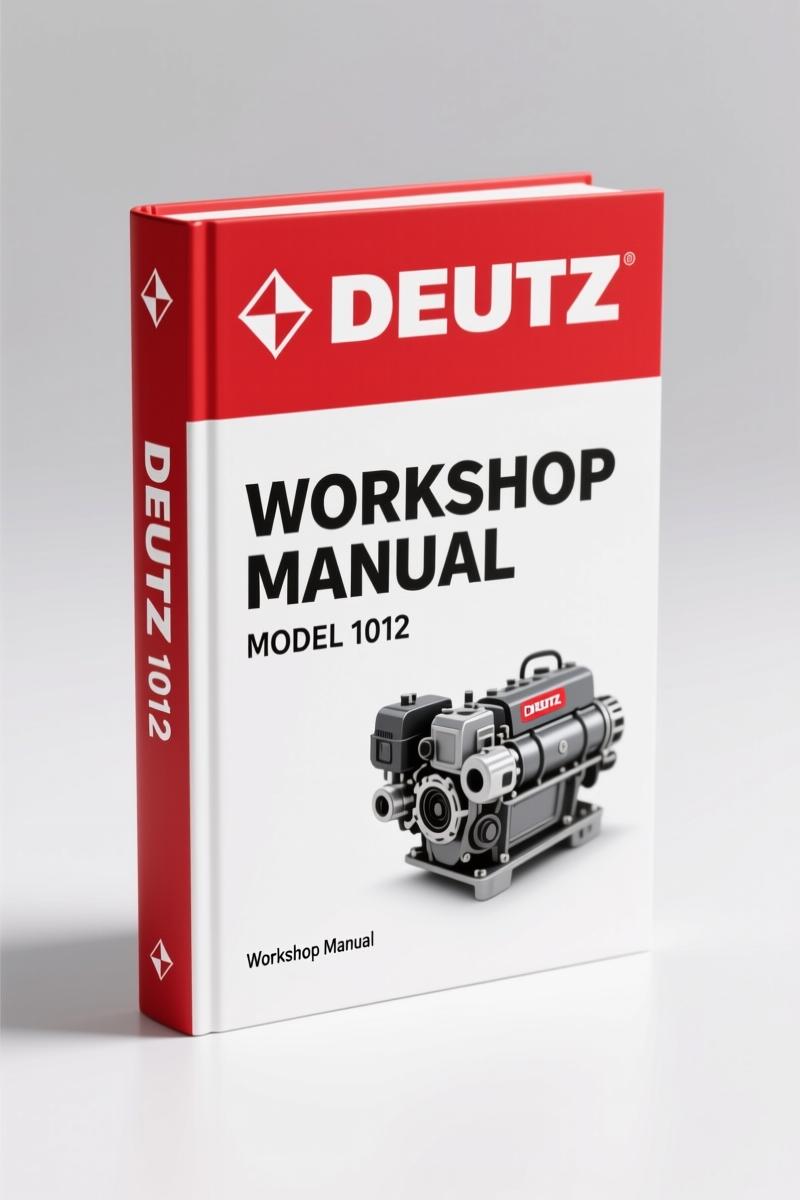
Deutz 1012, 1013 Workshop Manual – Factory Specs for Engine Repair
Original price was: $59.85.$45.00Current price is: $45.00.
Factory workshop manual for Deutz 1012 and 1013 engines – 489 pages of specification data, repair procedures, and torque specs.
Description
Deutz 1012, 1013 Workshop Manual – What You Get When You Stop Guessing
After twenty-eight years of twisting wrenches in San Antonio, I’ve seen more cylinder heads cracked by wrong torque values than I can count. Every time it’s the same story—somebody trusted a generic manual or a forum post instead of looking up the factory data. That’s why when I see a Deutz 1012, 1013 Workshop Manual, I know the guy holding it is serious. This isn’t a paperback reprint or a third-party summary. It’s the original 489-page binder from Deutz, printed in four languages, with the same specs the dealer uses. You do not guess when you have this. You measure, you adjust, and you torque to the number on the page.
Working on diesel engines without factory documentation is like welding in the dark. The 1012 and 1013 are common in industrial equipment, gen sets, and agricultural machines around here. One wrong spec and you are pulling the head a second time on your own dime. This manual puts the full factory procedure in front of you—no abbreviations, no shortcuts, just the original text from Deutz. I’ve had more than a few shop owners tell me their techs stopped coming back with stripped threads once they started using OEM manuals instead of photocopies.
Specification Data: Where You Stop Guessing
Section 1, Technische Daten – Specification data, is where you start. It lists compression pressures, valve clearances, injection timing, and every fluid capacity you need. If you are rebuilding a 1012 or 1013, you check these numbers before you turn a wrench. The manual gives them in the exact format Deutz issued—not rounded off, not converted to some aftermarket standard. That means the difference between a running engine and a knock you have to explain to a customer.
Checking and Adjusting – Why You Don’t Skip This Section
Chapter 2, Prüfen und Einstellen – Checking and adjusting, covers the steps most DIY guys ignore. Valve lash adjustment on the 1013 requires a specific feeler gauge thickness and a cold engine—skip that and you’ll burn a valve. The factory procedure shows the order of adjustment and the exact tolerances. I keep a copy of this chapter taped to my tool box for the five times a year I see a Deutz come through. It’s that simple: do it by the book or do it twice.
Repair of Components – What the Aftermarket Leaves Out
Section 3, Bauteile instand setzen – Repair of components, goes into the oil pump, cylinder head, timing gears, and injection pump. If you are replacing injectors or lapping valves, this section shows the original torque sequence and the exact order for tightening. Aftermarket manuals often skip the sequence—that is how you warp a head. Deutz printed the pattern in this chapter, with notes on when to use new bolts.
Disassembly and Reassembly of Complete Engine – The Big Job
Chapter 4, Demontage und Montage, Motor komplett – Disassembly and reassembly of complete engine, is for the full rebuild. This is the section that tells you how to pull the engine, split the crankcase, and re‑install the rotating assembly. It includes the specific puller tools and the sequence for torquing main bearing caps. Page 73 (if I recall the numbering correctly) has the torque chart for the cylinder head—eighteen foot‑pounds on the inner bolts and a different value for the outer ones. You need that chart, not a best guess from a forum.
Tools: The Right Wrenches for the Job
Section 5, Werkzeuge – Tools, lists the special tools Deutz designed for these engines. You might think you can get by with a strap wrench or an adjustable spanner, but the manual shows you the tool numbers and how to use them. For a shop that sees Deutz regularly, buying a few of those factory tools pays for itself the first time you don’t strip a nut. If you need background on how a manual transmission works alongside this engine, check the Manual Transmission article. The same logic applies—factory specs matter everywhere.
Who Needs This Manual?
DIYers who bought a used generator set or a tractor with a 1013 under the hood and don’t want to pay a dealer to diagnose a fuel issue. Shop owners who want their techs to finish jobs on time and avoid comebacks. Fleet mechanics who maintain multiple units and need one source for all the specs. If you have ever been halfway through a job and realized you don’t know the oil pressure range, this manual is for you. No fluff here—just the original Deutz content in PDF form.
Why Factory OEM Beats Aftermarket Reprints
Every time I see a reprint manual that says “for Deutz 1012/1013,” I check the torque values. I have found errors in the timing marks more than once. This document is the actual workshop manual from Deutz, scanned from the original print run. The page numbers match, the diagrams are legible, and the text is the exact four‑language layout (German, English, French, Spanish). You are not getting a condensed version—you are getting the same 489 pages that a Deutz dealer pulls off the shelf. Pair it with the Deutz 1012 Spare Parts Catalogue for part numbers, or the DEUTZ 1012 1013 2007 Workshop Manual if you need a newer revision. All of these come from the same source: factory files, not a scanner in a basement.
FAQ – Two Questions I Hear Every Week
- Does this manual include torque specs for head bolts?
- Yes. They are in Chapter 4 under cylinder head installation.
- What makes this different from a generic repair guide?
- A generic guide pulls data from multiple sources and often leaves out critical notes like bolt stretch angles, tightening sequences, and the specific tools required. This manual comes straight from Deutz’s original engineering department. Every number in the spec section was measured on a test bench and verified in the field. If the manual says 150 N·m for a main cap bolt, that is the value Deutz tested. Generic guides sometimes round to the nearest ten foot‑pounds, which on a high‑stress diesel can mean the difference between a sealed joint and a leak. I have seen it happen. The factory manual also includes the multi‑language safety warnings and the original torque sequence diagrams—details that aftermarket publishers often delete to save space. If you are paying for a manual, pay for the one that came from the people who built the engine.
If you are serious about keeping your Deutz 1012 or 1013 running on the job, get the documentation that the factory built. Access the Factory Manual DEUTZ 1012 1013 Workshop Manual and stop relying on photocopies. For more background on transmissions that bolt to these engines, see Manual Transmission articles. This manual belongs on your workbench, not in a folder on someone else’s computer.
Additional information
| Brand | Deutz |
|---|---|
| Language | English |
3 reviews for Deutz 1012, 1013 Workshop Manual – Factory Specs for Engine Repair
You may also like…
-
Sale!
Deutz 1012, 1013 2007 Workshop Manual – Factory Engine Service Specs
Original price was: $86.40.$60.00Current price is: $60.00. -
Sale!
Deutz 912, 913 2002 Workshop Manual – Factory Specs
Original price was: $72.00.$60.00Current price is: $60.00. -
Sale!
Deutz BFM 1015 2002 Workshop Manual – OEM Service Data
Original price was: $91.20.$60.00Current price is: $60.00. -
Sale!
Deutz 912, 913 Workshop Manual – Factory Specs for Technicians
Original price was: $89.05.$65.00Current price is: $65.00.
Related products
-
Sale!

1995 Operators Manual – International 1000-4000 Series | OEM Documentation
Original price was: $12.49.$9.99Current price is: $9.99. -
Sale!
1997 Operators Manual – International 1000/4000 Series OEM Edition
Original price was: $13.49.$9.99Current price is: $9.99. -
Sale!

2011 Parts Catalog – International 7400 SFA 6X6 – 1886 Pages of OEM Part Numbers
Original price was: $32.00.$25.00Current price is: $25.00. -
Sale!
1993 Electrical Schematic – International 1000/3000/4000 Bus Chassis OEM Wiring Diagrams
Original price was: $29.26.$22.00Current price is: $22.00.
Richard G. –
This is just what I needed. The PDF quality is excellent. Contains precise bolt torque specs for Deutz. I will recommend this shop to others.
diy_master –
Excellent workshop guide. Quick access after checkout process. A must-have for any Deutz 1012, DIYer doing repairs. I will definitely buy again.
Charles W. –
This is just what I was looking for. The scan is high-quality and well indexed. Contains clear wiring diagrams for Deutz. Great value for money.