
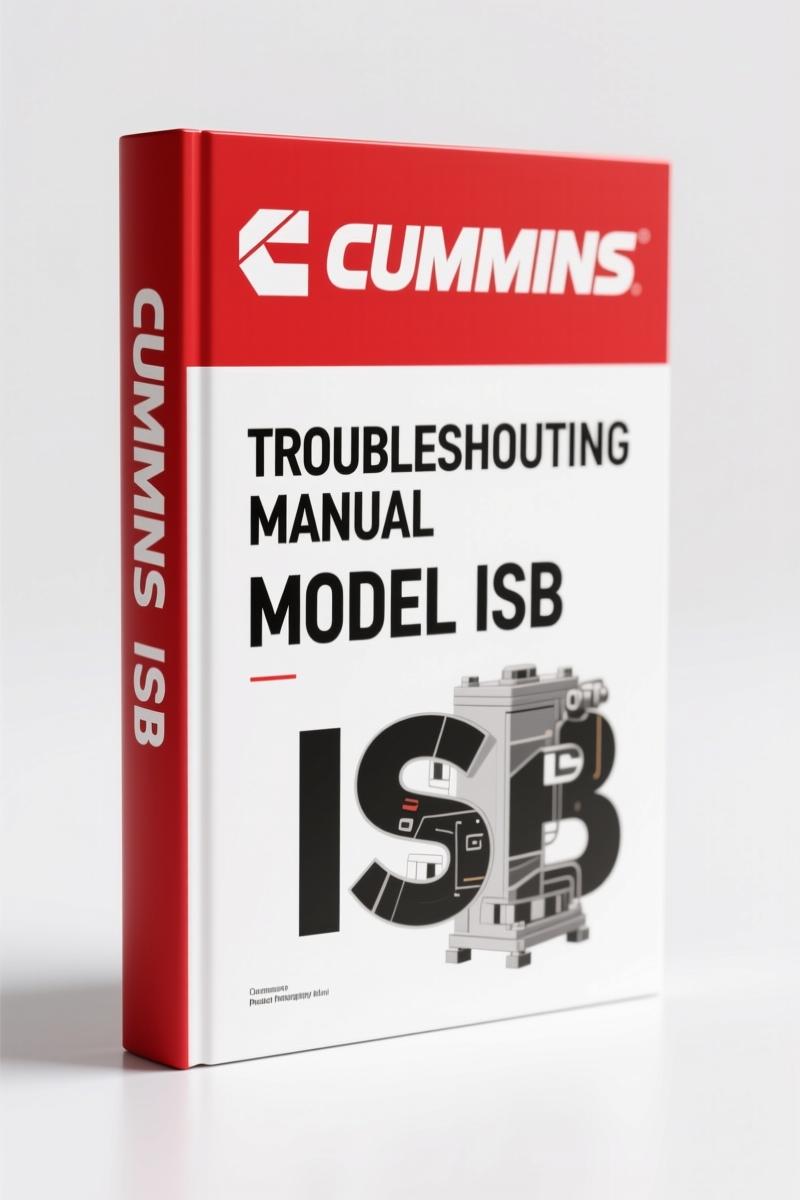
Cummins ISB/ISBe2/ISBe3/ISBe4 QSB4.5 Troubleshooting Manual 814-Page OEM Spec
Original price was: $49.60.$40.00Current price is: $40.00.
OEM 814-page troubleshooting manual covering ISB, ISBe2, ISBe3, ISBe4, QSB4.5 CM850 electronic control systems. Fault codes, symptoms, specs.
Description
Cummins ISB, ISBe2, ISBe3, ISBe4, QSB4.5 Troubleshooting Manual – 814 Pages of Factory Diagnostics
Twenty-eight years turning wrenches in San Antonio and I’ve lost count of the engines I’ve seen ruined by aftermarket manuals that skip torque specs or copy-paste wiring diagrams from the wrong model year. This Cummins ISB, ISBe2, ISBe3, ISBe4, QSB4.5 Troubleshooting Manual is the real thing – 814 pages of factory diagnostic logic from Cummins Inc., covering the CM850 electronic control system. If you are pulling fault codes or chasing a symptom on these engines, you need documentation that was written by the engineers who designed the damn thing. Not a reprint. Not a generic scan. An original OEM file.
Troubleshooting Fault Codes (FC2554 and Beyond)
The manual opens with a systematic fault code section that starts at FC2554 and works through the full list. Each code gets its own cause-correction table. You do not waste time guessing – you check the code, flip to the section, and follow the logic. This is not a list of generic OBD-II codes. These are Cummins proprietary codes with specific test procedures. Page 1 of the manual shows a symptom example for coolant temperature above normal. It lists low coolant level, collapsed radiator hose, high or low engine oil level, even dirty engine exterior. Every cause has a corresponding correction with a cross-reference to the right procedure. That level of detail saves you hours of chasing ghosts.
Coolant Temperature Above Normal – What the Factory Procedure Looks Like
Take the symptom “Coolant Temperature Above Normal.” The manual dedicates a full page to it. You see a table with causes like “Low Coolant Level” and “Collapsed Radiator Hose” and “Engine Lubricating Oil Level is too High or Low.” Each row has a check box and a correction reference. This is how a real troubleshooting manual works – it forces you to verify each step before moving on. I have seen guys skip the radiator shutters check and end up replacing a water pump for nothing. That does not happen when you follow this document. The manual also covers related symptoms like “Engine is Receiving too Much Fuel” and “Dirty Engine (Exterior)” – things that sound obvious but get overlooked when you are in a hurry.
What Makes This Manual Different from Aftermarket Junk?
Aftermarket manuals love to say they “cover” an engine. Then you open them and find torque specs listed in newton-meters with a footnote that says “convert to ft-lbs yourself.” That is a lawsuit waiting to happen. This manual was printed by Cummins in September 2013 (bulletin 4021416). It includes the foreword that tells you exactly how to use it, warnings about safety, and instructions to contact Cummins if you find a discrepancy. The specifications section (Section V) contains the actual factory tolerances – no rounding, no translation errors. If you need charge pressure or valve adjustment specs, they are in there. Trusting an aftermarket manual with a diesel engine is like trusting a map drawn by someone who has never been to the city.
3 Reasons to Keep This Manual on Your Bench
First, the troubleshooting symptom section. It covers both the old format and a new format – so you get cross-reference capability across different engine revisions. Second, the Electronic Controls Group 19 section. That part alone is worth the price if you are dealing with CM850 ECM issues. Third, the service literature appendix (Section L) lists every other manual you might need, including the shop manual and specifications manual. You can find the correct companion document for rebuild procedures. This manual is for troubleshooting in the chassis – it tells you what to fix, not how to rebuild the block.
Does This Manual Cover Fuel System Diagnostics?
Yes, but only within the scope of troubleshooting. The manual does not cover vehicle equipment problems – that is the manufacturer’s job. It does cover fault codes related to fuel pressure, injection timing, and actuator response. You will also find symptom trees for “Engine Cranks but Will Not Start” and “Excessive Smoke.” For fuel system repair procedures, you need the engine shop manual. This manual is the diagnostic partner to that book.
Who Actually Needs This Manual?
If you’re a home garage guy who works on a school bus or a box truck with a QSB4.5, you need this. If you’re a fleet mechanic handling multiple ISB and ISBe3 engines, you need this. If you’re a shop owner who has a technician burning hours because he guesses at which sensor to test, you need this. The audience is anyone who touches a Cummins CM850 engine and wants to fix it right the first time. Beginners should read the introduction (Section i) carefully – it explains how the manual is organized and warns about safety. I don’t care how many engines you’ve built – read the warnings. Coolant steam burns don’t heal fast.
For related diagnostics on earlier models, check the Cummins ISB Engine 2001 Diagnostics Manual or the Cummins ISB and QSB5.9 Troubleshooting Manual. If your vehicle uses the larger ISL or QSL platform, see the Cummins ISB QSB ISC QSC ISL QSL Troubleshooting Manual. And when the troubleshooting points to a drivetrain issue, don’t forget to consult the Manual Transmission service info for your vehicle, as well as the Manual Transmission clutch adjustment specs – wrong clutch drag can mimic engine power complaints.
- How many pages does this manual have?
- 814 pages of OEM troubleshooting content.
- Does the manual include torque specifications for head bolts?
- Yes, the Specifications section (Section V) lists all critical torque values including cylinder head bolts, main bearing caps, and injector hold-downs. You will also find fluid capacities and tightening sequences. For the exact page number, look under “Specifications” in the table of contents – the manual is organized by section letters and numbers. I recommend printing that page and laminating it for the shop wall.
- Is this manual the same as the one Cummins sells directly?
- Yes. This is the identical factory document – bulletin 4021416, printed September 2013. It is the same file a dealer tech would pull up on their laptop. No aftermarket rewrites, no third-party summaries.
- Can I use this manual for a QSB5.9 or QSB6.7?
- This specific manual covers QSB4.5, QSB5.9, and QSB6.7 as listed on the title page. It also includes ISC, QSC8.3, ISL, ISLe3, ISLe4, and QSL9 with the CM850 control system. If your engine uses a different ECM, you need the corresponding troubleshooting manual.
Stop burning billable hours on guesswork. Get the factory troubleshooting data that every Cummins tech relies on. Click below to Access the Factory Manual and add it to your digital library. Your engine – and your wallet – will thank you.
Additional information
| Brand | Cummins |
|---|---|
| Language | English |
2 reviews for Cummins ISB/ISBe2/ISBe3/ISBe4 QSB4.5 Troubleshooting Manual 814-Page OEM Spec
You may also like…
-
Sale!
Cummins 495, 743, 855, V-1710, KT-1150 Service Manual – 143 Pages
Original price was: $89.70.$65.00Current price is: $65.00. -
Sale!
Cummins NT 855 Service Manual – 693 Pages of OEM Repair Data for Big Cam III & IV
Original price was: $104.00.$65.00Current price is: $65.00. -
Sale!
Cummins QSB6.7, ISL, ISC, ISB, QSB4.5 2014 Repair Manual – 810 Pages
Original price was: $109.20.$70.00Current price is: $70.00. -
Sale!
Cummins ISB, ISBe2, ISBe3, ISBe4, QSB4.5 Troubleshooting Manual
Original price was: $92.30.$65.00Current price is: $65.00.
Related products
-
Sale!

1994 Troubleshooting Manual – International 1000-4000 FBC
Original price was: $60.00.$50.00Current price is: $50.00. -
Sale!

2012 Service Manual – Body Builder Electrical Systems 480 Pages
Original price was: $48.28.$34.00Current price is: $34.00. -
Sale!

2005 Parts Catalog – International NGD 3.0 L Engine (77 pages)
Original price was: $44.70.$30.00Current price is: $30.00. -
Sale!

Technical Manual – International DT 530 & HT 530 (118 Pages)
Original price was: $37.00.$25.00Current price is: $25.00.
Thomas B. –
Excellent workshop guide. It is easily zoomable on my iPad without losing quality. It guided me to fix my Cummins ISB/ISBe2/ISBe3/ISBe4 transmission. Highly recommended for mechanics.
diy_master –
Great buy! It is easily zoomable on my tablet without blur. Contains detailed bolt torque specs for Cummins. Saves me so much time.