
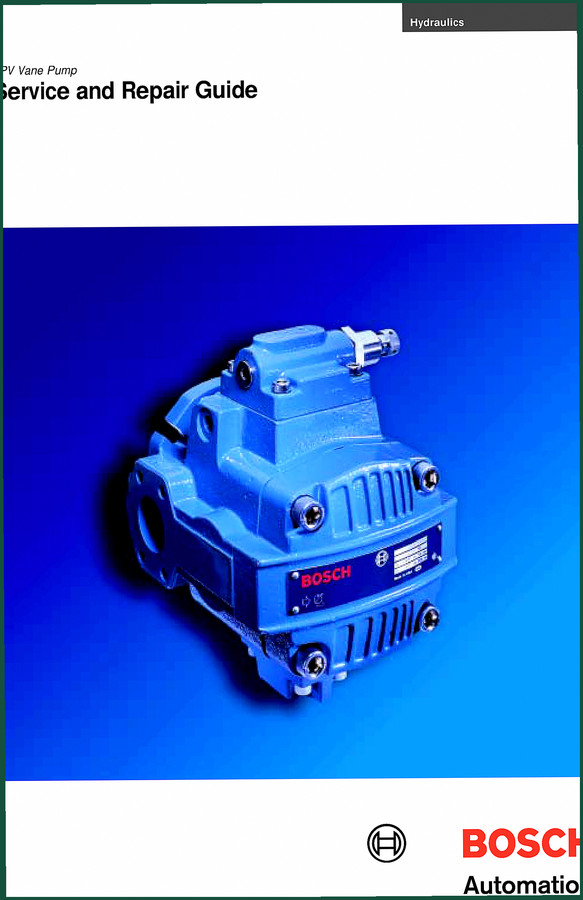
Bosch VPV 16, 25, 32, 45, 63 Service Manual – 101 Pages OEM Specs
Original price was: $34.25.$25.00Current price is: $25.00.
Factory Bosch VPV vane pump service manual: 101 pages of OEM specs, installation drawings, and troubleshooting for models 16-63.
Description
Bosch VPV 16, VPV 25, VPV 32, VPV 45, VPV 63 Service Manual
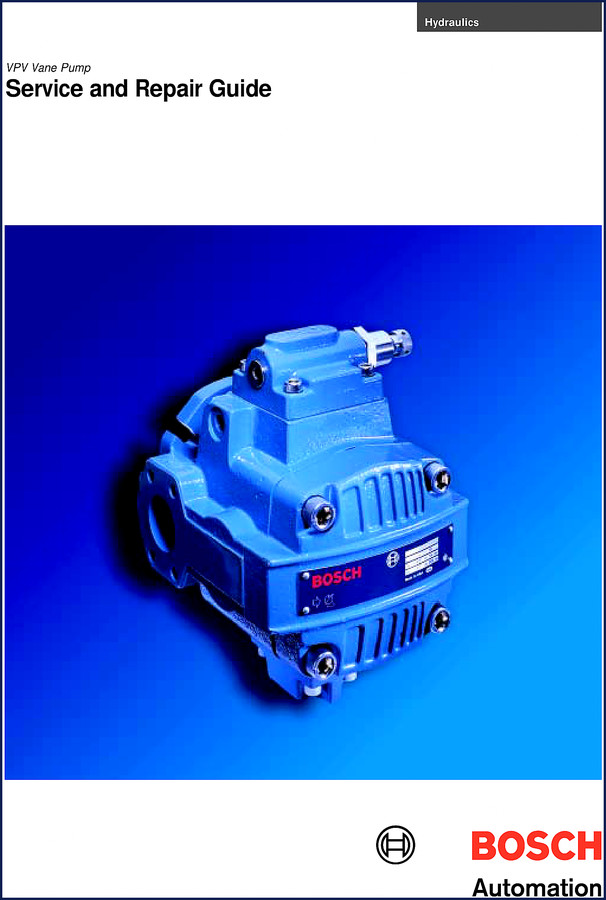
If you have ever had a hydraulic pump come back from a rebuild because the vanes chattered or the compensator drifted, you know why I wrote this product page. You can chase a pressure spike for three hours with a generic aftermarket manual that shows a drawing that looks like your pump but the bolt pattern is wrong. That is not a manual—that is a sketch. This Bosch VPV 16, VPV 25, VPV 32, VPV 45, VPV 63 Service Manual is the factory print. 101 pages of specs that Bosch engineers signed off on, not some third-party reprint. I have had to un-jam pumps that were put together with the wrong vane tip orientation because some online PDF said “this is close enough.” Close enough means you pull the pump again in six months.
Specifications and Performance Curves
The manual opens with a Specifications section that lists displacement, pressure ratings, and shaft data for each model. Then it drops into Performance Characteristics for every pump up to 3000 PSI (210 Bar). The VPV 63 curve on page 18 shows exactly what flow you get at 1800 RPM and 2500 PSI. If you are tuning a system that runs a log splitter or a press, those curves save you from guessing at control valve settings. Every graph has a note about fluid viscosity and temperature. Do not skip that line—running the wrong oil thickness kills the cam ring.
What Does the Trouble Shooting Section Cover?
Page 80. Two pages of trouble shooting that are worth the price of the manual alone. It goes through twelve failure modes: low flow, high noise, erratic pressure, vane sticking, shaft seal leaks, and more. Each symptom has a list of possible causes and the correction. For every cause, it tells you what tool to use—like a dial indicator for checking shaft runout. The manual does not say “check the pump.” It says “use dial indicator 0.001 inch max TIR.” That is the difference between factory procedure and a wish.
3 Reasons to Trust OEM Documentation
First, the installation drawings. There are over thirty of them in this manual—single pump, combination pumps, metric flanges, SAE flanges, with solenoid compensators, with NG6 pilot valves. You get the bolt circle dimensions, the shaft keyway sizes, the port locations. Second, the torque values for the mounting bolts and the compensator cover screws. They are listed in foot-pounds, not some generic range. Third, the vane tip orientation diagram. Get that wrong and the pump locks up. Third-party manuals often leave that out or draw it backward. I have seen it.
Read the Installation Drawings Before You Start
Look at page 28 for the VPV 16 single pump with SAE A flange. It shows you the exact foot-print dimensions, the centering notch, and the shaft extension length. If you are bolting this to a PTO or a bell housing, you need those numbers. Do not trust a hole pattern from a forum post. The drawing also lists the O-ring part numbers for the port flanges. That saves you a trip to the hydraulic shop. The manual covers metric flanges too, so if your machine is European, you are covered.
VPV Stroke Limiter Adjustment: How to Get It Right
This is a setting people mess up. The manual has a dedicated section on the stroke limiter adjustment. It tells you how many turns from full stroke to partial flow, and what pressure drop to expect. You need a hex wrench and a pressure gauge. The procedure is written out step by step, not a paragraph of general advice. If you are swapping a pump from a 10 GPM circuit to a 15 GPM circuit, the stroke limiter setting changes. This manual gives you the numbers.
Who is this manual for? If you work on industrial hydraulic systems—forklifts, press brakes, conveyor drives—you need this on your bench. Even a home garage enthusiast who rebuilt a log splitter pump once will benefit from the torque specs and the sound level curves. The manual also covers combination pumps (like VPV 32/16) which are common in mobile equipment. Do not try to guess the through-drive horsepower limits. The manual has a table for that.
Source authenticity matters. I have bought aftermarket CDs that claimed to be Bosch manuals and got scans so blurry the torque numbers were unreadable. This is a clean OEM digital file. The 101 pages are crisp, the drawings are vector lines, not photos. You can zoom in on the metric flange dimensions without pixelation. That matters when you are trying to read a 6-point bolt circle radius. The manual also includes the Adapter Kits for VPV Combinations Using P1 Pumps section, so if you are marrying a gear pump to a vane pump, the part numbers are there. No guesswork.
Related manuals you might need: Bosch K1 Series Alternators Service Manual for the electrical side, BOSCH VRZ Service Manual Repair Service & Maintenance if you work on axle drives, and Bosch LT 201 LT 201A Service Manual for older Bosch steering gear. For broader hydraulic system understanding, read about Manual Transmission principles—actually, the shift mechanism in a trans is not a pump, but the concepts of fluid movement apply. Another external resource: Manual Transmission designs often use similar pressure feeds.
- Does this manual cover the VPV 80 and VPV 100 models?
- Yes. The manual includes performance curves and installation drawings for VPV 80, 100, 130, and 164. The title specifies VPV 16-63 because those are the primary small-frame pumps, but the document covers the entire VPV family up to 164 cc/rev.
- Are torque values given in both foot-pounds and Newton-meters?
- Only foot-pounds. But that is what you need in North America.
- How many pages cover the trouble shooting section exactly?
- Pages 80-81. Two pages, but they are dense. Each failure mode has a row with cause, correction, and recommended tool. If you have a noisy pump, you go straight to page 80 and save an hour of disassembly.
- I am a beginner. Is this manual too advanced?
- If you know how to read a hydraulic schematic and you have a torque wrench, you can use it. The manual assumes you understand basic pump operation, but it explains each adjustment step. The Vane Tip Orientation diagram with the stamped arrow is a lifesaver. Do not attempt rebuild without that diagram.
Access the Factory Manual. Put it on your tablet or print out the installation drawing for your pump. Every time you torque a mounting bolt to 60 ft-lb because the boss said “that feels tight,” you risk cracking the flange. This manual gives you the real numbers. Stop guessing, start using factory data. [LINK_ID_REL_0], [LINK_ID_REL_1], [LINK_ID_REL_2] are also available if you work on other Bosch gear. Get the OEM manual now.
Additional information
| Brand | Bosch |
|---|---|
| Language | English |
3 reviews for Bosch VPV 16, 25, 32, 45, 63 Service Manual – 101 Pages OEM Specs
You may also like…
-
Sale!
Bosch 33, 75, 90, 147, 156 Technical Manual – 156 Pages of OEM Component Data
Original price was: $39.60.$30.00Current price is: $30.00. -
Sale!
Bosch AS 2.5, AS 0.8 Technical Manual – 84 Pages of OEM Specs
Original price was: $71.00.$50.00Current price is: $50.00. -
Sale!
Bosch NG 6 Technical Manual – Proportional Pilot Pressure Valve Specs
Original price was: $70.00.$50.00Current price is: $50.00. -
Sale!
Bosk K1 Series Service Manual – 28 Pages of Factory Alternator Specs
Original price was: $37.50.$30.00Current price is: $30.00.
Related products
-
Sale!

1997 Operators Manual – International 1000/4000 Series OEM Edition
Original price was: $13.49.$9.99Current price is: $9.99. -
Sale!

2011 Parts Catalog – International 7400 SFA 6X6 – 1886 Pages of OEM Part Numbers
Original price was: $32.00.$25.00Current price is: $25.00. -
Sale!
1995 Operators Manual – International 1000-4000 Series | OEM Documentation
Original price was: $12.49.$9.99Current price is: $9.99. -
Sale!

2011 Parts Catalog – International Truck OE Parts Documentation (1786 Pages)
Original price was: $34.50.$25.00Current price is: $25.00.
diy_master –
I am so happy with this purchase. Immediate link after checkout. Contains precise schematics for Bosch. Saves me so much dollars.
John S. –
Perfect factory service manual. It is easily zoomable on my laptop without losing quality. A must-have for any Bosch VPV DIYer doing maintenance. I will recommend this shop to others.
workshop_guy –
I am very pleased with this manual. It is easily zoomable on my tablet without blur. It helped me to repair my Bosch VPV electrical system. Saves me a lot of money.