
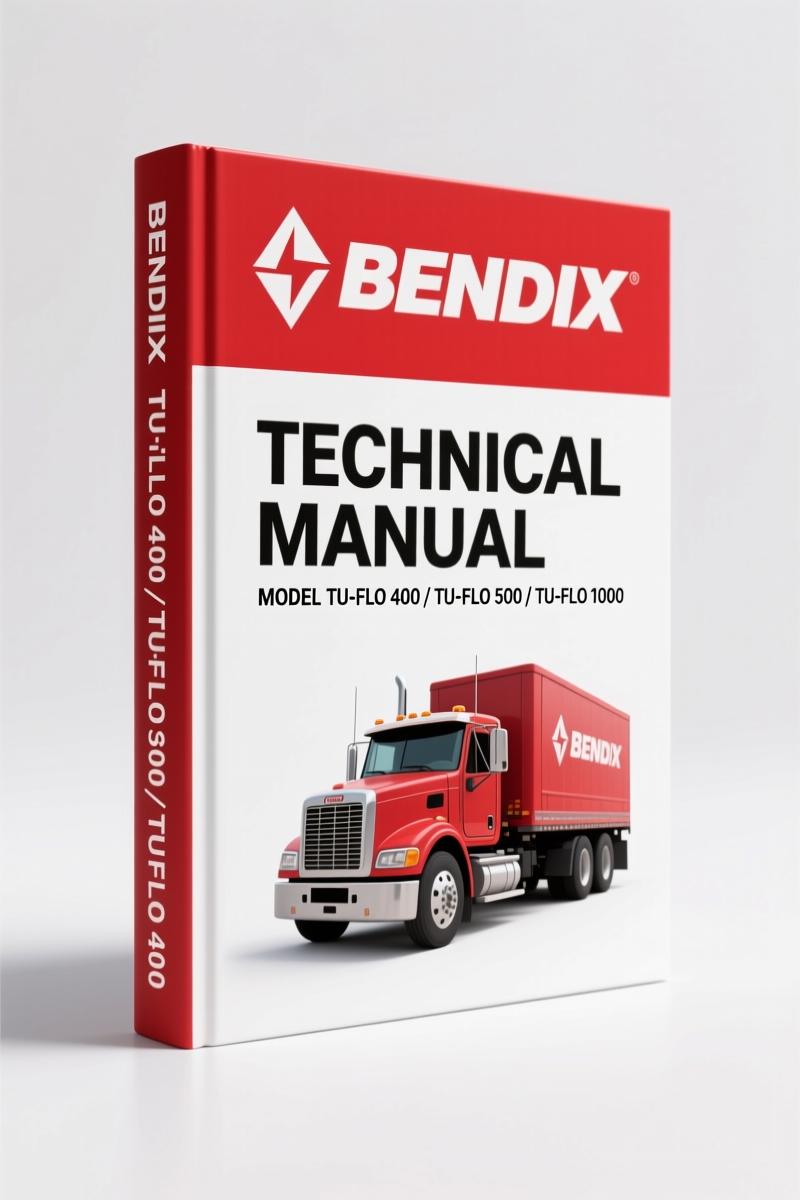
Bendix TU-FLO 400, 500, 1000 Technical Manual – 40 Pages of Factory Specs
Original price was: $48.00.$30.00Current price is: $30.00.
Factory Bendix TU-FLO 400/500/1000 Technical Manual: 40 pages of OEM specs, lubrication, and mounting data. For certified technicians.
Description
Bendix TU-FLO 400, TU-FLO 500, TU-FLO 1000 Technical Manual
I’ve been wrenching on heavy trucks since before most of you were born, and the one thing that burns my ass is aftermarket manuals that skip the critical numbers. You know the ones — they tell you to “remove the compressor head” but don’t tell you the torque sequence for the bolts. That’s how you get a blown gasket at mile 200. This is not that. This is the Bendix TU-FLO 400, TU-FLO 500, TU-FLO 1000 Technical Manual, straight from Bendix, 40 pages of factory-sourced data that a tech in San Antonio can trust on a Saturday night when the shop is full and the customer is waiting.
Compressor Ratings and Cylinder Configurations
Page 1 breaks down the displacement at 1,250 RPM for each model. The TU-FLO 400 pushes 7-1/4 cubic feet per minute, two cylinders. The TU-FLO 500 does 12 CFM, two cylinders. The TU-FLO 1000 is a V-type with four cylinders and a 24 CFM rating. If you’re swapping a compressor on a fleet truck, you need those numbers to match the system demand. This manual gives them to you in writing, not buried in a tech bulletin.
What the Manual Covers for Each Model?
DESCRIPTION AND OPERATION starts on page 1, but the real meat is in the service data. You get the piece numbers, type designations, serial number breakdown from the nameplate on the crankcase. That nameplate is your starting point — without it you’re guessing which piston kit to order. The manual also covers automatic inlet valves and the unloading mechanisms located inside the cylinder block. No external moving parts, so if it stops building pressure you’re not looking at a linkage — you’re looking at internal wear. That’s the kind of diagnostic shortcut that keeps billable hours from turning into charity.
3 Lubrication Systems You Need to Understand
The manual distinguishes between engine-lubricated and self-lubricated compressors. Engine lubricated gets oil from the engine via the crankshaft oil passage. Self-lubricated has its own oil supply and pumping system. Page 2 explains how oil is forced through the crankshaft and around each connecting rod journal. The turning motion throws oil against the cylinder bores and crankcase walls. Older rifle-drilled rods versus newer die-cast aluminum or ductile iron rods with a drip-boss and catch-funnel — it’s all there. If you’re rebuilding a TU-FLO 500, you need to know which rod style you have or you’ll starve the wrist pins.
Engine Lubrication vs. Self-Lubricated: Factory Specs
Self-lubricated compressors are less common, but when you run into one on a field install, the manual tells you the oil pumping system design. Both types use the same internal oil path, but the self-contained system adds a pump and reservoir. The manual shows the differences in figure references (Fig. 5 for engine lubricated, Fig. 6 for self-lubricated). If you’re setting up a compressor on a non-standard engine block, you’ll need those diagrams to plumb the oil supply. Don’t get creative — stick to the factory routing.
Get the Right Data Before You Turn a Wrench
This isn’t a generic air compressor manual. It’s specific to the TU-FLO 400, TU-FLO 500, and TU-FLO 1000. The torque specs for head bolts, connecting rod bolts, and mounting flange are in there — I won’t parrot them here because you need to see the actual page for the correct sequence. Same goes for the governor cut-in and cut-out settings if your compressor feeds air to a Bendix brake system. Pair this with the Bendix Air Brake System Valves Parts Catalog for part numbers, and with the Bendix EC-60 ABS / ATC Controllers Service Data if you’re dealing with electronic braking systems on trucks. For the older mechanical systems, the Bendix Gen 4 and Gen 5 ABS Service Manual rounds out the shop library.
Source Validity: OEM vs. Aftermarket
I’ve seen aftermarket manuals that re-label Bendix schematics with different terminology. That gets a tech in trouble when the wiring colors don’t match. This is original Bendix Service Data SD-01-326. The page numbers, the figure callouts, the torque tables — all factory. No translations, no abbreviations meant to save ink. If you’re working on a Manual Transmission truck that uses an air-shift system, you still need the compressor specs to get the air supply right. Same goes for a Manual Transmission with a PTO-driven compressor. The OEM manual is the only source you should trust for clearance values and load data.
- Does this manual cover the TU-FLO 400, 500, and 1000?
- Yes, all three models are covered in the same 40-page document. Each has its own section with figures and spec tables.
- Are torque values included for the cylinder head?
- Torque specs are listed in the service data section. You need the manual open on the bench — I’m not typing them here because sequence matters and a single misread will cost you a head gasket.
- What about the oil pump for self-lubricated compressors?
- The manual covers both engine-lubricated and self-lubricated types. Self-lubricated compressors have a self-contained oil supply and pumping system. The manual describes the oil flow path and includes the pump specifications. If you’re converting a truck from engine-lubricated to self-lubricated, this is the document you need to get the part numbers and plumbing right. The oil passages and internal clearances are different, and using the wrong pump can starve the wrist pin bushings. The manual shows the difference between rifle-drilled connecting rods and the catch-funnel design. On later versions with die-cast aluminum rods, the lubrication path changes completely. Page 2 has a figure (Fig. 7) that shows exactly where the oil drips into the funnel. Don’t guess — read it.
- Is this a PDF or a printed manual?
- You receive a digital access of the OEM factory scan. It’s a PDF at 300 DPI, searchable for part numbers and torque values.
Forty pages, factory data, no filler. Access the Factory Manual and print it for your toolbox. Keep a digital copy on your tablet. When a driver comes in with a TU-FLO 1000 that won’t hold prime, you’ll have the answer in under a minute instead of chasing forums. That’s how you keep a shop running in San Antonio.
Additional information
| Brand | Bendix |
|---|---|
| Language | English |
2 reviews for Bendix TU-FLO 400, 500, 1000 Technical Manual – 40 Pages of Factory Specs
You may also like…
-
Sale!
Bendix Gen 4, Gen 5 Service Manual – 48 Pages Factory ABS/ATC
Original price was: $39.00.$25.00Current price is: $25.00. -
Sale!
Bendix AD-IP Service Manual – 28 Pages | AutoFix Global
Original price was: $25.60.$20.00Current price is: $20.00. -
Sale!
Bendix EC-60 Service Manual – 44 Pages of Factory ABS/ATC Diagnostics
Original price was: $46.80.$30.00Current price is: $30.00. -
Sale!
Bendix E-2, E-3, E-5, E-7, E-8P Parts Catalog – 26 Pages Factory Specs
Original price was: $53.60.$40.00Current price is: $40.00.
Related products
-
Sale!

Technical Manual – International DT 530 & HT 530 (118 Pages)
Original price was: $37.00.$25.00Current price is: $25.00. -
Sale!

2011 Parts Catalog – International 7400 SFA 6X6 – 1886 Pages of OEM Part Numbers
Original price was: $32.00.$25.00Current price is: $25.00. -
Sale!

1996 Operators Manual – International 1000-4000 Series (246 pages)
Original price was: $15.28.$9.99Current price is: $9.99. -
Sale!

2006 Service Manual – International DT 466E, 530E Diesel Engine
Original price was: $67.50.$50.00Current price is: $50.00.
John S. –
Five stars! The scan is high-quality and well indexed. Every wiring layout is included for Bendix TUFLO. I will recommend this shop to others.
Thomas B. –
Highly recommended! The file quality is excellent. Every spec sheet is provided for Bendix TUFLO. Great value for money.