
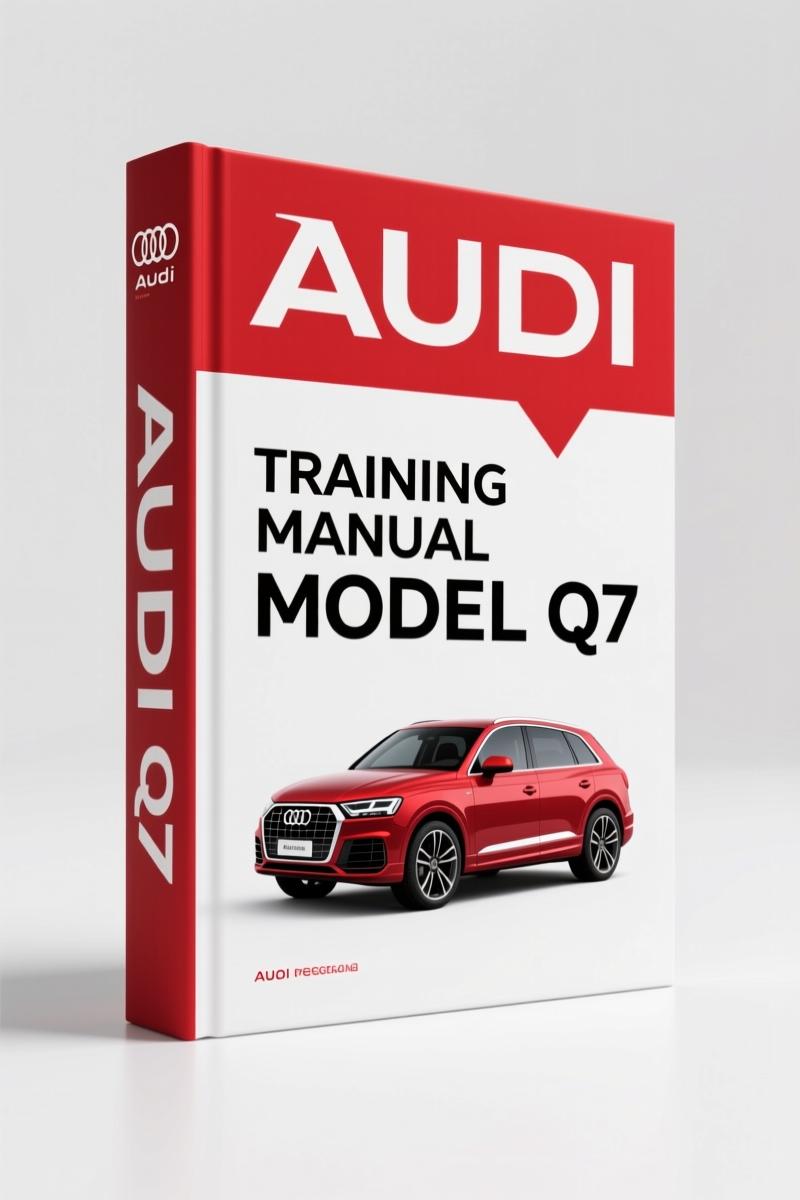
Audi Q7 Training Manual – Factory Self-Study Programme 361
Original price was: $27.45.$22.50Current price is: $22.50.
Audi Q7 factory training manual (76 pages) – body, engine, running gear, electrical, HVAC, infotainment. OEM self-study programme.
Description
Audi Q7 Training Manual – Self-Study Programme 361
If you have cracked open a third-party aftermarket manual for an Audi Q7 and found yourself staring at a wiring diagram that doesn’t match the harness in front of you, you already know the frustration. This Training Manual (Self-Study Programme 361) is not a repair manual – it’s the factory’s own deep-dive into how every system on the Q7 works. 76 pages of Audi-approved technical theory, with cutaway illustrations and system logic that no Chilton or Haynes reprint can replicate. You get the design intent, the sensor relationships, and the failure modes that Audi engineers documented when the vehicle was new. That matters when you’re diagnosing a no-start or a suspension fault that doesn’t throw a code the way you expect.
Body Structure and Passenger Protection
Pages 8 through 12 cover the body shell design and the passenger protection systems. The manual walks you through the load paths in the unibody, the high-strength steel zones, and how the restraint system interacts with the airbag control module. For a technician, this is gold when you are cutting out a damaged section or troubleshooting a side-impact sensor fault. The section on passenger protection includes the deployment logic for the front and side airbags, plus the seat belt tensioner triggers. If you are a shop owner who does structural repair, having this factory reference on the tablet saves you from guessing sensor locations.
Engine Overhaul Coverage
The engine section runs from page 34 to the end of that chapter. It covers both the 4.2L FSI and the 3.0L TDI – the same powerplants that came in the early Q7s. The manual explains the direct injection strategy, the variable valve timing, and the exhaust gas recirculation circuits. It is not a step-by-step rebuild guide; it is a systems-level explanation. For example, it details why the high-pressure fuel pump pulse damper is located where it is, and what happens to the rail pressure curve when the pressure control valve fails. That kind of knowledge lets you diagnose a lean-code condition without throwing parts at it.
Running Gear: Suspension and Brake System Logic
Starting at page 44, the running gear chapter covers the adaptive air suspension, the quattro driveline, and the brake system. The manual explains the self-leveling valve relationships and the pressure accumulator precharge. If you are working on a car that sits low on one corner after a weekend, these pages tell you where to look first – the ride-height sensors, the compressor dryer, or the solenoid block. The torque values for the suspension subframe bolts are not here (this is a training manual, not a workshop manual), but the system architecture is laid out clearly. Pair this with the workshop manual for the actual torque specs, and you will not waste time pulling the wrong module.
Electrical System and ESX Control Override
Pages 50 through 53 cover the electrical system, including the onboard power supply control unit (ESX) and the central gateway. The training manual explains how the ESX manages the sleep-mode wake-ups and the terminal 15 relay control. When a Q7 comes in with a dead battery after three days of sitting, the ESX current draw diagnostic steps are laid out here. The infotainment section on pages 68-76 covers the MMI interface, the MOST bus topology, and the amplifier communication. For audio system failures that do not trigger a DTC, this section shows you the signal flow from the head unit to the speakers.
Who Should Use This Manual
This is for the technician who already has a workshop manual (like the one from Audi or Bentley) and needs the engineering background to speed up diagnostics. It is also for the advanced DIY owner who is comfortable reading electrical schematics and wants to understand why the Audi Q7 behaves a certain way. Beginners will find the terminology heavy – the manual assumes you know what a CAN-bus is and how a pressure sensor works. But if you have been turning wrenches for a few years, this training manual fills the gaps that a generic repair guide leaves open. The information is metric (all specs in liters, kg, bar), so have your conversion chart handy if you work in imperial units.
Source Validity: Factory Training vs. Reprints
Every page in this manual comes from Audi’s own Self-Study Programme series – SSP 361 for the Q7. That means the content was written by Audi engineers, reviewed by Audi technical trainers, and printed on factory presses. Aftermarket manuals repackage generic data from multiple models and often miss the specific software version notes that Audi released. This manual references the software version applicable at the time of compilation (see the note on page 3). If you are chasing a fault that appears only after a certain ECU flash, the reprint shop manuals will not warn you. This one does.
- Does this manual contain torque specifications for the Audi Q7 engine and chassis?
- No. This is a training manual, not a workshop manual. It explains system function but does not list torque values or service procedures.
- I have a 2010 Audi Q7 3.0 TDI with a suspension fault. Will this 76-page manual help me diagnose it?
- Yes – the running gear section on pages 44-49 covers the adaptive air suspension system, the level control module, and the compressor circuit. It explains the logic behind the solenoid valve activation, which is exactly what you need to isolate a sensor versus a solenoid failure. You still need the workshop manual for component replacement steps and torque specs, but understanding the system architecture here will cut your diagnostic time in half. Pair it with the Audi Q7 Electrical System Self-Study Programme 364 for the wiring details, or the Audi Q7 Self-study programme 375 Training Manual for later model changes. The Audi Q7 Self-study programme Training Manual bundle covers all generations.
For a broader look at modern vehicle technology, the Automotive Industry Overview can give you context on how Audi’s approach fits into the industry. And if you want to understand the difference between the ZF 8-speed automatic and the Manual Transmission that Audi no longer offers, that link has the basics.
Access the Factory Manual now and get the engineering knowledge that separates a parts-swapper from a real diagnostician. This is the same resource Audi uses to train its own dealer technicians – put it on your shop tablet and stop guessing.
Additional information
| Brand | Audi |
|---|---|
| Language | English |
4 reviews for Audi Q7 Training Manual – Factory Self-Study Programme 361
You may also like…
-
Sale!
Audi A3 2003 Repair Manual – Fuel System Service Documentation
Original price was: $63.45.$45.00Current price is: $45.00. -
Sale!
Audi 100, 200 1989 Workshop Manual – Factory Service for 5-Cylinder Engine
Original price was: $63.45.$45.00Current price is: $45.00. -
Sale!
Audi 5000 S 1985 Wiring Diagram – OEM Cooling Fan Circuit Data
Original price was: $86.90.$55.00Current price is: $55.00. -
Sale!
Audi A8, Q7 Training Manual – Ceramic Brake Systems
Original price was: $54.00.$45.00Current price is: $45.00.
Related products
-
Sale!

1989 Service Manual – International 1000-4000, 7000, 8000 Instruments
Original price was: $58.80.$40.00Current price is: $40.00. -
Sale!

Acura Integra 1998 Service Manual – 1891 Pages Factory OEM Documentation
Original price was: $31.75.$25.00Current price is: $25.00. -
Sale!
2004 Acura TSX Wiring Diagram – 73-Page Factory Electrical Schematics
Original price was: $15.88.$9.99Current price is: $9.99. -
Sale!
1996 Operators Manual – International 1000-4000 Series (246 pages)
Original price was: $15.28.$9.99Current price is: $9.99.
pro_mechanic –
Perfect OEM spec sheet. The text is searchable and easy to navigate. Every spec sheet is provided for Audi Q7. I will definitely buy again.
Robert M. –
This is just what I required. It is very easy to read on my tablet without losing quality. It guided me to repair my Audi Q7 transmission. I will definitely buy again.
Michael T. –
This is just what I was looking for. The file is very clear. It helped me to repair my Audi Q7 transmission. Saved my repair job! Thanks.
Charles W. –
I am very pleased with this transaction. The pages are clean and easy to navigate. Every wiring layout is provided for Audi Q7. Saves me so much money.