
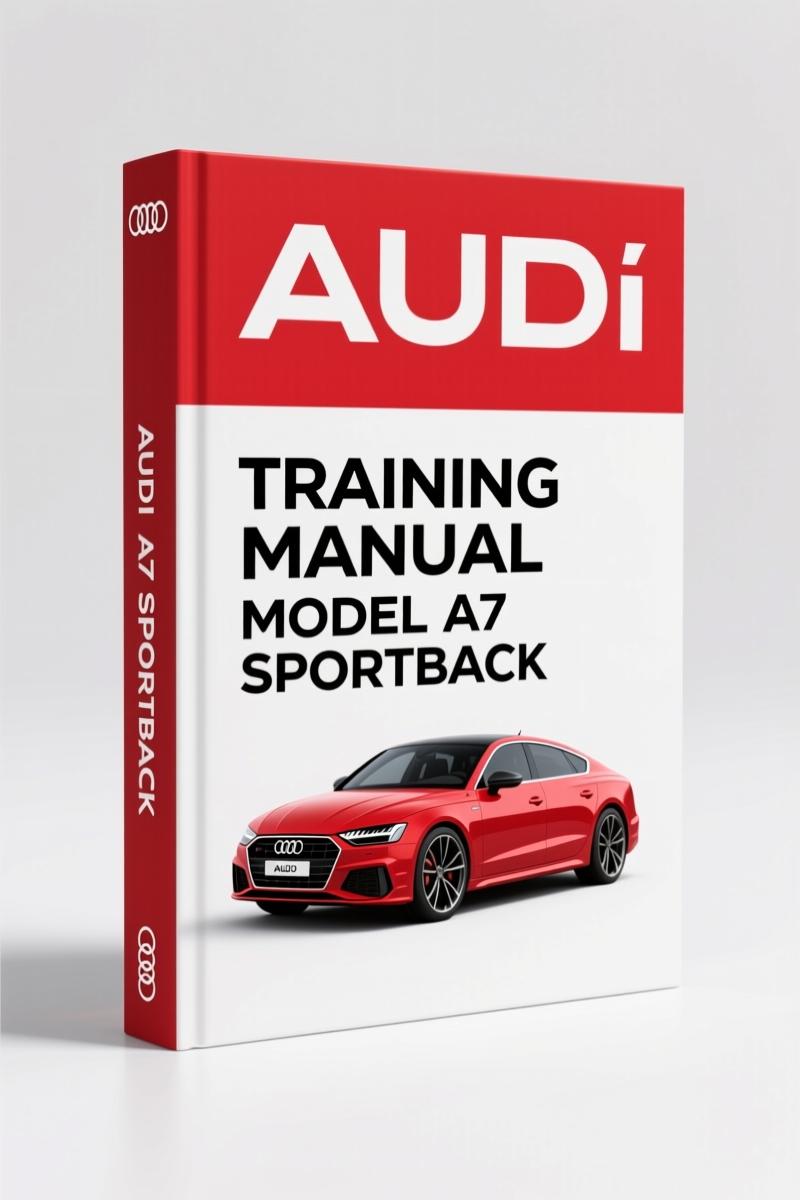
Audi A7 Sportback Technical Manual – Running Gear & Suspension Analysis
Original price was: $34.43.$22.50Current price is: $22.50.
Factory Audi A7 Sportback technical training manual covering adaptive air suspension, steering, brake systems, and ESP. 44 pages of OEM design data.
Description
Audi A7 Sportback Technical Manual
Let me spell this out straight: I’ve seen DIY guys tear into an A7 Sportback with nothing but a generic scan tool and a YouTube video. Then they come into my shop with a car that has an air suspension fault they turned into a cracked control arm. I get it – shop labor rates in San Antonio will eat your lunch. But skipping the factory-level understanding of how this car’s running gear works is how you turn a $200 diagnostic into a $1,200 parts cannon. That’s why the Audi A7 Sportback Technical Manual exists. It’s 44 pages of Audi Service Training content – exactly what the factory uses to teach technicians the theory behind the suspension, steering, brakes, and ESP. It’s not a repair manual – it tells you right on page 2 that it’s a self-study programme. But if you’re going to touch the adaptive air suspension, the five-link front axle, or the electromechanical steering, you need this knowledge first.
This manual starts with an overview of the running gear / suspension concept – the same footprint as the Audi A8 and A6 but with a 69 mm longer wheelbase and wider front track. It details the five-link front axle and trapezoidal-link rear axle, exactly the geometry that makes this car handle. Then it dives into the adaptive air suspension (AAS) system components, control strategy, and service jobs. Page 7 covers running gear alignment specs. Page 16 walks through service procedures for the air springs. If you’re chasing an intermittent level control fault, you’ll find the system logic and diagnostic hints here that no aftermarket manual will give you. The electromechanical steering section (starting page 20) explains how the power assistance reduces fuel consumption by up to 0.3 L/100 km and lists the additional functions – you cannot align this car correctly without understanding its steering angle sensor calibration. Brake system and ESP sections (pages 32–38) cover system components, service jobs, and system functions like the control unit for sensor electronics J849.
Adaptive Air Suspension: System Components and Control Strategy
If you’ve ever replaced an air spring on an Audi without knowing the pressure limits, you’ve risked damaging the compressor or blowing a line. This manual devotes eight pages to the AAS system: component locations, pressure supply, damping valves, and the control unit’s strategy for level control and ride height adaptation. It shows the interaction between the level sensors, the compressor unit, and the driver information displays. You will understand why the suspension drops overnight and whether it’s a leak or a logic issue. The service jobs section gives you the order for evacuating and refilling the system – critical if you’re swapping a strut.
3 Sections You Cannot Afford to Skip
First, the front and rear axle geometry pages (pages 5-6). These give you the exact camber, toe, and caster ranges – not generic values from an aftermarket database. Second, the steering system overview (page 20) – it explains how the steering gear sits in front of the axle on the subframe, which is why you need a specific puller for the tie rod ends. Third, the ESP system functions (page 36). The Electronic Stability Program on the A7 Sportback uses a yaw rate sensor and steering angle sensor; if you replace the steering rack, you must recalibrate the steering angle sensor using the procedure in this manual. Miss that step, and the ESP will flag a fault every time you take a corner.
Does This Manual Cover the Brake System and ESP?
Yes, from page 32 through page 38. The brake system section lists components like the vacuum brake booster and the ESC hydraulic unit. There’s a service jobs subsection that tells you how to bleed the system after a module replacement – including the sequence for actuating the solenoid valves via the diagnostic tool. The ESP section explains the torque vectoring function by braking individual wheels – not something you’ll figure out from a wiring diagram alone. If you’re working on a car with a malfunction indicator light for ESP, this manual gives you the system logic to decide whether it’s a wheel speed sensor or a hydraulic unit issue.
Source Validity: Factory OEM vs. Aftermarket
I trust aftermarket service information about as far as I can throw a 10mm socket. They’ll give you a torque value that came from a 1998 Passat and call it “applicable.” This manual is produced by Audi Service Training – part number SSP 480. It uses the same terminology and data that the dealership techs study. The torque specifications, the electronic component functions, the alignment tolerances – all validated by the engineers who designed the car. The manual explicitly states: “It is essential that you refer to the latest technical literature when carrying out maintenance and repair jobs.” That means you still need the official repair manual for actual step-by-step procedures, but this technical manual gives you the foundational knowledge to avoid misdiagnosis. It’s the difference between wiring a house with a schematic vs. a photo of someone else’s work.
Understand the Steering System Before You Touch It
The electromechanical steering on this Audi is not just a power steering pump replacement. It has a torque sensor, a control unit, and a motor that assists based on vehicle speed. The manual details the power consumption and how the system reduces fuel load. On page 21, it shows the layout of the components. If you’re swapping a rack, you need to know the electrical connections and the necessary software adaptation – this manual tells you which sensors talk to which controller. Without this, you might install a rack and still have a red steering wheel warning light because the steering angle sensor wasn’t initialized.
Related Manuals
- Audi A7 Sportback Self Study Programme 478 – covers the engine and transmission integration.
- Audi A7 Sportback Convenience Electronics Training Manual – electrical system and CAN bus details.
- Audi A7 Sportback HUD & Speed Limit Indicator SSP 482 – driver assistance systems.
External References
- Automotive Industry Overview – context on Audi’s suspension design trends.
- Manual Transmission – though this car uses dual-clutch, the steering principles apply across platforms.
FAQ – Four Questions
- Is this a repair manual I can use for torque specs?
- No. This is a self-study programme explaining system functions. You still need the official repair manual for specific bolt torque values and procedures.
- What year models does this manual apply to?
- The manual was published for the first-generation Audi A7 Sportback (2010-2014). The content covers the running gear design introduced with that model.
- How does this help me with an adaptive air suspension leak?
- It explains the system’s pressure flow, component locations, and control strategy. Use it to isolate whether the leak is at the compressor, a valve block, or a strut. Then you can order the right part instead of replacing everything.
- Can I use this manual for other Audi models like the A6 or A8?
- The concepts are similar, but the specific component locations and geometry differ. This manual is only for the A7 Sportback. For other models, look for their respective SSPs.
Bottom line: If you work on the Audi A7 Sportback, especially the suspension, steering, or brake system, you need this Audi A7 Sportback Technical Manual as your reference guide. It’s the factory’s own training material – 44 pages that will save you from guessing. Access the Factory Manual now and keep it on your tablet next to the repair manual. You’ll diagnose faster, fix it right, and avoid coming back to the job a second time.
Additional information
| Brand | Audi |
|---|---|
| Language | English |
3 reviews for Audi A7 Sportback Technical Manual – Running Gear & Suspension Analysis
You may also like…
-
Sale!
Audi 100, 200 1989 Workshop Manual – Factory Service for 5-Cylinder Engine
Original price was: $63.45.$45.00Current price is: $45.00. -
Sale!
Audi A8, Q7 Training Manual – Ceramic Brake Systems
Original price was: $54.00.$45.00Current price is: $45.00. -
Sale!
Audi 5000 S 1985 Wiring Diagram – OEM Cooling Fan Circuit Data
Original price was: $86.90.$55.00Current price is: $55.00. -
Sale!
Audi A3 2003 Repair Manual – Fuel System Service Documentation
Original price was: $63.45.$45.00Current price is: $45.00.
Related products
-
Sale!

2012 Service Manual – Body Builder Electrical Systems 480 Pages
Original price was: $48.28.$34.00Current price is: $34.00. -
Sale!

1993 Operators Manual – International Bus 1000-3000 OEM Specs
Original price was: $12.30.$7.99Current price is: $7.99. -
Sale!
1992 Electrical Schematic – OEM Wiring Diagrams for International 1000-3800
Original price was: $24.48.$18.00Current price is: $18.00. -
Sale!

1991 Operators Manual – International Truck OEM Specs (108 Pages)
Original price was: $13.63.$10.99Current price is: $10.99.
James L. –
I am so happy with this manual. It is easily zoomable on my tablet without losing quality. Every spec sheet is provided for Audi A7. Worth every penny.
David K. –
Excellent factory service manual. It is very easy to read on my tablet without blur. Contains detailed bolt torque specs for Audi. Great value for money.
workshop_guy –
Perfect OEM spec sheet. The document is high resolution. It guided me to fix my Audi A7 electrical system. Saved my repair job! Thanks.