
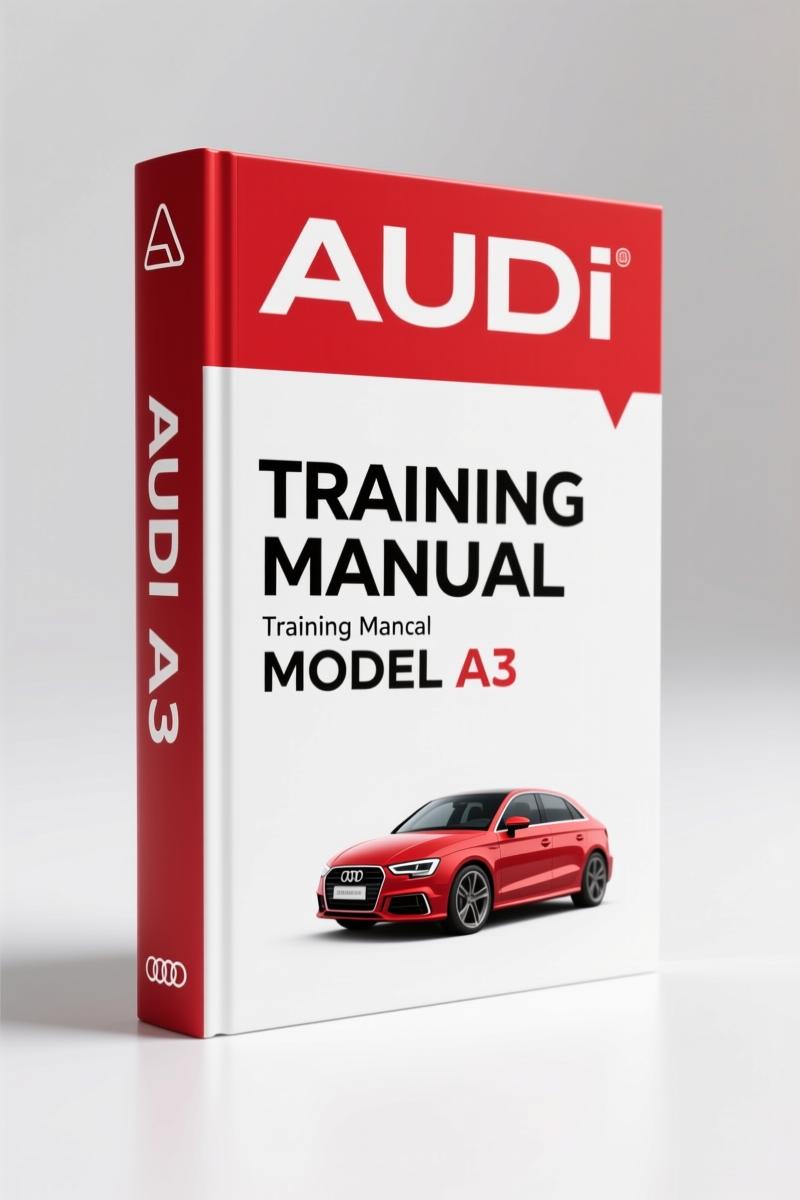
Audi A3 1996 Training Manual – Factory Self-Study Programme SSP 182
Original price was: $31.25.$25.00Current price is: $25.00.
Factory Self-Study Programme for Audi A3 (1996). 74 pages covering engineering principles, body crumple zones, engine lubrication, gearbox, running gear, brakes, electrical.
Description
Audi A3 1996 Training Manual
I’ve seen too many DIYers and even some shop guys tear into an Audi A3 without knowing the engineering behind the parts. They grab a generic manual, skip the fundamentals, and end up with stripped threads or a bent subframe. This 1996 training manual from Audi is the factory’s own breakdown of how the A3 was designed – from the programmed crumple zones to the reverse braking system. You need the Audi A3 1996 Training Manual if you want to understand what you’re working on before you turn a wrench.
This thing is 74 pages of pure Audi engineering, not a reprint of some third-party rewrite. It’s a Self Study Programme (SSP 182/83), meant to teach the technology inside the A3 – not a workshop manual. That distinction matters. When you know why the engineers put a concertina principle in the side members or why the seat belts have tensioners, you’ll stop making assumptions that cost you time and parts.
Is the Audi A3 1996 Training Manual a Workshop Manual?
Straight answer: no. The inside cover even says “The Self Study Programme is not a Workshop Manual!” You don’t get step-by-step removal and installation procedures here. What you get is the logic behind the design – engine lubrication flow diagrams, functional schematics for the electrical system, and explanations of the braking system’s power-under-pressure layout. If you need actual repair steps, grab the Audi A3 1997 Service Manual or the Audi A3 1997 Workshop Manual. Use this training manual as your pre-work before you touch a bolt.
Engine Lubrication and Functional Diagrams
Pages 16 through 49 cover the engines – from lubrication circuits to full system overviews and self-diagnosis. The manual walks you through the oil flow path, the cooling system, and the electrical architecture. You’ll see functional diagrams that show how the ECU talks to the sensors. For a guy who’s replaced three head gaskets on A3s because he didn’t understand the reverse brake system interaction, this section pays for itself. The torque specs for engine components aren’t listed here – that’s in the service manual – but the engineering context will save you from overtightening a bearing cap because you know the oil gallery routing.
Body: Programmed Crumple Zones
The body section (page 6) details the concertina side members, side reinforcement in doors, and the flush fit between B pillar and sill. If you’re repairing collision damage on a 1996 A3, you need to know where the engineered crush zones are. Cutting and welding without this knowledge compromises the safety structure. The manual shows the footwell cross member and explains why the seats have high transverse rigidity. It’s not just sheet metal – it’s a designed energy management system. Don’t skip this section just because you think you know how to weld.
Running Gear: Well-Clamped and Adjustment-Free
Running gear is where most aftermarket manuals fail you. They’ll say “tighten to spec” but give you a generic range. This training manual explains why the cast wheel bearing housing uses a single-bolt clamp and why the caster is self-aligning. The oblique rear axle mounting and the double ball bearing design affect alignment angles. When you’re replacing a wheel bearing on a 1996 A3, understanding that single-bolt clamp design tells you exactly how much clamping force is needed – and why a torque wrench is non-negotiable. For the actual torque values in ft-lbs, you’ll need the workshop manual, but the training manual gives you the ‘why’ that prevents mistakes.
Electrical System: Switches and Controls
Page 64 dives into the electrical system – switches, controls, and the self-diagnosis capability. The manual includes the seat occupied recognition (SOR) system and the reversing brake logic. If your A3 has an intermittent electrical gremlin, this section helps you trace the circuit logic instead of blindly swapping relays. The wiring diagrams are functional, not connector-level, but they show the high-level flow. Combine this with the Audi A3, A1 Training Manual – 1.2l TFSI Engine Overview if you’re working on later engine variants.
Why OEM Documentation Beats Aftermarket Reprints
I’ve been burned by aftermarket manuals that reprint a 1980s diagram for a 1996 car. This Audi manual is original OEM – printed by Volkswagen AG, internal use only, with technical status 07/96. The paper was made with chlorine-free bleach – that level of detail tells you it’s not a photocopy. Every diagram, every bolt clamping explanation, every functional diagram comes straight from the engineers who designed the car. For a broader perspective, check the Automotive Industry Overview or read the Automotive Industry Overview for context on why OEM data matters. This training manual is the foundation – use it, and you’ll work smarter.
Frequently Asked Questions
- Can I use this manual for actual repair procedures?
- No. This is a training manual, not a workshop manual.
- What torque specifications are in this manual?
- The manual doesn’t list torque values directly, but it provides the engineering basis for fastening methods – like the single-bolt clamp in the running gear. For actual torque values in ft-lbs, you need the separate Audi A3 service manual. However, knowing the clamping force design helps you understand why a torque spec exists, which reduces the chance of under- or over-tightening.
- Does this cover the 1.8T engine?
- The engine section (pages 16-49) covers the engines offered in 1996, including the 1.8L. The lubrication and functional diagrams are included. Check the specific diagram for your variant.
- Why would a DIYer buy this instead of a repair manual?
- Because knowing why the engineers designed the crumple zones to concertina on the side members or why the seat belts have tensioners prevents you from making mistakes that compromise safety. This manual gives you the background that makes repair manuals make sense. If you only own a repair manual, you’re working blind on the design rationale. The training manual fills that gap.
Access the Factory Manual from AutoRepairManuals. It’s the same 74-page PDF that Audi service departments used to train their techs. No reprints, no third-party guesswork – just the original factory training material for the 1996 Audi A3. Get it now and understand your A3 before you start wrenching.
Additional information
| Brand | Audi |
|---|---|
| Language | English |
3 reviews for Audi A3 1996 Training Manual – Factory Self-Study Programme SSP 182
You may also like…
-
Sale!
Audi A3 2003 Repair Manual – Fuel System Service Documentation
Original price was: $63.45.$45.00Current price is: $45.00. -
Sale!
Audi 5000 S 1985 Wiring Diagram – OEM Cooling Fan Circuit Data
Original price was: $86.90.$55.00Current price is: $55.00. -
Sale!

Audi 100, 200 1989 Workshop Manual – Factory Service for 5-Cylinder Engine
Original price was: $63.45.$45.00Current price is: $45.00. -
Sale!
Audi A8, Q7 Training Manual – Ceramic Brake Systems
Original price was: $54.00.$45.00Current price is: $45.00.
Related products
-
Sale!

2011 Parts Catalog – International 7400 SFA 6X6 – 1886 Pages of OEM Part Numbers
Original price was: $32.00.$25.00Current price is: $25.00. -
Sale!

1991 Operators Manual – International Truck OEM Specs (108 Pages)
Original price was: $13.63.$10.99Current price is: $10.99. -
Sale!

1992 Electrical Schematic – OEM Wiring Diagrams for International 1000-3800
Original price was: $24.48.$18.00Current price is: $18.00. -
Sale!
1991 Electrical Schematic – 112-Page OEM Wiring Diagram for International 1000-3000 Series
Original price was: $22.75.$17.50Current price is: $17.50.
diy_master –
Excellent quality! The pages are clean and easy to navigate. Every spec sheet is included for Audi A3. Saves me a lot of money.
Richard G. –
Excellent quality! The file looks clean. Contains detailed bolt torque specs for Audi. Saved my weekend project! Thank you.
Robert M. –
I am extremely satisfied with this manual. The file is high resolution. A must-have for any Audi A3 owner doing repairs. Saves me hundreds of dollars.