
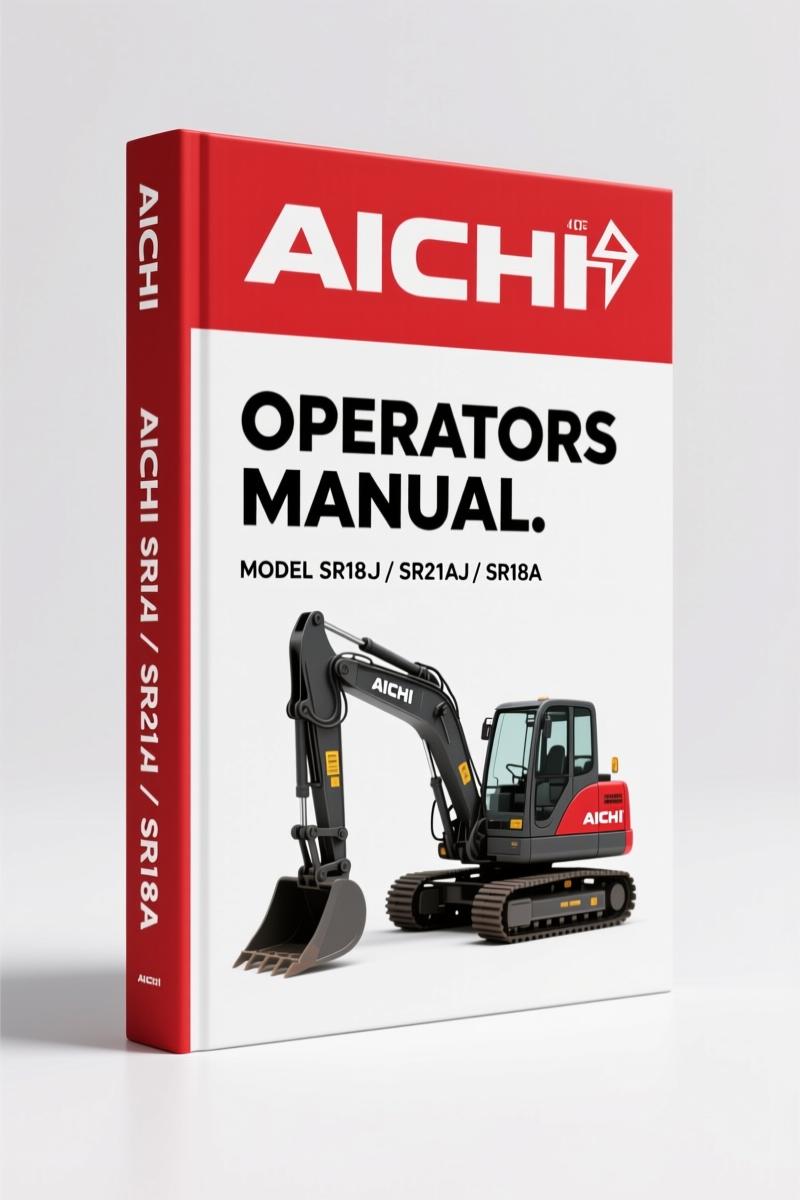
Aichi SR18AJ, SR21AJ, SR18A, SR21A, ISR60J Operators Manual – Factory Specs
Original price was: $12.62.$7.99Current price is: $7.99.
OEM 78-page Operators Manual for Aichi SR18AJ, SR21AJ, SR18A, SR21A, ISR60J crawler aerial platforms. Pre-start checks, safety, control panels.
Description
Aichi SR18AJ, SR21AJ, SR18A, SR21A, ISR60J Operators Manual
You bought or rented an Aichi crawler aerial platform – now what? Park it in the yard and start button-mashing? That’s how you shear a boom cylinder pin or tip the machine into a ditch. I’ve seen enough wrecked equipment to know that skipping the operator manual is the fastest way to a six-figure repair bill. This Aichi SR18AJ, SR21AJ, SR18A, SR21A, ISR60J Operators Manual is the factory-printed book that came with the machine when it left Saitama. Not a third-party reprint, not a scanned PDF with missing pages – 78 pages of the actual documentation that Aichi Corporation expects every operator to read before turning the key.
Pre-start Checks: What You Risk Skipping (Section IV)
Section IV runs from page 6 through page 10, and it’s the part most operators ignore because they think “I’ll check it when I feel a vibration.” That’s backwards. Page 6 lays out a specific checklist: fluid levels, visual inspection of hoses and welds, function test of the work range limit system. The sub-section on page 10 dives into pre-start checks for that limit system – a critical safety interlock that prevents the platform from exceeding its designed envelope. If you blow past those checks and the limit system fails, you’re looking at a tip-over. I’ve torqued bolts on overturned lifts; it’s not a job you want. Follow the list.
Control Panels: Lower and Upper – Learn the Difference (Section IX)
Section IX covers the lower control panel (page 30) and the upper control panel (page 31), plus a full set of pictorial symbols on page 32. Beginners often confuse the ground-level controls with the platform controls – that’s how you get a boom moving when nobody’s on the platform. The manual shows you exactly which switch does what, with symbols that match the decals on the machine. Spend the ten minutes it takes to memorize them. Your safety depends on it.
Operating Method: Ground vs. Platform – Two Completely Different Procedures (Section X)
Section X starts on page 34 and runs through page 52. It’s the meat of the manual. You get engine start procedures from both lower and upper controls (pages 34-37), then separate operating instructions for ground-level boom movement, emergency stop, emergency pump operation, platform level adjustment (page 42), bleeding air from the leveling system (page 43), and the limit cancel switch on page 45. Then the upper control section covers foot switch operation (page 46), travel, boom raising/lowering, rotation, telescope, platform rotation, fly jib, and leveling. Each procedure has a step order. Do not skip steps. For example, the emergency pump operation on page 41 is the only way to lower a platform if the engine dies – you need to know that before you’re stuck 50 feet up.
Safety Devices: Section VIII – Not Optional Equipment
Section VIII runs page 29. It documents every safety device on the machine: limit switches, tilt alarms, emergency stop buttons. The factory expects you to test these daily. A limit switch that’s been painted over or gummed up with grease will not save you when you drive into an overhead obstacle. Read the list, find each device on your machine, and confirm it works.
Specifications and Work Range Diagram (Section III)
Section III gives you the main specifications on page 3 and the work range diagram on page 5, including a counterweight table. If you’re picking a machine for a job, you need the reach and capacity numbers – they’re all here. The work range diagram shows you the envelope in metric, but for North American use you’ll convert to feet and inches. That’s fine – the shape of the envelope doesn’t change. The counterweight table tells you what ballast to add for different configurations. Ignore that and you’ll be under-counterweighted, which is a rollover waiting to happen.
Who Needs This Operators Manual?
If you own one of these Aichi models – SR18AJ, SR21AJ, SR18A, SR21A, or ISR60J – you need this manual on the machine, not in the office drawer. Rental companies need it in every delivery binder. DIY mechanics maintaining their own lifts need it for pre-start checks. Beginners will find the pictorial symbols especially useful because they don’t assume prior knowledge. Even experienced operators should review it annually – procedures get forgotten.
Why OEM Beats the Aftermarket Copies
I’ve had tow-in jobs caused by aftermarket manuals that showed the wrong control layout or omitted the emergency pump procedure. This is an original factory print from Aichi – not a reprint, not a scan with missing pages. The Aichi SR18AJ, SR21AJ, ISR60J, ISR70J Technical Manual – Factory Specs and the Aichi SR18AJ, SR21AJ, SR18A, SR21A, ISR60J Service Manual are separate documents for repair work. For daily operation, this operators manual gives you the correct steps, straight from the manufacturer that built the machine. That’s the only source I trust.
- Does this manual cover the ISR60J model?
- Yes, it covers both the SR18AJ/ISR60J and SR21AJ/ISR70J combinations as stated in the introduction.
- What if I need repair procedures – torque specs, disassembly, rebuild?
- This is an operators manual, not a service manual. For repair steps, torque values, and overhaul instructions, you need the Aichi SR18AJ SR21AJ SR18A SR21A Parts Catalog – 300pp OEM or the service manual. The operators manual covers only operation, pre-start checks, and safety. Don’t try to rebuild a hydraulic pump with the info in this book – you’ll strip threads and leak fluid. Get the correct service documentation.
- Does the manual include torque specifications?
- No. Torque values for bolts and fasteners are not part of an operators manual. Those appear in the service manual.
- How many pages is the manual?
- 78 pages total, including the index, specifications, control panels, operating procedures, and safety sections.
Before you put a single person on that platform, read this manual. Know the pre-start checks, understand the control panels, and practice the emergency procedures on the ground. Just as a Manual Transmission requires the driver to know clutch engagement points, an aerial platform requires you to know its limits and safety systems. The Manual Transmission analogy holds: one wrong move and you’re buying parts instead of using them. Access the Factory Manual from AutoRepairManuals – put it in the machine, and operate with the same documentation the factory provides.
Additional information
| Brand | Aichi |
|---|---|
| Language | English |
2 reviews for Aichi SR18AJ, SR21AJ, SR18A, SR21A, ISR60J Operators Manual – Factory Specs
You may also like…
-
Sale!
Aichi RZ-150, IRZ500 Parts Catalog – 169 Pages OEM Exploded Views
Original price was: $45.12.$32.00Current price is: $32.00. -
Sale!
Aichi SR123J, ISR403J Service Manual – 146 Pages of Factory Specs
Original price was: $42.60.$30.00Current price is: $30.00. -
Sale!
Aichi SP12C, SP14CJ, SP400C, SP460CJ, SP12CSM Service Manual – 173 Pages
Original price was: $42.90.$30.00Current price is: $30.00. -
Sale!
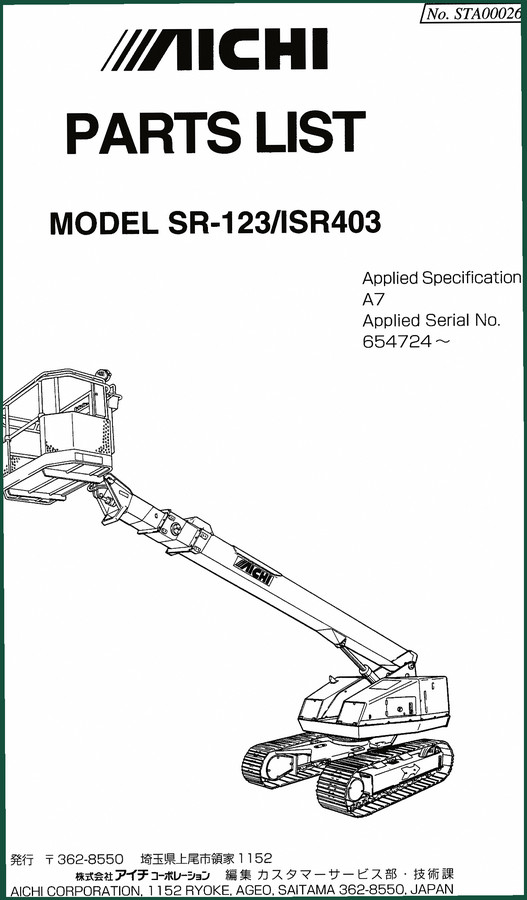
Aichi SR-123, IS-R403 Service Manual – 168 Pages OEM Factory Diagnostics
Original price was: $38.40.$30.00Current price is: $30.00.
Related products
-
Sale!

2005 Parts Catalog – International NGD 3.0 L Engine (77 pages)
Original price was: $44.70.$30.00Current price is: $30.00. -
Sale!

International 1000-3000 Series Operators Manual – 132 Pages of OEM Specs
Original price was: $14.40.$10.99Current price is: $10.99. -
Sale!
1993 Electrical Schematic – International 1000/3000/4000 Bus Chassis OEM Wiring Diagrams
Original price was: $29.26.$22.00Current price is: $22.00. -
Sale!

Technical Manual – International DT 530 & HT 530 (118 Pages)
Original price was: $37.00.$25.00Current price is: $25.00.
diy_master –
Excellent quality! It is easily zoomable on my tablet without blur. Contains detailed schematics for Aichi. Saved my weekend project! Thanks.
Robert M. –
I am very pleased with this purchase. Quick access after payment. A must-have for any Aichi SR18AJ, owner doing maintenance. I will recommend this shop to others.