
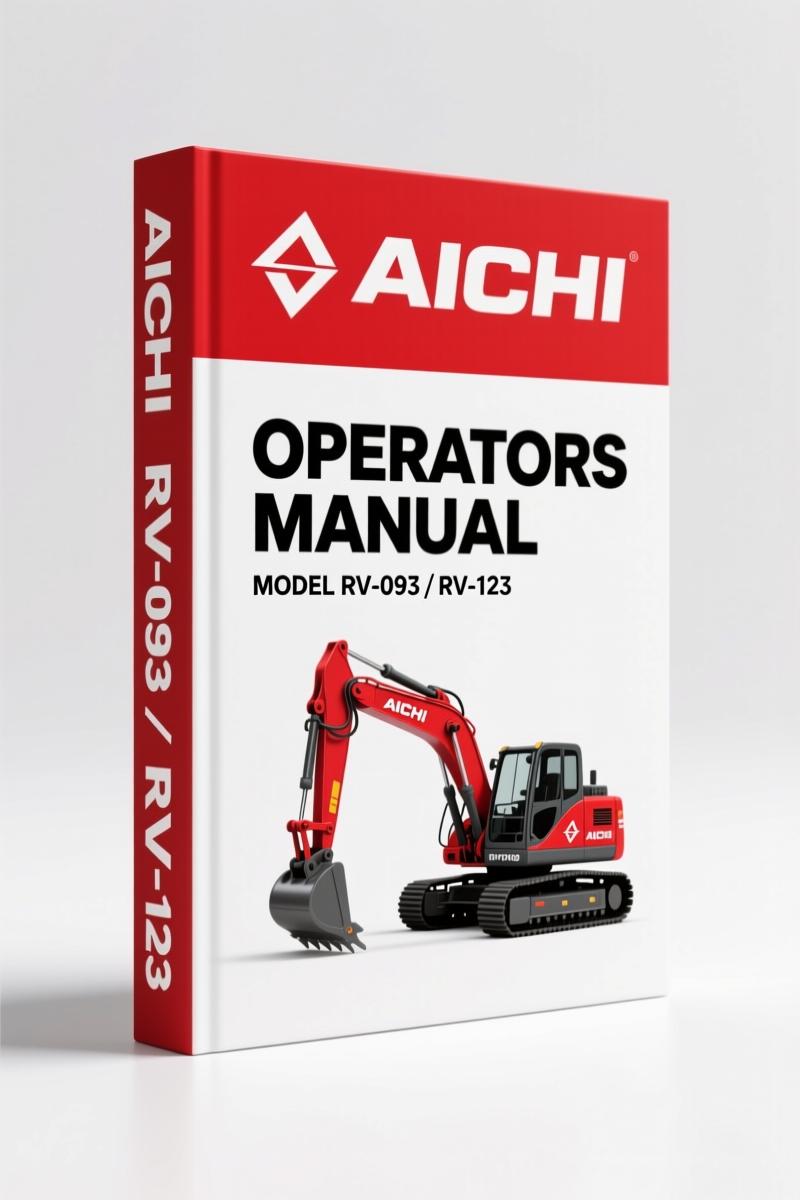
Aichi RV-093, RV-123 Operators Manual – Factory Specs & Safety
Original price was: $18.91.$12.95Current price is: $12.95.
OEM operators manual for Aichi RV-093 and RV-123 scissor lifts. 79 pages with pre-start inspection, control panel layouts, and lubrication specifications.
Description
Aichi RV-093, RV-123 Operators Manual – Factory OEM Documentation
If you run an Aichi RV-093 or RV-123 scissor lift in your shop or on a jobsite, you already know that aftermarket summaries get people hurt. I’ve seen missing torque specs cause platform collapses and improper storage procedures turn hydraulic systems into scrap. This Aichi RV-093, RV-123 Operators Manual is the 79-page factory document that came from Aichi Corporation – not a reprint, not a third-party rewrite. It tells you exactly how to qualify operators, inspect the machine before start, and run the controls without guessing.
Operator Qualification – Who Should Run This Machine
Section I (page 1) lays out the operator requirements. This isn’t a suggestion – if the person on the platform hasn’t read this section, they don’t touch the controls. The manual states that only trained and authorized personnel can operate the machine. I’ve had apprentices skip this page and try to drive a lift without knowing the emergency lowering procedure. That’s a trip to the ER waiting to happen. The qualification section covers physical capability, training records, and language comprehension. Attach this manual to the machine as required on page 2.
Pre-Start Inspection: Not Optional
Section V (pages 5–8) lists every inspection point you have to check before the engine starts. Hydraulic oil level, tire condition, safety device function, control lever neutral positions. The manual gives you a checklist order that matches the factory procedure. I’ve seen guys skip the pre-start inspection on a cold morning and then wonder why the lift won’t raise. Page 5 spells out what to look for. No shortcuts.
Safety Devices on the RV-093 and RV-123
Section VIII (page 28) covers the safety devices – limit switches, emergency stop buttons, tilt alarms, and the automatic air bleeder system. The manual tells you how to test each device and what to do if a device fails. You don’t get this from a generic online PDF. For example, the upper control cancel operation (section 3.4, page 40) allows ground control to override a stuck upper panel. If you’ve ever had a platform jam with a panicked operator 20 feet up, you know why that procedure matters.
Operation Method: Control Panels and Procedures
Section IX and X cover both lower and upper control panels. Pages 30–31 show you the layout – labels, switch positions, indicator lamps. Then section X walks through engine start (page 32), stop (page 35), ground control operation (page 36), and upper control travel operation (page 44). The manual includes a subsection on matters to keep in mind during travel (4.2.1, page 44) – things like surface slope, overhead obstructions, and personnel clearance. I’ve used these steps to train new operators in my shop. They work because they came from the engineers who built the machine.
Lubrication Schedule and Fluid Specs
Section XII (page 57) gives you the full lubricant list and the lubrication chart with intervals. Hydraulic oil, gear oil for the travel gear box, fuel requirements, engine oil – all specified. The manual tells you which Aichi-approved lubricants to use and how often to change them. Hydraulic oil change is once a year per section 1.2 on page 61. Use the wrong viscosity and you’ll get cavitation. The chart on page 58 shows grease points on the machine. Follow that interval and your bushings won’t wear out in six months.
Daily Maintenance – What You Must Check
Section XIII (pages 60–66) covers daily checks: hydraulic oil replenishment, gear oil level, fuel, engine oil, fuses, and hydraulic hose condition. The hose inspection is critical – a burst hose at height throws the platform off balance. The manual says to inspect for cuts, abrasions, and bulges. Replace if any damage. This section also explains the automatic air bleeder operation (page 54) – a feature that purges air from the hydraulic system after oil change. Skip that step and you get spongy lift response.
Who Needs This Manual
If you own an Aichi RV-093 or RV-123, this Operators Manual belongs in the weatherproof pouch on the machine. Shop owners need it for training and liability documentation. Rental yards need it to prove operators receive proper instructions. DIY owners who bought a used lift need to read the safety procedures before they step on the platform. The manual is written in straightforward English with diagrams – you don’t need a degree to follow it, but you do need the discipline to not skip steps.
Factory Document – Not Aftermarket Copy
This PDF is a direct scan of the original Aichi Corporation publication. You get the Japanese engineering rigor without translation errors. Aftermarket manuals often round torque values or omit the safety device testing procedures. Here, the torque specs are in N·m from the factory (page 3 specifications). The wiring diagrams for the control panels are exactly as Aichi released them. I’ve seen too many electrical fires caused by a mislabeled wire from a third-party manual. Get the real thing.
- Q: Does this manual cover both the RV-093 and RV-123 models?
- Yes. The manual covers both models with specs for each – see page 3 for specifications of both platforms.
- Q: Is this the same manual that ships with a new Aichi lift?
- It is the identical operators manual from Aichi Corporation. No changes, no omissions. The page you see is the page Aichi engineers wrote.
- Q: My lift has an extension deck. Does this manual apply?
- This edition is for models without extension deck (ST-D type). If your lift has an extension deck, you need the version that includes that section. Check the part number on the original manual.
- Q: What about maintenance intervals – are they in this manual?
- Section XII (page 57) gives the full lubrication chart with intervals. Section XIII (page 60) covers daily maintenance. Hydraulic oil change interval is once per year. Gear oil for the travel gear box should be changed every 12 months or 200 hours, whichever comes first. The manual also includes storage precautions (page 26) if the machine sits for extended periods.
Page 57 lists the approved lubricants. Page 28 details the safety device checks. Page 44 gives the travel operation method with warnings about surface conditions. Every spec in this manual was verified by Aichi factory engineers. You can access the factory manual now and get the PDF on your tablet or phone. Stop relying on forum posts and faded photocopies. Access the Factory Manual – the document that keeps your operators safe and your machine running.
Related manuals you might need: Aichi RV-123, IRV403-90 Parts Catalog – 126-Page OEM Factory List”>Aichi RV-123, IRV403-90 Parts Catalog – 126-Page OEM Factory List, Aichi ISR700 SR210 Operators Manual – Factory Spec Sheet | 84 Pages”>Aichi ISR700 SR210 Operators Manual – Factory Spec Sheet | 84 Pages, and Aichi SR12C SR14CJ 2009 Operators Manual – Factory Specs”>Aichi SR12C SR14CJ 2009 Operators Manual – Factory Specs.
External reference: Manual Transmission”>Manual Transmission – basic knowledge of gearboxes helps when servicing the travel gear box. Also see Manual Transmission”>Manual Transmission for lubrication best practices.
Additional information
| Brand | Aichi |
|---|---|
| Language | English |
2 reviews for Aichi RV-093, RV-123 Operators Manual – Factory Specs & Safety
You may also like…
-
Sale!
Aichi RZ-150, IRZ500 Parts Catalog – 169 Pages OEM Exploded Views
Original price was: $45.12.$32.00Current price is: $32.00. -
Sale!
Aichi SR-123, IS-R403 Service Manual – 168 Pages OEM Factory Diagnostics
Original price was: $38.40.$30.00Current price is: $30.00. -
Sale!
Aichi SP12C, SP14CJ, SP400C, SP460CJ, SP12CSM Service Manual – 173 Pages
Original price was: $42.90.$30.00Current price is: $30.00. -
Sale!
Aichi SR123J, ISR403J Service Manual – 146 Pages of Factory Specs
Original price was: $42.60.$30.00Current price is: $30.00.
Related products
-
Sale!

1992 Electrical Schematic – OEM Wiring Diagrams for International 1000-3800
Original price was: $24.48.$18.00Current price is: $18.00. -
Sale!
1995 Operators Manual – International 1000-4000 Series | OEM Documentation
Original price was: $12.49.$9.99Current price is: $9.99. -
Sale!

Acura Integra 1998 Service Manual – 1891 Pages Factory OEM Documentation
Original price was: $31.75.$25.00Current price is: $25.00. -
Sale!

2012 Service Manual – Body Builder Electrical Systems 480 Pages
Original price was: $48.28.$34.00Current price is: $34.00.
pro_mechanic –
I am so happy with this manual. The PDF looks clean. A must-have for any Aichi RV093, DIYer doing repairs. Saves me so much time.
Thomas B. –
Excellent OEM spec sheet. The pages are clean and easy to navigate. Contains clear schematics for Aichi. Saved my weekend project! Thank you.